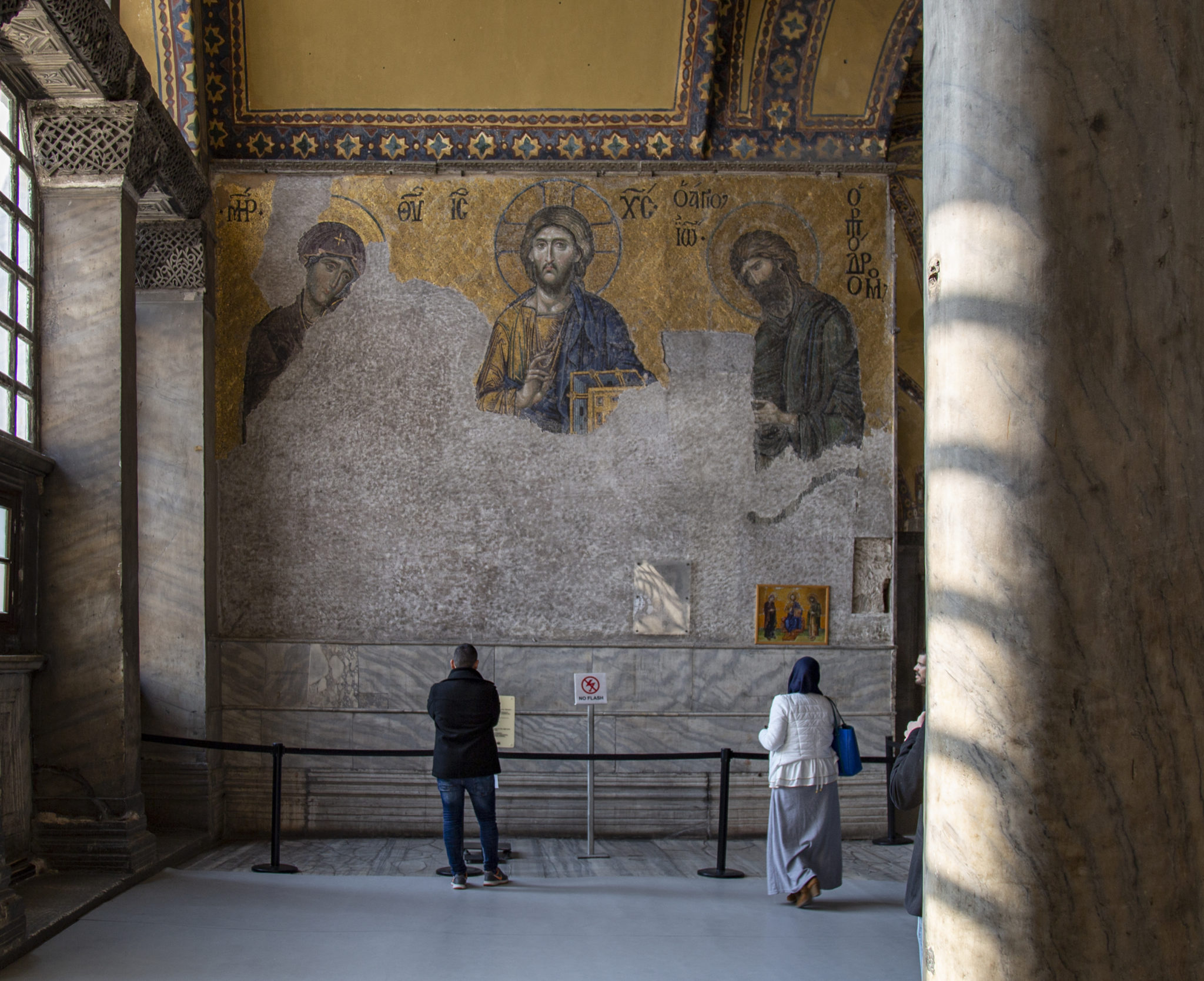
The Deesis Mosaic
Christ Pantocrator with the Virgin Mary and John the Baptist
The Deesis Mosaic, created around 1261, is considered one of the finest examples of Byzantine art ever created. Located in the south gallery, it depicts Christ as Pantocrator (Ruler of All) with the Virgin Mary and John the Baptist interceding on behalf of humanity.
Christ Pantocrator
At the center sits Christ in majesty, his right hand raised in blessing while holding the Gospels in his left. His face conveys both divine authority and human compassion, exemplifying the Palaeologan Renaissance style.
The Virgin Mary
To Christ's right stands the Theotokos (Mother of God), her hands extended in supplication. Her sorrowful expression emphasizes her role as intercessor for humanity.
John the Baptist
On Christ's left is John the Baptist, the Forerunner, also gesturing in intercession. His ascetic appearance reflects his role as the last prophet.
Artistic Significance
The Deesis represents the pinnacle of Byzantine mosaic art. The naturalistic rendering of faces, the subtle shading, and the emotional depth mark a departure from earlier, more rigid Byzantine styles.