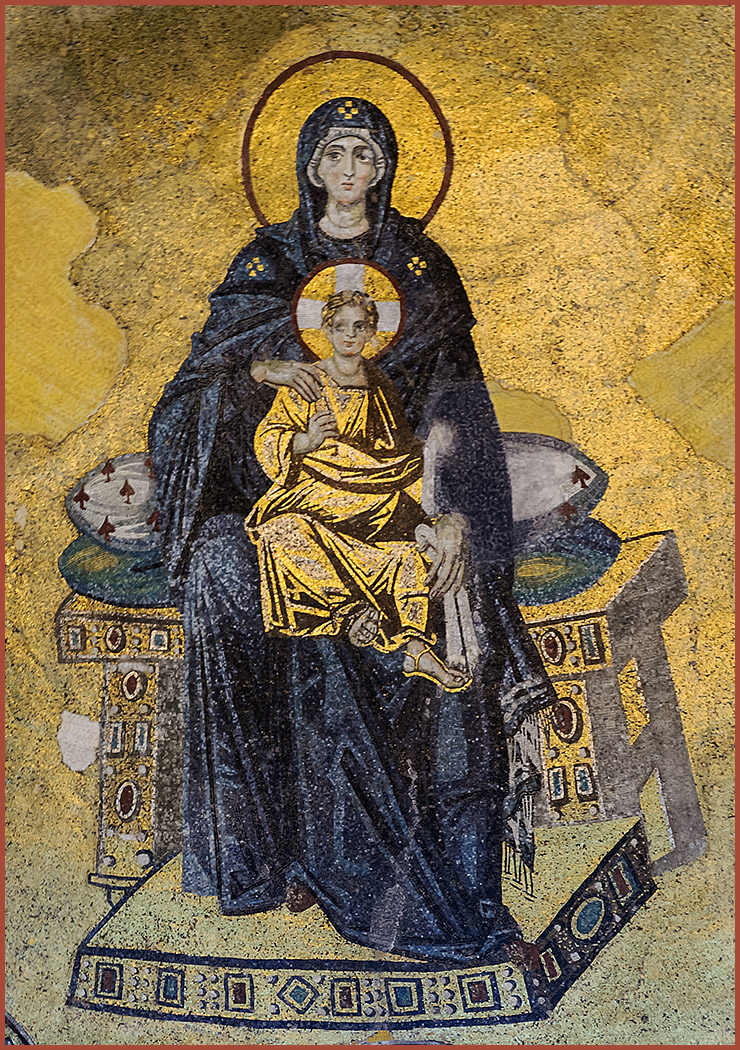
Apse Mosaic of the Virgin and Child
The Icon of the Theotokos in the Eastern Apse
High above the main altar of Hagia Sophia, in the eastern apse, shines a monumental mosaic of the Virgin Mary holding the Christ Child. Installed after the end of Byzantine Iconoclasm in 867, it marks the triumphant return of sacred images to the Great Church.
Historical Background
During the periods of Iconoclasm in the 8th and early 9th centuries, figural images were removed from many churches in the Byzantine Empire. When the veneration of icons was officially restored, Hagia Sophia received a new apse mosaic of the Theotokos (Mother of God). An inscription recorded in medieval sources celebrated the restoration of images in the Great Church.
Composition & Style
The Virgin is shown seated on a jeweled throne, holding the Christ Child on her lap. Both figures are rendered with soft modeling against a radiant gold background. The simplicity of the composition, combined with the monumental scale, creates an image that is both intimate and majestic.
Theological Significance
Placing the image of the Theotokos in the apse above the altar underlines her role as intercessor between heaven and earth. For medieval worshippers, the mosaic proclaimed the victory of the defenders of icons and affirmed the legitimacy of visual images in Christian worship.
Where to See the Apse Mosaic
The apse mosaic is best viewed from the central nave, looking east toward the mihrab area. Because of its height, binoculars or a zoom lens can help reveal details of the faces and garments.
Visitor Tip
Stand under the main dome and slowly turn toward the eastern apse. Notice how the Virgin and Child appear suspended above the light-filled space, framed by the architecture of the semi-dome and windows.