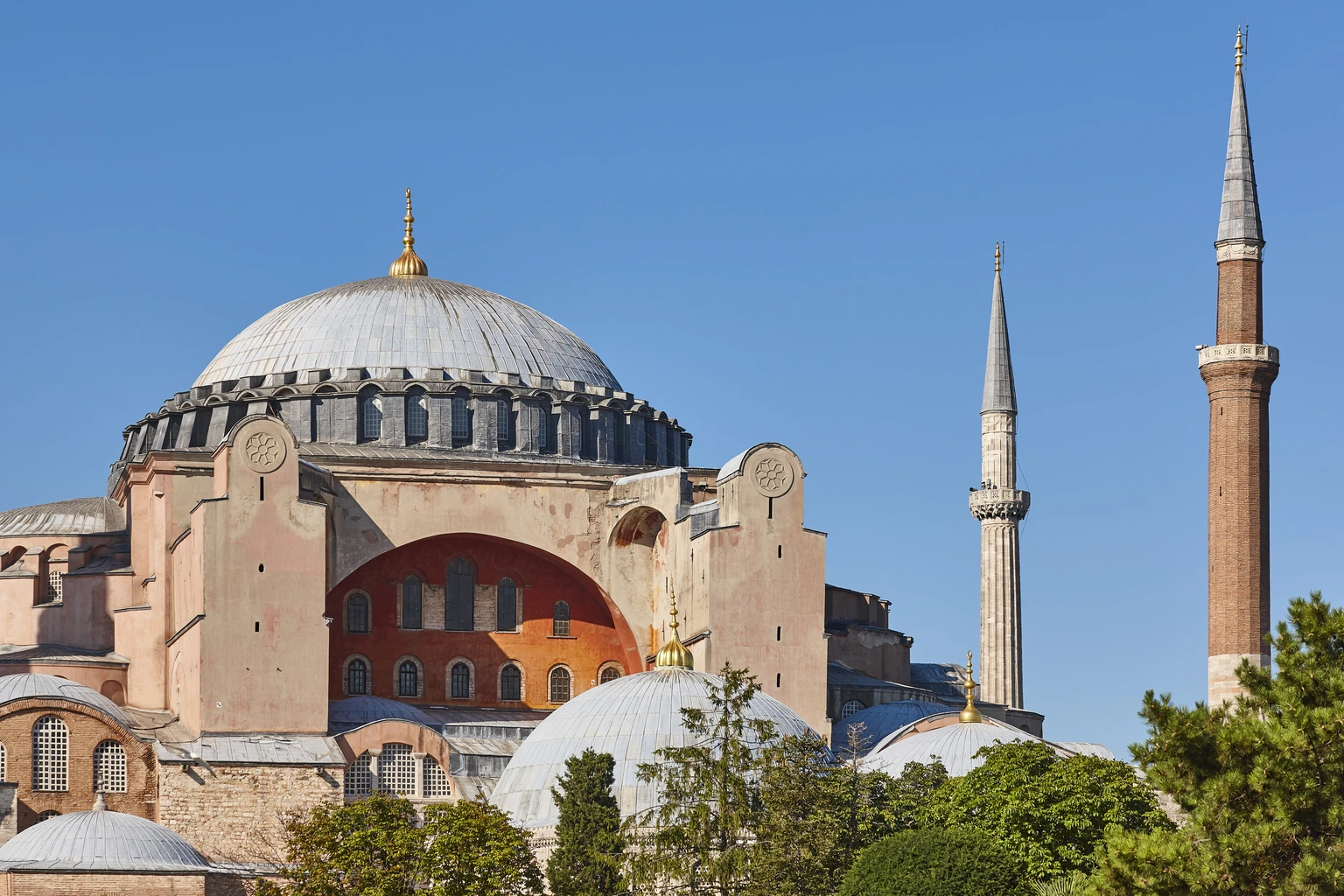
Architectural Masterpiece: Hagia Sophia
From Experimental Basilica to Timeless Icon
When it was completed in 537, Hagia Sophia was unlike any building the world had ever seen. Its enormous central dome floating above a rectangular basilica plan pushed the limits of engineering and defined a new kind of sacred space.
The Revolutionary Dome
The 31‑meter wide dome rises about 55 meters above the floor, supported by four massive piers and a system of pendentives and semi‑domes. This daring combination allows the dome to appear as if it rests on a ring of windows and pure light.
Light as Architecture
Byzantine architects treated light itself as a building material. Windows at multiple levels, from the lower aisles to the drum of the dome, create a constantly shifting play of reflections on marble and gold mosaics.
Materials from Across the Empire
Columns of green Thessalian marble, purple porphyry, and other exotic stones were brought from older temples and palaces across the empire. This deliberate reuse turned Hagia Sophia into a symbolic map of the Mediterranean world.
Ottoman Additions
Minarets, buttresses, the mihrab, minbar, and giant calligraphic roundels were added after 1453. Rather than erasing the Byzantine core, these elements wrapped the building in a new Islamic layer, making the monument a rare fusion of two imperial cultures.
Dive deeper into Hagia Sophia’s architecture
Go to Architecture page