Hagia Sophia's Traveler Echoes: A Thousand Years of Resonations and 2026's Acoustic Secrets
Hagia Sophia, a monument cradling civilizations for centuries, captivates not only with its architecture but also its auditory wonders. This article delves into the mysterious acoustic properties of this iconic structure, examining the latest research and unveiling 'Hagia Sophia's Acoustic Secrets 2026' to understand how sounds have resonated within its walls throughout history, offering insights into its unique sonic heritage.
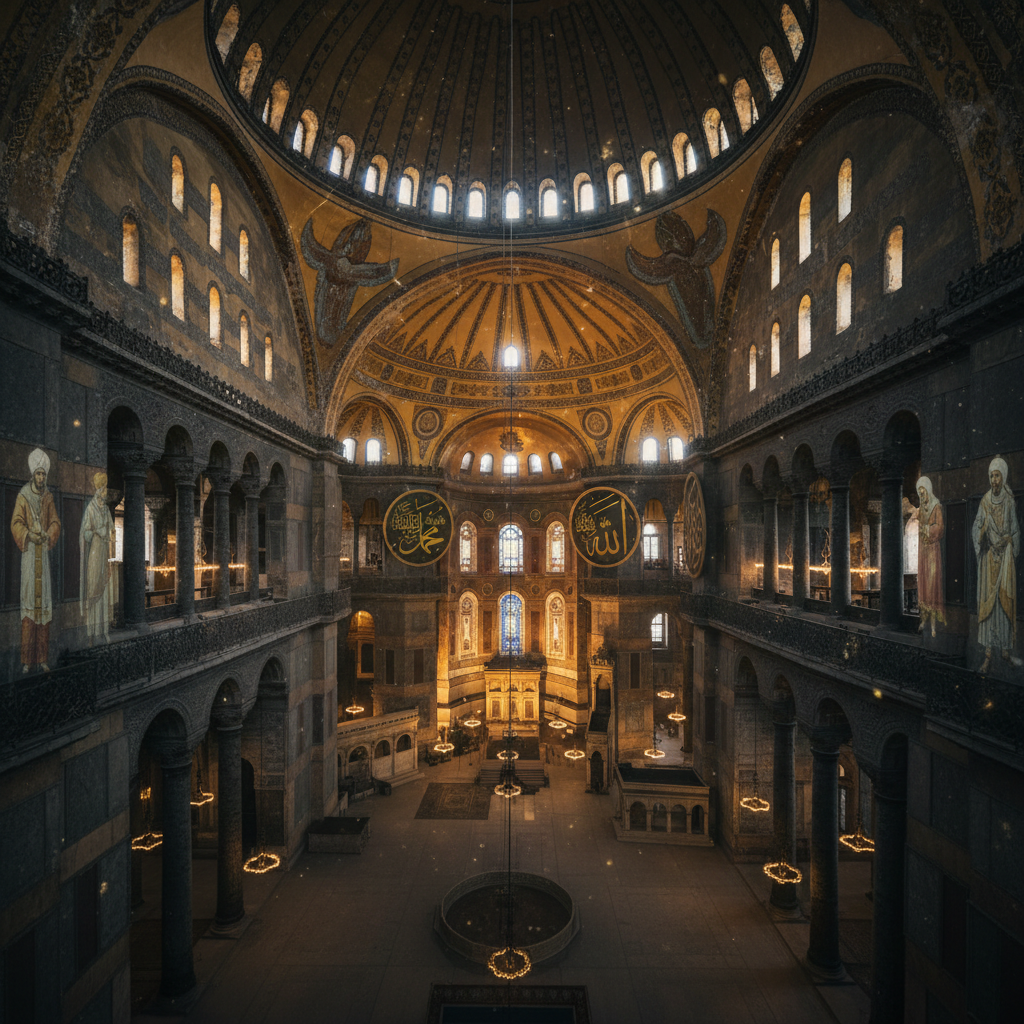
Hagia Sophia's Acoustic Secrets 2026: Millennial Reverberations Explored
Having cradled civilizations for centuries, captivating the entire world with its architecture and history, Hagia Sophia not only offers a visual feast but also hosts an auditory miracle. In 2026, research continues to unravel Hagia Sophia's Acoustic Secrets 2026. This article delves into the mysterious acoustic properties of the structure, exploring the latest findings and the unique connection of this sacred space with sound. Indeed, this marvel of sound science attracts the interest of both visitors and researchers, igniting curiosity throughout every period.
Hagia Sophia's Acoustic Structure: Unveiling Ancient Engineering
During the construction of Hagia Sophia, engineers considered not only aesthetics and durability, but also how sound would reverberate within the structure. Their calculations were remarkably precise. The 6th-century engineers' knowledge of sound physics is astonishing, even by today's standards. Ensuring that sound reached every corner clearly, in a vast space where thousands worshiped or imperial ceremonies were held, was nothing short of an engineering marvel. It's a testament to the skill of Hagia Sophia's traveling artisans.
Acoustic Calculations in Byzantine Architecture Explored
Byzantine architects incorporated several key features to optimize sound:
- Dome Effect: The colossal dome of Hagia Sophia provides a monumental appearance and plays a critical role in sound distribution. Its inner surface was specifically designed to ensure a homogeneous spread of sound. This visual spectacle is further explored in Hagia Sophia's Evolving Lights and Shadows.
- Material Selection: Builders carefully evaluated the sound absorption and reflection properties of materials like stone, brick, and mortar. This precise combination prevents excessive reverberation, thereby maintaining sound clarity.
- Galleries and Niches: The upper floor galleries and wall niches contributed significantly to sound distribution. This design ensured that speeches and hymns, in particular, could be clearly heard from every part of the structure. Many traveler's memoirs and diaries note the impressive acoustics.
These features remain among the most fundamental elements emphasized in Hagia Sophia's Acoustic Secrets 2026 research. Today's simulations and acoustic measurements consistently reveal the genius of ancient architects in this regard.
Echo of Silence: Sound Experience in Hagia Sophia from Past to Present
Hagia Sophia has hosted diverse sound experiences throughout its lengthy history as a place of worship. In its early days as a church, Byzantine hymns and liturgies filled the space. After its conversion into a mosque, calls to prayer, Quran recitations, and prayers during services permeated these walls. In every period, the structure's acoustics strengthened and deepened these sounds, leaving an unforgettable impression on visitors. Delve deeper into the spiritual dimension with Hidden Hymns of Hagia Sophia.
The Acoustic Effect of Adhan and Quran Recitation
Hagia Sophia offers a unique experience with the calls to prayer rising from its minarets and the Holy Quran recitations heard within. The structure's acoustics ensure these sounds reach every part of the congregation, and also impart a mystical and spiritual dimension. This experience fascinates foreign tourists, especially when considering Hagia Sophia's Acoustic Secrets 2026. For a deeper understanding of the religious practices and their historical context, the Islamic Arts website offers valuable insights into its time as a mosque.
Guide Narrations and Acoustics in Hagia Sophia
For tourists visiting Hagia Sophia today, guide narrations are also crucial in terms of acoustics. The reverberation of guides' voices, the quality of speaker systems, and visitor density directly influence this experience. Even with modern sound systems, the natural acoustics of the structure continue to offer a truly unique auditory experience. Planning a visit? The official Go Türkiye travel guide provides comprehensive visitor information for 2026.
2026 Acoustic Research and the Mysteries of Hagia Sophia
With advancing technology, research into Hagia Sophia's acoustic properties has deepened considerably. In 2026, scientists are utilizing advanced sound modeling software and laser-based measurement techniques. This allows for a more detailed analysis of sound propagation within the structure. Consequently, this research not only uncovers past engineering secrets but also informs future restoration and conservation efforts, shedding more light on Hagia Sophia's Acoustic Secrets 2026.
Digital Acoustic Modeling and Simulations
Recent 2026 research involves acoustic simulations conducted on three-dimensional digital models of Hagia Sophia. These simulations provide a realistic visualization of how different sound sources, such as speech, music, and hymns, are distributed. They also analyze reverberation times and sound pressure levels within the structure. In this way, Hagia Sophia's Acoustic Secrets 2026 can be explained with more concrete data and a deeper understanding.
The Role of Acoustics in Transmission to Future Generations
This research is vital for the proper transmission of Hagia Sophia's unique acoustic heritage to future generations. Preserving the natural sound environment of the structure, without distortion, is a critical aspect of cultural heritage. Thanks to developing technology, the sound characteristics of this sacred structure are better understood, and effective preservation strategies are being developed. For further scientific data, consider resources from the Acoustical Society of America.
Visitor Experience and Acoustic Secrets in Hagia Sophia
Everyone who visits Hagia Sophia feels enveloped in a distinct atmosphere the moment they step inside. A significant part of this profound feeling stems directly from the structure's unique acoustics. This acoustic quality, which makes even whispers seem to return from the dome and hymns appear to descend from the heavens, leaves a deep and lasting impression on visitors.
Whispering Gallery and Acoustic Illusions
The area known as the "whispering gallery" on the upper floor represents one of Hagia Sophia's acoustic miracles. The ability to clearly hear a whispered word from one end of this gallery to the other is another demonstration of the structure's extraordinary sound engineering. This feature has captivated visitors throughout history and remains a highly curious topic for tourists, especially when considering Hagia Sophia's Acoustic Secrets 2026.
Acoustics as a Source of Meditation and Inner Peace
Hagia Sophia's serene atmosphere and rich acoustics provide a source of meditation and inner peace for many visitors. The echoing sounds, combined with the ethereal light filtering down from the ceiling, offer a profound spiritual experience. This unique atmosphere transforms Hagia Sophia from merely a historical building into a truly spiritual sanctuary.
Hagia Sophia's Acoustic Secrets 2026 and Cultural Heritage Preservation
Hagia Sophia's acoustic properties are not merely an area of scientific interest; they are an integral part of its cultural heritage. Preserving this unique sound experience and transmitting it to future generations is a critical issue requiring international effort. As of 2026, awareness in this direction is significantly increasing, and conservation efforts are being carried out more actively than ever before.
Restoration Works and Acoustic Impact
In all restoration works carried out in Hagia Sophia, it is essential to ensure the original acoustic properties of the structure are not compromised. The potential effects of new materials or interventions on sound propagation and reverberation time must be thoroughly evaluated in advance. This sensitivity is also crucial in ongoing Hagia Sophia's Acoustic Secrets 2026 studies.
Education and Awareness Activities
Education and awareness activities are organized to explain the acoustic value of Hagia Sophia and to foster public understanding. Information provided to students and the general public contributes significantly to the protection of this unique heritage. In 2026, this vital information is effectively being conveyed to wider audiences through various digital platforms. For a complete overview of what to expect, consult the Hagia Sophia Traveler's Guide 2026.
In conclusion, Hagia Sophia stands as not only an architectural masterpiece but also a living legend that embodies the miracle of sound and acoustics. The sounds that have permeated its walls over centuries, coupled with modern research on Hagia Sophia's Acoustic Secrets 2026, continually deepen the mystery of this magnificent structure. This sacred space will undoubtedly continue to offer its visitors an unforgettable experience, engaging not only their sight but also their sense of hearing.