Hagia Sophia's Mysterious Ink Traces: Hidden Seals and Correspondence from the Past to 2026
New research in 2026 continues to unravel the mysteries of Hagia Sophia's hidden ink traces and ancient correspondence. This iconic structure, famous for its architecture, may hold secrets etched into its very fabric, suggesting messages from the past are still waiting to be fully discovered and understood in modern times.
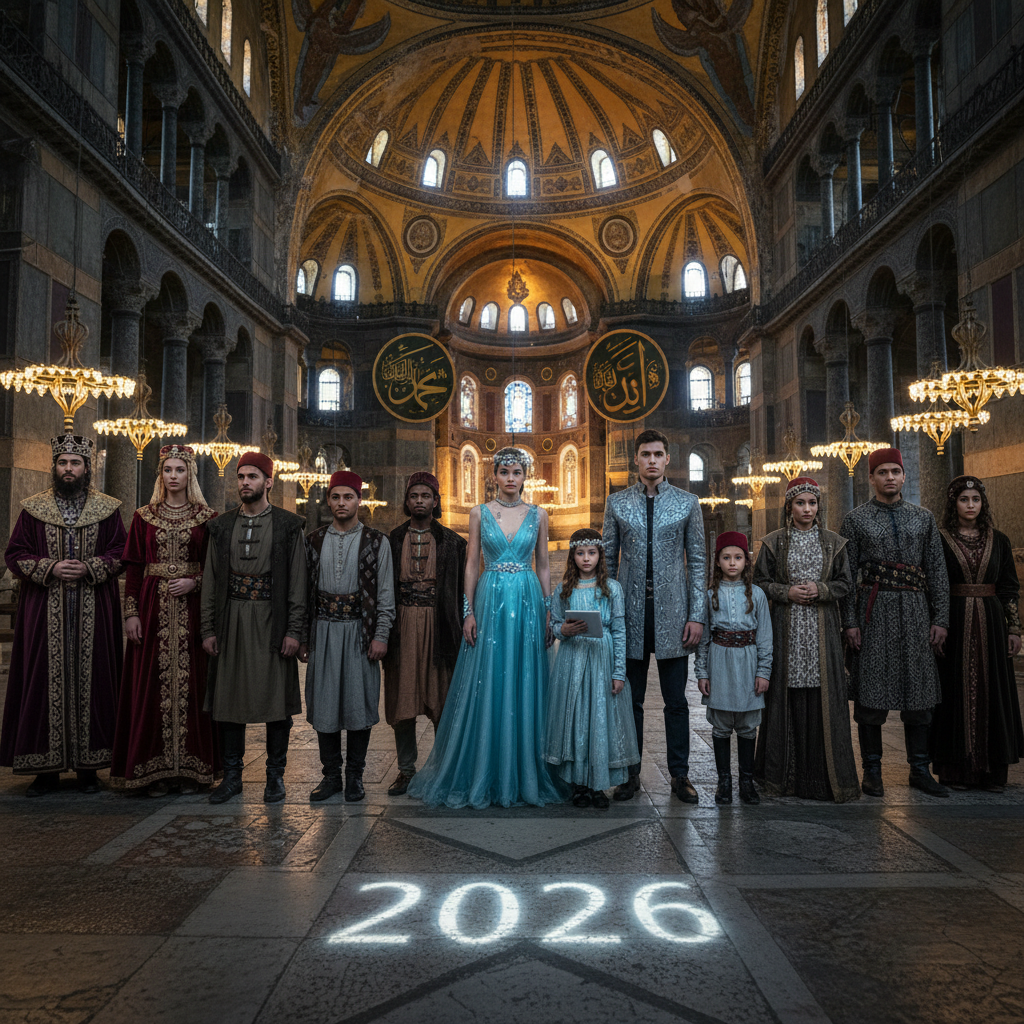
Hagia Sophia's Mysterious Manuscripts: Unveiling Hidden Correspondence
In 2026, research and speculation surrounding Hagia Sophia's Mysterious Manuscripts continue to captivate historians and researchers alike. This iconic structure, standing for centuries, mesmerizes not only with its architectural grandeur but also with the histories etched, hidden, or whispered into its very walls. Could every stone, every fresco, and even every seemingly invisible corner hold a message from the past, a key to a secret? This article delves into these enigmatic forms of communication, exploring the profound stories they hold within Hagia Sophia's depths.
Unearthing Unknown Notes and Marks in Hagia Sophia
Since its inception, Hagia Sophia has hosted a multitude of empires, cultures, and beliefs. Consequently, claims have emerged regarding Hagia Sophia's mysterious correspondence found within and around the structure from various periods. These correspondences sometimes manifest as runic letters carved into walls, or as symbols cleverly concealed behind ancient frescoes. The study of these markings often leads to discoveries of previously unknown Hagia Sophia's Mysterious Manuscripts.
Runic Inscriptions and the Viking Connection
Indeed, within the galleries of Hagia Sophia, keen observers can spot several runic inscriptions. These markings are widely believed to have been left by Vikings, specifically the Varangian Guards who served as mercenaries during the Byzantine Empire. The most famous inscription, "Halvdan carved these runes," continues to intrigue visitors centuries later. These inscriptions are like small, ancient Hagia Sophia's Mysterious Manuscripts etched in stone.
- These inscriptions serve as tangible traces left by the Vikings on Hagia Sophia's ancient surfaces.
- They specifically highlight the significant role of the Varangian Guards within the imperial Byzantine guard regiment.
- Furthermore, these unique inscriptions can be considered among the earliest examples of modern language correspondence found within such a historical context. If you're planning a visit this year, consider our Hagia Sophia Traveler's Guide 2026 for an in-depth look.
Mysterious Symbols and Secrets Beneath Frescoes
Hagia Sophia's frescoes and mosaics are undeniably intricate works of art. However, some researchers posit that hidden symbols, diagrams, or letters exist beneath or directly within the plaster layers surrounding these magnificent artworks. Understandably, these symbols could represent messages from a secret society of a bygone era, or perhaps personal notes left by architects or artists during the construction or renovation phases. These findings often echo the stories explored in Hagia Sophia's Traveling Artists, hinting at more Hagia Sophia's Mysterious Manuscripts.
Deciphering Hagia Sophia's Ancient Texts and Records
The history of Hagia Sophia extends far beyond the symbols etched into its walls. Crucially, much valuable information about this grand structure is preserved in ancient texts, detailed travelogues, and insightful chronicles. These invaluable documents may contain pivotal clues about the structure's construction, its varied uses, or even potential hidden passages or treasures concealed within its vast confines. Intriguingly, Hagia Sophia's mysterious correspondence can sometimes be deciphered from the cryptic expressions embedded within these ancient texts, forming a collection of Hagia Sophia's Mysterious Manuscripts.
Byzantine Imperial Records and Enigmatic Letters
The extensive archives of the Byzantine Empire offer detailed information concerning the construction, numerous restorations, and religious ceremonies performed at Hagia Sophia. Nevertheless, among these records, there may exist letters or decrees specifically related to Hagia Sophia that have yet to be fully deciphered. Such correspondence could potentially contain vital clues illuminating previously unknown aspects of the structure's long and complex past, touching upon its architectural evolution from Byzantium to the Ottomans and into 2026. These historical documents are essentially early forms of Hagia Sophia's Mysterious Manuscripts.
Travelers' Notes and Truths Within Legends
Over centuries, countless travelers, intrepid explorers, and diligent scholars who visited Hagia Sophia meticulously recorded their observations and experiences in their notebooks. Among these notes, one might discover cryptic expressions pertaining to Hagia Sophia's hidden sections, untold stories, or deeply held architectural secrets. Historically, many prominent figures, from Marco Polo to various Ottoman travelers, have sought to unravel the persistent mysteries of this awe-inspiring structure. For more insights into these historical narratives, explore Hagia Sophia's Traveler's Memoirs, which often contain hints of Hagia Sophia's Mysterious Manuscripts.
- These historical notes offer unique and diverse perspectives on the structure's evolving significance.
- They can significantly help in shedding light on the origins and development of certain enduring legends.
- Moreover, these accounts illustrate the perception and paramount importance of the structure across different historical periods.
Modern Technology and the Search for Hagia Sophia's Manuscripts
Today, advanced technology offers unprecedented opportunities to uncover the secrets of the past. Specifically in 2026, innovative methods such as laser scanning, highly sensitive thermal imaging, and sophisticated artificial intelligence analysis have revolutionized our ability to look behind Hagia Sophia's walls, precisely decipher ancient texts, and make remarkable new discoveries regarding potential Hagia Sophia's mysterious correspondence and previously unknown Hagia Sophia's Mysterious Manuscripts.
Discovery of Hidden Chambers with Laser Scanning
Large and complex architectural structures like Hagia Sophia often contain spaces that have been subtly added or sealed over the course of centuries. Fortunately, laser scanning technology can accurately detect minute density differences behind walls, thus revealing previously unknown chambers, elusive passages, or hidden voids. Within these newly discovered sections, one might potentially find ancient documents or valuable artifacts, perhaps even more of Hagia Sophia's Mysterious Manuscripts.
Artificial Intelligence and Historical Text Analysis
Ancient manuscripts and historical documents are frequently characterized by complex language and often contain cryptic expressions. However, advanced artificial intelligence algorithms are now capable of analyzing these texts with remarkable precision, revealing intricate patterns, subtle connections, and profound hidden meanings that the human eye might easily miss. Consequently, this leads to a much deeper understanding of ancient correspondence directly related to Hagia Sophia, including the potential for uncovering new Hagia Sophia's Mysterious Manuscripts.
Hagia Sophia's Mystical Whispers and Legendary Manuscripts
Hagia Sophia transcends its role as merely a historical structure; it is also a place deeply steeped in countless legends, spiritual beliefs, and mystical events. While most of these legends are transmitted through rich oral tradition, some may indeed be concealed as "secret correspondences" within written sources or symbolic representations. These captivating mystical narratives collectively reveal the profound meanings humanity has consistently attached to this extraordinary structure. For deeper insights into its spiritual dimension, see Hidden Hymns of Hagia Sophia, which could be considered a form of Hagia Sophia's Mysterious Manuscripts.
The Weeping Column and Wish Notes
Certainly, one of Hagia Sophia's most well-known mystical elements is its fabled column, often referred to as the "Weeping Column." The tradition of making a wish by touching the cool marble of this column has persisted for centuries. Interestingly, numerous visitors have left tiny notes or whispered wishes on this column. This practice can be interpreted as a form of "silent communication" or a unique instance of Hagia Sophia's mysterious correspondence. These small, personal writings are like modern-day Hagia Sophia's Mysterious Manuscripts. Learn more about its intriguing characteristics and historical significance on Hagia Sophia's Official Museum Site.
Legendary Treasure Maps and Secret Passages
Like many ancient and grand structures, legends concerning hidden treasures and the elusive paths leading to them circulate widely about Hagia Sophia. These captivating legends often speak of coded maps or cryptic correspondences that supposedly contain clues revealing the way to a hidden treasure. While concrete evidence for these tales remains scarce, these enduring stories significantly enhance the overall mystique of the structure. Perhaps some of these legends are rooted in actual Hagia Sophia's Mysterious Manuscripts. For further historical context on hidden treasures in ancient sites, reference scholarly articles on AramcoWorld Magazine's archives.
Preserving Hagia Sophia's Manuscripts for Future Generations
Today, Hagia Sophia stands as an invaluable part of humanity's shared heritage. Both ongoing restoration work and rigorous scientific research are absolutely vital for ensuring the preservation of this enormous structure for future generations. Throughout 2026 and beyond, every dedicated effort made for the conservation and deep understanding of Hagia Sophia is, in essence, a crucial "correspondence" with the future. This is particularly true for illuminating and meticulously documenting topics such as Hagia Sophia's mysterious correspondence and the discovery of new Hagia Sophia's Mysterious Manuscripts.
Digital Archiving and Documentation Projects
The comprehensive scanning and archiving of all details of Hagia Sophia within a three-dimensional digital environment effectively prevents potential losses and simultaneously creates an unparalleled database for extensive research on the structure. These cutting-edge digital archives will empower future researchers to meticulously examine even the finest details of the structure with unprecedented accuracy, including any newly found Hagia Sophia's Mysterious Manuscripts.
International Cooperation and Joint Research
The universal importance of Hagia Sophia necessitates robust international cooperation. Joint research initiatives conducted by experts from diverse countries and various disciplines can significantly help in illuminating the remaining unknowns in Hagia Sophia's rich history and, importantly, in solving any possible mysterious correspondence that continues to baffle us. Insights from organizations like ICOMOS often guide these global efforts to understand Hagia Sophia's Mysterious Manuscripts.
In conclusion, Hagia Sophia is far more than just a place of worship or a museum; it is a living, breathing book containing countless stories, intricate symbols, and perhaps hidden correspondences from myriad periods of history. Throughout 2026 and into the future, by diligently following these mysterious ink traces and studying Hagia Sophia's Mysterious Manuscripts, it becomes our collective duty to understand, preserve, and cherish this unique structure, which represents a magnificent common heritage for all humanity.