Hagia Sophia's Evolving Lights and Shadows: A Visual Feast Through Time (2026)
In 2026, Hagia Sophia in Istanbul continues to captivate visitors with its mystical atmosphere. The interplay of light and shadow invites exploration into its unique architecture and depths, from sunrise to sunset. This visual feast reveals the historical grandeur and spiritual essence of one of humanity's most iconic structures, offering an unforgettable experience for every observer.
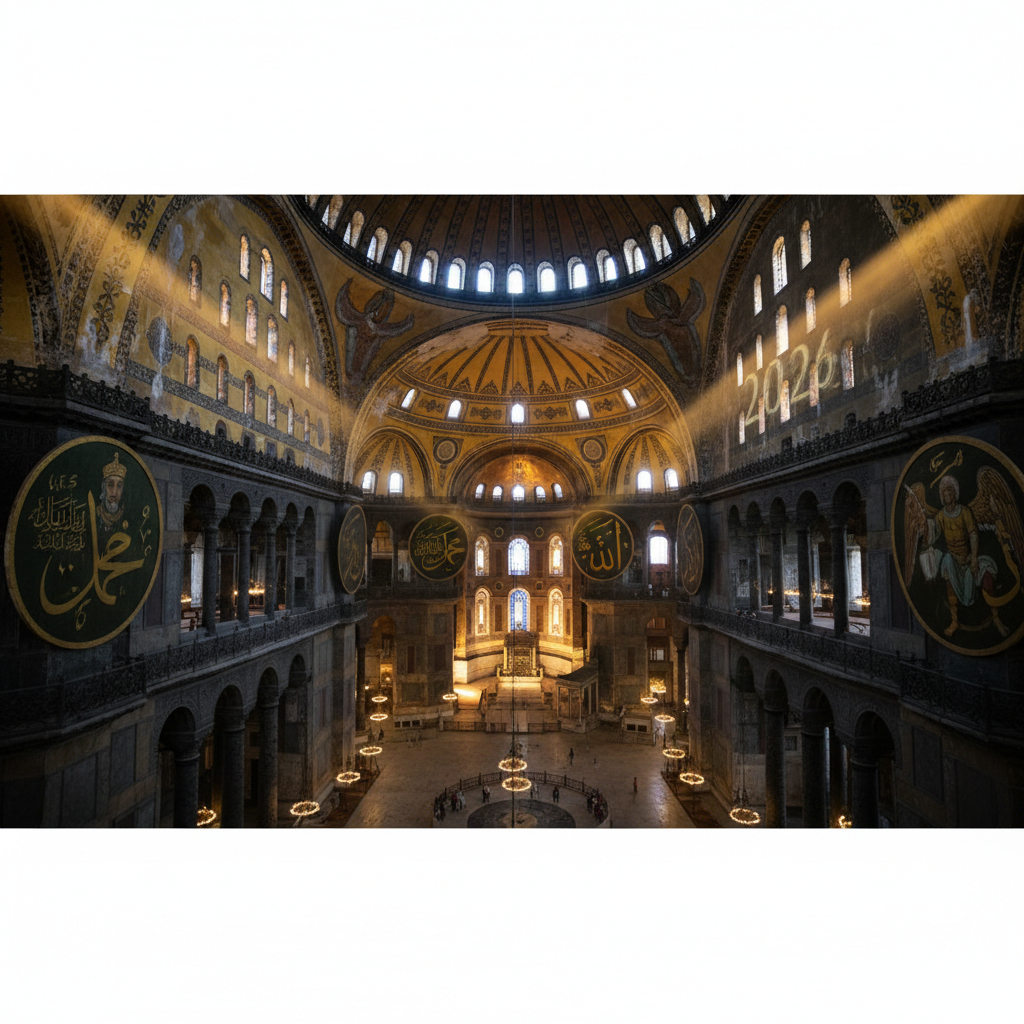
Hagia Sophia: Light and Shadow – A Visual Feast in the Footsteps of Time (2026)
In 2026, within the heart of Istanbul, Hagia Sophia, one of humanity's most captivating structures, continues to mesmerize its visitors with its mystical atmosphere. Specifically, the interplay of Hagia Sophia: Light and Shadow serves as an invitation to explore the architecture, decorations, and profound depths of this unique edifice. From sunrise to sunset, beams of light filtering through window frames or highlighted by artificial illumination animate each corner with a distinct spirit, while shadows on the walls seem to carry whispers from the past. Hagia Sophia is, therefore, more than just a structure; it is an artistic meeting point of light and shadow, offering a truly unique experience of Hagia Sophia: Light and Shadow.
The Mystical Dance of Light and Shadow in Hagia Sophia
Certainly, one of the many elements that make Hagia Sophia special is its internal lighting arrangement. Having hosted diverse cultures throughout its history, this structure has consistently created a spiritual atmosphere by utilizing light in its unique way across every era. Especially, natural sunlight filtering through the high windows elevates the colors of the mosaics and frescoes to an entirely different dimension, enhancing the experience of Hagia Sophia: Light and Shadow. For more on its physical evolution, explore Hagia Sophia's Architectural Evolution: A Journey Through Ages from Byzantium to the Ottomans and into 2026.
Hagia Sophia at Sunrise and Sunset: Illuminating History
Typically, in the early hours of the morning, the first rays of light hitting Hagia Sophia's dome offer visitors truly unforgettable moments. Conversely, at sunset, the reddish light entering through the windows on the western facade fills the interior with a warm and peaceful ambiance. These particular moments provide unique frames for photography enthusiasts and, moreover, a mystical experience for history buffs. Many Hagia Sophia's Traveler's Memoirs often highlight these exact moments, showcasing the beauty of Hagia Sophia: Light and Shadow.
Artificial Lighting: Highlighting Traces of the Past
Furthermore, artificial lighting systems added in the modern era also play a significant role in emphasizing Hagia Sophia's splendor. Especially in night shots or on overcast days, properly positioned spotlights reveal the inscriptions on the dome, intricate details on the columns, and embellishments in the niches. This strategic lighting makes the traces of both the Christian and Islamic periods of Hagia Sophia more pronounced, adding another layer to the Hagia Sophia: Light and Shadow narrative. The details revealed by this lighting often connect to Hagia Sophia's Mysterious Ink Traces, showcasing ancient seals and correspondence.
Hagia Sophia: Light and Shadow Stories in Layers of History
Hagia Sophia, after all, is a monument standing since the 6th century, with each layer bearing the marks of a different period. This profound history becomes even more evident with the captivating interaction of Hagia Sophia: Light and Shadow. From the Byzantine period to the Ottoman period, indeed, each layer gains a different meaning through the interpretation of light and shadow.
The Splendor of Byzantine Mosaics Through Light
Specifically, mosaics from the Byzantine Empire period stand out with their gold gilding and vibrant colors. The reflection of natural light on these mosaics creates an atmosphere akin to a dynamic art gallery. Important works, such as the "Deesis" mosaic in the South Gallery, exhibit different depths and brilliance depending on the angle of the light. These artistic expressions are often created by Hagia Sophia's Traveling Artists, whose stories are brought to life by the play of light, further enriching the narrative of Hagia Sophia: Light and Shadow.
The Ottoman Period and the Shadow of the Minbar
With Hagia Sophia's conversion into a mosque, the added minbar, mihrab, and monumental calligraphic panels subsequently created new areas of light and shadow within the interior. Especially at specific times, such as midday prayers, the shadow of the minbar stands as a silent witness to the structure's past service as a mosque. These shadows reflect the aesthetic and spiritual understanding of previous generations, enriching the experience of Hagia Sophia: Light and Shadow.
Mysterious Niches and Corridors: Whispers of the Past
Hagia Sophia also boasts many mysterious niches, intriguing corridors, and dimly lit corners. These areas offer visitors a sense of being intertwined with the past, where time truly seems to stand still. The small amount of light filtering through narrow windows adds a mystical air to these sections, while the resulting shadows seem to whisper stories. As of 2026, these parts still hold secrets waiting to be discovered by observant visitors, enhancing the overall experience of Hagia Sophia: Light and Shadow. Many of these hidden areas might even contain traces of Hagia Sophia's Mysterious Touches – ancient handprints and footprints.
The Architectural Significance of Hagia Sophia's Light and Shadow Interaction
Ultimately, Hagia Sophia's architecture is meticulously designed to profoundly impact visitors by consciously utilizing light and shadow. This is not merely an aesthetic choice; indeed, it also serves a spiritual purpose. The feeling of infinity within the structure largely stems from this ingenious lighting strategy, making Hagia Sophia: Light and Shadow a core architectural principle.
Divine Light Reflected on the Dome
Remarkably, Hagia Sophia's magnificent dome gives the impression of being suspended from the sky. Light filtering through the 40 windows around the dome eliminates the dome's perceived weight, making it appear as a source of divine light. This unique window arrangement is a testament to the architectural genius of Anthemius and Isidore. Thus, Hagia Sophia: Light and Shadow form an inseparable whole. To learn more about the structure's design, you can consult resources like the Khan Academy's overview of Hagia Sophia.
The Dance of Columns and the Depth of Space
Moreover, the colossal columns within the structure gain a more dynamic appearance thanks to the captivating play of light and shadow. Areas receiving bright light reveal all the intricate details of the columns, while sections remaining in shadow add depth and mystery to the space. This allows, therefore, everyone entering the space to have different perceptions at varying times, truly showcasing the power of Hagia Sophia: Light and Shadow.
Guide to Experiencing Hagia Sophia: Light and Shadow (2026)
The best way to truly visit Hagia Sophia is to fully immerse yourself in the visual feast offered by light and shadow. Here are some invaluable tips for guests visiting Hagia Sophia in 2026 to fully appreciate Hagia Sophia: Light and Shadow:
- Early Hours and Sunset: Visit during the first hours after opening or near sunset as closing approaches. During these times, the light is softer and the atmosphere is considerably more mystical. Crowds are also typically smaller.
- Observe from Different Angles: Do not just stay in the main hall. Ascend to the upper galleries to fully appreciate how the structure looks from varying perspectives. Each angle, undoubtedly, tells a different Hagia Sophia: Light and Shadow story.
- When Taking Photos: Aim to capture moments where light and shadow combine harmoniously. Especially mosaics and domes make for truly wonderful photographs under natural light. Critically, avoid using flash, as it can cause glare and potentially damage the historical texture. Photography tips for architectural marvels can be found on sites like National Geographic's travel photography guides.
- Reflect in a Quiet Moment: Find a peaceful corner away from the crowds and quietly observe how the light subtly transforms the space. This will significantly help you to understand the spirit of Hagia Sophia more deeply, appreciating the nuances of Hagia Sophia: Light and Shadow.
- Guided Tours: By joining guided tours, you can learn more about the mystical stories and architectural details related to light and shadow. Some guides specifically explain the secrets of the structure with the help of light. For a comprehensive experience, consider reviewing a Hagia Sophia Traveler's Guide 2026 to plan your visit efficiently.
Hagia Sophia: A Timeless Masterpiece of Light and Shadow
In 2026, Hagia Sophia continues to enchant humanity with its aesthetic and spiritual value, truly carried from past to present. In fact, Hagia Sophia: Light and Shadow is not just an architectural detail but also a fundamental element reflecting the structure's identity, history, and soul. Every beam of light, every shadow, is undeniably part of a millennia-old story. Within this colossal structure, to experience a journey beyond time, simply allow light and shadow to guide you. Hagia Sophia is one of those rare places where human craftsmanship and divine inspiration unite, where every visitor embarks on a unique journey within their own inner world. The profound impact of such historical sites on human perception is a topic often discussed by academics, such as those found on World History Encyclopedia.
To experience this unparalleled journey, to meet history, art, and one of humanity's greatest achievements, you must visit Hagia Sophia. Witness the magical dance of light and shadow, delve into the profound depths of this magnificent structure, and thereby discover your own story through the lens of Hagia Sophia: Light and Shadow.