Hagia Sophia's Mysterious Reflection: Ancient Mirrors, Optical Illusions, and 2026's Visual Secrets
Hagia Sophia continues to mesmerize visitors with its unique architecture, historical layers, and profound visual depth. Delve into the captivating Hagia Sophia optical illusions and the ancient use of mirrors that enhance the building's mystical ambiance. Even in 2026, new visual secrets are constantly being revealed within its walls.
Hagia Sophia's Optical Illusions: Ancient Mirrors, Visual Secrets, and Timeless Wonders
Hagia Sophia is a unique structure that has captivated visitors throughout the ages with its architecture, historical layers, and visual depth. This is especially true for Hagia Sophia's optical illusions and the use of mirrors from ancient times. These elements add a different dimension to the mystical atmosphere of the building. Even as of 2026, the visual secrets awaiting discovery in every corner of this ancient structure continue to attract the admiration of visitors, making Hagia Sophia's optical illusions a truly fascinating subject.
Historical Origins of Hagia Sophia's Optical Illusions
The optical illusions used in the construction of Hagia Sophia showcase the mastery and engineering genius of the architects. While getting lost in the grandeur and magnificence of the structure, it is immediately apparent that the use of light and perspective was consciously designed. Therefore, these illusions were used not only for aesthetic concerns but also to imbue religious and symbolic meanings. For more insights into the deeper meanings, explore the hidden meanings of Hagia Sophia and how they relate to Hagia Sophia's optical illusions.
Deepening the Perception of the Interior Space through Optical Illusions
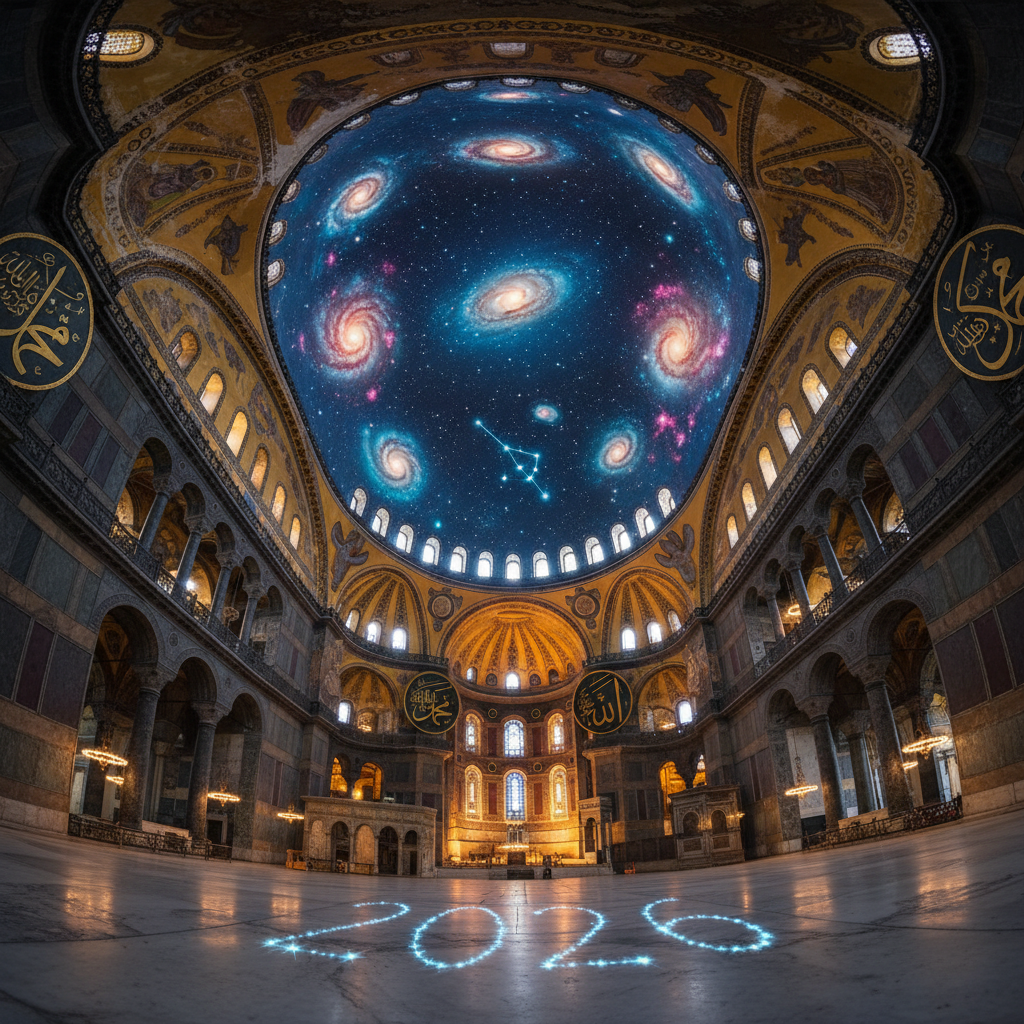
- The feeling that the massive dome of the structure is suspended in mid-air is a central illusion. The light entering through the surrounding windows seemingly melts the base of the dome, creating this effect, a prime example of Hagia Sophia's optical illusions.
- Furthermore, the colorful mosaics and reflective surfaces of the marbles used make the space appear larger and more spacious than it is.
- Motifs and patterns that change when viewed from different angles offer visitors a continuous discovery experience, highlighting the cleverness of Hagia Sophia's optical illusions.
Materials Used and Light Play in Hagia Sophia's Optical Illusions
The marbles, onyx stones, and mosaics used in the construction of Hagia Sophia interact effectively with light to create its celebrated Hagia Sophia optical illusions. Especially the gold-leafed mosaics, even in dim light, shimmer to create a divine atmosphere and increase spatial depth. You can learn more about these captivating materials and their journey in Secrets Beneath Hagia Sophia's Marble, which contribute to the stunning Hagia Sophia's optical illusions.
The Role of Ancient Mirrors in Hagia Sophia's Optical Illusions
It is believed that during and after the construction of Hagia Sophia, reflective surfaces and their capacity to create Hagia Sophia optical illusions were used with great skill. Although ancient mirrors have not been directly discovered, we can infer these effects from the lighting and reflective materials used in the building, which are central to Hagia Sophia's optical illusions.
Strategic Placement of Reflective Surfaces for Optical Illusions
- The placement of polished marbles and mosaics at specific angles both directs natural light into the interior and makes the interior appear brighter, enhancing Hagia Sophia's optical illusions.
- Moreover, reflective surfaces on the ceiling and walls amplify the sparkle of candlelights and oil lamps, enhancing the mystical atmosphere of the space.
- These surfaces might also have helped to highlight specific points during religious ceremonies. For centuries, various forgotten rituals took place within these very walls, often accentuated by Hagia Sophia's optical illusions.
Lighting Design and Reflection Effect in Hagia Sophia's Optical Illusions
Hagia Sophia's lighting design is not limited to natural light entering through windows. The oil lamps, chandeliers, and other lighting elements used in the interior combine with reflective surfaces to create a visual feast. These light plays illuminate the ceiling mosaics and dome frescoes from different angles, giving them a dynamic appearance. The interaction of light and architecture creates a celestial experience, drawing parallels to the sky through Hagia Sophia's mirror, all contributing to Hagia Sophia's optical illusions.
Discovering Hagia Sophia's Optical Illusions in 2026
Hagia Sophia, in 2026, continues to be like a living museum, hosting millions of tourists worldwide. Visiting the structure and personally experiencing these Hagia Sophia optical illusions and visual secrets offers an unforgettable experience. For current information on visiting, refer to official sources like the Turkish Museums official website.
Try Different Perspectives to Uncover Hagia Sophia's Optical Illusions
When touring Hagia Sophia, constantly change your perspective. Notice how the mosaics, columns, and dome look different when viewed from different heights and angles. Especially the view from the upper gallery allows you to understand the size of the space and the play of light more clearly, revealing more of Hagia Sophia's optical illusions.
Observe the Effect of Daylight on Hagia Sophia's Optical Illusions
Visiting Hagia Sophia at different times of the day helps you fully understand the structure's interaction with light. The soft lights in the early morning or the golden reflections in the afternoon allow the mosaics and architectural details to shimmer differently. This will certainly help you better understand the world of Hagia Sophia optical illusions.
Mysterious Corners and Visual Illusions: Exploring Hagia Sophia's Optical Illusions
Every corner of Hagia Sophia holds a unique story and a visual secret. Beyond the grand main space of the building, there are many mysterious corners and optical illusions awaiting discovery. Some parts even hint at Hagia Sophia's mysterious guardians, all contributing to the allure of Hagia Sophia's optical illusions.
The Emperor's Gate and the Mystery of the Columns in Hagia Sophia's Optical Illusions
As you pass through the Emperor's Gate at the entrance, pay attention to the columns around you. The illusion of some columns having different thicknesses or inclinations was consciously designed to increase the depth of the space. This is one of the engineering marvels of the period and an important part of understanding Hagia Sophia optical illusions.
The Weeping Column and Sensations of Touch: Another of Hagia Sophia's Optical Illusions
One of Hagia Sophia's most popular spots, the "Weeping Column," creates an illusion not only through the sensation of touch but also visually. The moisture in the column, combined with light, creates a gleaming surface, making it appear as if there are drops of water. This offers visitors both a mystical and a visual experience, a unique aspect of Hagia Sophia's optical illusions.
Hagia Sophia's Optical Illusions and Their Symbolic Meanings
The optical illusions in Hagia Sophia, beyond being mere aesthetic arrangements, carry deep symbolic meanings. These visual plays were used to strengthen the religious and political messages of the structure. Ultimately, Hagia Sophia's optical illusions encourage visitors to embark on a spiritual journey.
Perception of Divine Presence and Eternity through Hagia Sophia's Optical Illusions
The mighty dome and the divine light streaming through the windows reinforce the feeling of eternity and the presence of a transcendent being within the space. Optical illusions further enhance this divine experience, allowing visitors to lose themselves in a spiritual atmosphere. Academic research from institutions like Dumbarton Oaks often delves into these symbolic interpretations of Hagia Sophia's optical illusions.
Imperial Power and Might Reflected in Hagia Sophia's Optical Illusions
The immense scale of Hagia Sophia and the grandeur created by optical tricks reflect the power and might of the Byzantine Empire. The structure also carries a political message, implying that the rulers of the period possessed divine authority. In 2026, these messages are still imbued in the structure, partly due to Hagia Sophia's optical illusions.
Conclusion: Hagia Sophia's Timeless Visual Feast of Optical Illusions
Hagia Sophia is not just an architectural marvel, but also a living work of art that continuously offers new experiences to its visitors through light, perspective, and Hagia Sophia optical illusions. The traces of ancient mirrors and its visual secrets, still inspiring awe even in 2026, make this unique structure one of the most special places on the world heritage list. On your next visit to Istanbul, don't forget to set aside ample time to personally discover Hagia Sophia's mysterious reflections and its incredible optical illusions.