Hagia Sophia's Mysterious Icons and Symbolic World: Millennial Codes Deciphered in 2026
Hagia Sophia, standing majestically in Istanbul, is a treasure trove of history and symbolism. Far more than just an architectural marvel, its walls, mosaics, and every corner meticulously conceal mysterious symbols. From overt crosses to subtle patterns, these millennial codes are finally being deciphered in 2026, offering new insights into its spiritual and historical significance.
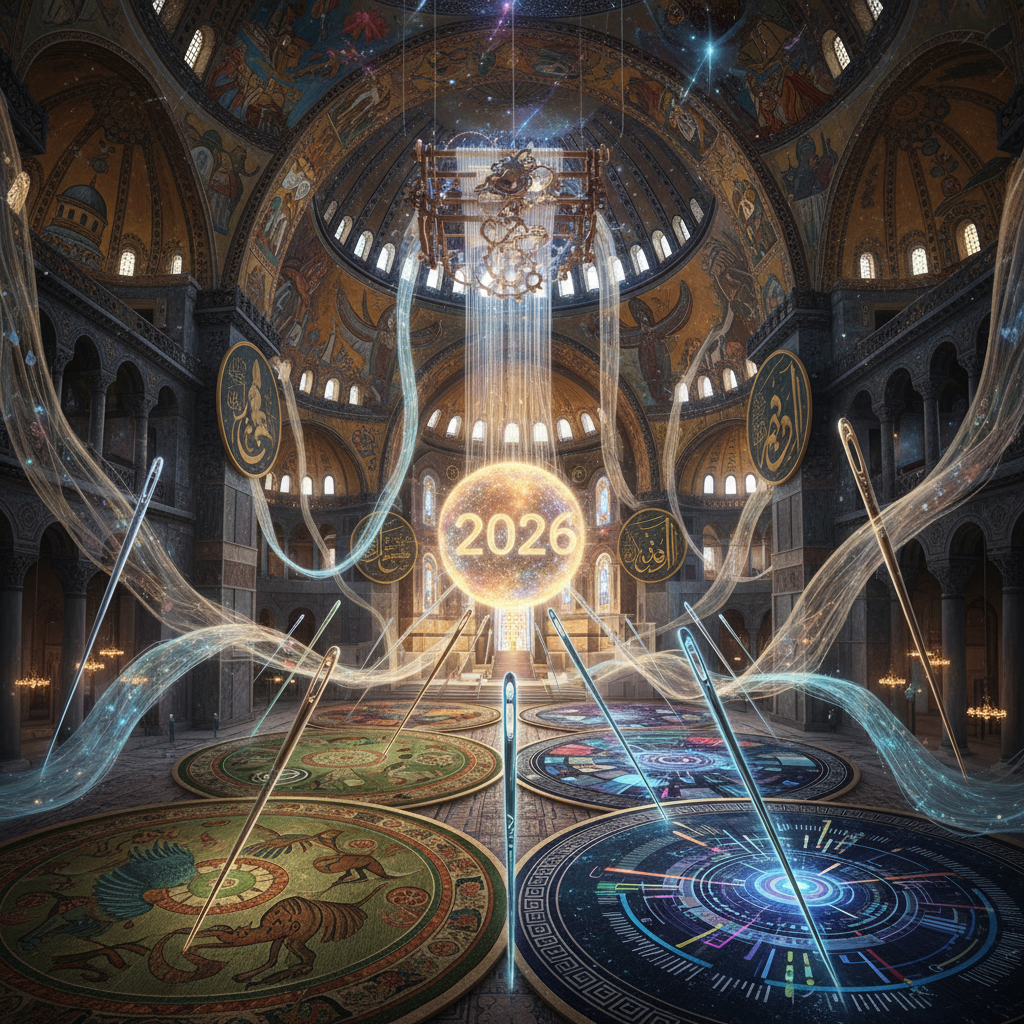
Hagia Sophia's Mysterious Symbols: Unraveling Millennia-Old Codes
Standing for centuries in the heart of Istanbul, breathtaking with its architecture and history, Hagia Sophia is far more than just a structure. It harbors countless stories embedded in its walls, thousands of secrets hidden in its mosaics, and Hagia Sophia's Mysterious Symbols concealed in every corner. These symbols can range from an openly visible cross to geometric patterns and mythological figures, carrying deep meanings that even experts have struggled to interpret for years. As of 2026, thanks to rapidly developing technology and increasing archaeological studies, most of these enigmatic symbols are now understood more clearly. In this article, we will take a deep dive into the fascinating world of Hagia Sophia's Mysterious Symbols, attempting to decipher its millennia-old codes together.
Early Christian Figures Among Hagia Sophia's Mysterious Symbols
Hagia Sophia has witnessed numerous cultural and religious changes since its construction. Moreover, these changes are clearly reflected in the building's architecture and decorations. Especially the walls, shaped by the influence of Christianity during its initial construction, serve as visual records of the Byzantine Empire's religious beliefs. These early Christian figures are key among Hagia Sophia's Mysterious Symbols.
Figures of the Virgin Mary and Child Jesus
Some of Hagia Sophia's most striking mosaics depict the Virgin Mary and Child Jesus. For instance, the Pantocrator Christ figure in the apse and the medallions above the Imperial Gate transport visitors to another dimension. Indeed, these figures reflect the belief system and artistic aesthetic of the period, adding to the rich tapestry of Hagia Sophia's Mysterious Symbols.
- Apse Mosaic: The figure of Jesus seated on the lap of the Virgin Mary shines magnificently against a gilded background.
- Mosaic Above the Imperial Gate: This mosaic, depicting Christ enthroned with Mary on his right and Archangel Gabriel on his left, emphasizes the divine origin of imperial authority through the emperor's prostration before Christ.
- Mary's Healing Power: The healing power attributed to Mary during the Byzantine period is also felt in the depictions on Hagia Sophia's walls.
These works are not merely religious figures. They also represent the pinnacle of Byzantine art. Every detail meticulously conveys the religious and political messages of the era, greatly contributing to Hagia Sophia's spiritual atmosphere and the understanding of Hagia Sophia's Mysterious Symbols.
Geometric Patterns: Mathematical Codes Among Hagia Sophia's Mysterious Symbols
Not only figurative but also abstract symbols of Hagia Sophia hold great importance. Particularly, the geometric patterns used in the ceiling and wall decorations of the interior space were crafted not just for aesthetic reasons but also with deep mathematical and cosmological meanings. These patterns symbolize the order of the universe, divine unity, and eternity, forming a significant part of Hagia Sophia's Mysterious Symbols.
Reflection of Universal Order
Squares, circles, triangles, and star motifs appear in every corner of Hagia Sophia. These motifs represent harmony and divine symmetry in the Universe. For example, octagonal motifs were frequently used. This form, also found in Islamic art, often symbolizes paradise and divine order, further enriching Hagia Sophia's Mysterious Symbols.
- Square and Circle: The square represents the world and matter, while the circle represents heaven and spirit. The perfect harmony of these two in Hagia Sophia shows the effort to unite both earthly and heavenly dimensions.
- Star Patterns: Especially eight and twelve-pointed stars are also seen in the decorations added during the Islamic period. These stars convey divine light and cosmic order.
- Interlocking Circles: Interlocking circle motifs, expressing eternity and unity, were used in both Byzantine and Ottoman periods, signifying continuity.
These patterns reveal the architects' and artisans' quest to create a sacred space beyond merely constructing a building. New research in 2026 indicates that these patterns are not just decorative but also incorporate specific mathematical ratios and astrological alignments. For a deeper look into the structure's hidden designs, explore the Hidden Sacred Spaces in Hagia Sophia, and uncover more of Hagia Sophia's Mysterious Symbols.
Ottoman Period Additions and Changing Symbolic Language
When Hagia Sophia was converted into a mosque after Sultan Mehmed the Conqueror's conquest of Istanbul, its symbolic language also changed significantly. While the Hagia Sophia's Mysterious Symbols from the Christian period were preserved, new decorations and additions in line with Islamic beliefs were made. This virtually transformed Hagia Sophia into a meeting point for the artistic and religious expressions of different civilizations, showcasing the evolution of Hagia Sophia's Mysterious Symbols.
Calligraphy and Islamic Motifs
One of the most striking elements of the Ottoman period additions are the massive calligraphic panels and Islamic motifs. Particularly the round panels inscribed with the names of Allah, Prophet Muhammad, the four caliphs, and Hasan and Husayn, located in the four corners of the inner courtyard, are powerful indicators of Hagia Sophia's new identity and add another layer to Hagia Sophia's Mysterious Symbols.
- Large Panels: The large calligraphic panels under Hagia Sophia's dome reach a diameter of 7.5 meters. These panels were crafted by the most famous calligraphers of their time.
- Mihrab and Minbar: The mihrab (prayer niche) and minbar (pulpit) added when it was converted into a mosque determine the direction of prayer (qibla) and constitute the fundamental elements of worship.
- Tiles and Geometric Patterns: Iznik tiles and geometric Islamic patterns added at various times have enriched the interior texture of Hagia Sophia.
These additions not only represent a religious transformation but also showcase the artistic and cultural power of the Ottoman Empire. Hagia Sophia continued to be a center of artistic and architectural innovation during this period as well. Discover more about the intricate details including the Mystical Lanterns that illuminated these changing eras, further revealing Hagia Sophia's Mysterious Symbols.
Mysterious Handprints and Legends Surrounding Hagia Sophia's Symbols
On Hagia Sophia's walls and columns, there are not only official artistic works but also Hagia Sophia's Mysterious Symbols and traces that are subject to legends passed down by word of mouth. These legends strengthen the mystical atmosphere of the structure and stimulate visitors' imagination, making the exploration of Hagia Sophia's Mysterious Symbols even more captivating.
The Sweating Column and the Weeping Mary
A column inside Hagia Sophia, known as the "Sweating Column," particularly attracts tourists. It is believed that wishes made by those who insert their finger into the hole on top of this column will come true. While scientifically attributed to humidity, this phenomenon has gained a miraculous quality among the populace, adding to the mystique of Hagia Sophia's Mysterious Symbols.
- Wishing Well: The hole around the column is also called the "wishing well." The origins of this practice date back to the Byzantine period.
- Legend of the Weeping Mary: Another legend tells that drops of water flowed from the eyes of a Mary figure in a special mosaic, and this water was believed to have healing properties.
Such legends show that Hagia Sophia is not merely made of stone and mortar. Instead, it is a living organism embodying humanity's beliefs, hopes, and imaginations. Even in 2026, the allure of these legends continues to captivate visitors to Hagia Sophia. Further insights into the building's hidden auditory wonders can be found by exploring Hagia Sophia's Mystical Water Sounds, which are part of the broader narrative of Hagia Sophia's Mysterious Symbols.
Hagia Sophia's Layered Identity and Modern Interpretations of its Symbols
Today, Hagia Sophia holds a unique position, serving as both a museum and a place of worship. This multi-layered identity further enriches its symbolic meaning and offers a different experience to each visitor. As of 2026, the universal symbolism of Hagia Sophia is being discovered by a broader audience worldwide. Indeed, Hagia Sophia's Mysterious Symbols are not just traces from the past but also codes that offer new meanings to people today.
Global Heritage and Cultural Dialogue
Hagia Sophia is considered a common heritage of human history. This structure, where different civilizations have converged, has become a symbol of cultural dialogue and tolerance. Its inclusion in the UNESCO World Heritage list is the most concrete indicator of this situation. For more information on UNESCO's role in preserving global heritage sites like Hagia Sophia, visit the UNESCO World Heritage Centre, and delve deeper into Hagia Sophia's Mysterious Symbols.
- Architectural Superiority: Hagia Sophia's dome architecture has been seen as a cosmic symbol as well as an engineering marvel.
- Future Research: In 2026 and subsequent years, new archaeological and scientific studies on unknown symbols and details in Hagia Sophia will continue. Dive into the world of newly uncovered documents with our article on Hidden Manuscripts of Hagia Sophia, which may shed more light on Hagia Sophia's Mysterious Symbols.
- Visitor Experience: With the help of digital technologies, visitors can now explore Hagia Sophia's symbolic layers in a more interactive way. Learn more about the contributions of patrons and their impact on such experiences via the Hagia Sophia's Traveling Billionaires and Patrons.
In conclusion, Hagia Sophia's Mysterious Symbols transform it from merely a structure into a living library of history, faith, and art. In every stone, every mosaic tile, and every calligraphic panel lies a compilation of thousands of years, with profound meanings awaiting its visitors. Visiting Hagia Sophia is not just seeing a place, but also transcending time to witness one of the most captivating symbolic narratives in human history. To explore an external resource on Byzantine architecture and its influence, you can refer to an academic overview from the Encyclopedia Britannica, further enriching your understanding of Hagia Sophia's Mysterious Symbols.