Mysterious Foundations of Hagia Sophia: The Underground World and Unseen Connections (2026)
Rising in the heart of Istanbul, Hagia Sophia, defying centuries, is a breathtaking structure with its architecture and history. However, the secrets beneath this magnificent building attract the attention of many visitors and history enthusiasts. Especially the Hagia Sophia underground tunnels have been the subject of both urban legends and scientific research. These tunnels tantalize with untold stories and undiscovered connections, inviting exploration into this iconic monument's hidden depths in 2026.
Exploring Hagia Sophia's Underground Tunnels: Secrets Beneath the Surface
Rising in the heart of Istanbul, Hagia Sophia, defying centuries, is a breathtaking structure with its architecture and history. However, the secrets beneath this magnificent building attract the attention of many visitors and history enthusiasts. Especially the Hagia Sophia's Underground Tunnels have been the subject of both urban legends and scientific research. These tunnels reveal not only the visible face of Hagia Sophia but also the thousands of years of mystery hidden in its depths. New research and discoveries as of 2026 have enabled us to learn more about these underground networks, further enhancing our understanding of when Hagia Sophia was built and how it evolved. Mysteries & Legends of Hagia Sophia
Unveiling Hagia Sophia's Underground Tunnels: A Historical Overview
Hagia Sophia is a unique structure that has hosted many civilizations from the Roman Empire to the Ottoman Empire and the Republic of Türkiye today. With such a deep-rooted history, countless secrets have accumulated beneath the structure. The Hagia Sophia's Underground Tunnels are one of the most exciting parts of these secrets. These tunnels refer to a complex network that may have been used for different purposes during or after the construction of Hagia Sophia. For a broader appreciation of the site's rich past, exploring ancient paths and mysterious trails around Hagia Sophia can provide additional context.
The Discovery Process of the Underground Tunnels
The underground structures of Hagia Sophia have been the subject of legends for centuries. However, scientific discoveries gained momentum, especially since the late 20th century. The first serious research began in the 1930s and has been enriched with new findings from time to time. Particularly in recent years, developed ground-penetrating radars (GPR) and seismic analyzes have provided important data to create a clearer map of these tunnels, shedding light on Hagia Sophia's Underground Tunnels.
Architectural Features of the Tunnels
The tunnels beneath Hagia Sophia generally consist of narrow passages, arched rooms, and sometimes sections opening to water cisterns. Some tunnels were built among the solid stone blocks forming the foundation of the structure, while others were built over the remains of older structures. A large part of these tunnels were built using brick and mortar, but building materials from the Roman period have also been found in older sections thought to belong to the Byzantine period. These architectural features are crucial to understanding Hagia Sophia's Underground Tunnels.
Purpose and Uses of Hagia Sophia's Underground Tunnels
The Hagia Sophia's Underground Tunnels have been used for different purposes throughout history. The existence of these tunnels shows how much of an advanced engineering marvel the structure is, not only with its visible beauty but also with its functionality, echoing the mathematical elegance and divine proportions seen in its design.
Water Supply and Infrastructure
Water supply was of great importance during and after the construction of Hagia Sophia. Some of these tunnels may have been used to transport water to massive cisterns or to drain wastewater. Many large water cisterns have already been discovered around and beneath Hagia Sophia. Tunnels connected to these cisterns were an important part of the structure's water management system, highlighting the practical uses of Hagia Sophia's Underground Tunnels.
Secret Passages and Escape Routes
During the Byzantine Empire, Hagia Sophia was both a religious and political center. The safety of emperors and high-ranking clerics was always a priority. Therefore, it is thought to have been used as secret passages to safely leave the structure in case of possible attacks or dangers. There are legends that such tunnels connected to the palace or other important buildings, adding to the mystique of Hagia Sophia's Underground Tunnels.
Storage and Preservation Areas
Some underground sections are thought to have been used to store Hagia Sophia's valuable items, archives, or materials used in worship. These underground rooms, where humidity and temperature were more stable, may have provided ideal environments for the long-term preservation of certain materials. This aligns with historical insights into the cultural significance of the building, which also housed hidden manuscripts and ancient library secrets, further emphasizing the importance of Hagia Sophia's Underground Tunnels.
Legends and Facts: Intriguing Stories of Hagia Sophia's Underground Tunnels
The tunnels lying beneath Hagia Sophia have been the subject of various legends and rumors among the public for years. These legends have further reinforced the mystical atmosphere of the structure, particularly concerning Hagia Sophia's Underground Tunnels.
Legends of the Golden Room and Hidden Treasure
One of the most popular legends is that unique treasures belonging to the Byzantine Empire are hidden in a secret room beneath Hagia Sophia. This room is said to be hidden in the deepest points of the tunnels and can only be found at a certain time or with a certain sign. Although these legends attract the attention of treasure hunters, no concrete evidence has been found regarding these specific sections of Hagia Sophia's Underground Tunnels.
Tunnels Extending to the Sea
Another common legend is that there are secret tunnels starting from Hagia Sophia and extending to the Sea of Marmara. These tunnels are said to have allowed emperors to escape by sea in times of danger. Although historical sources do not explicitly mention such a connection, the existence of many tunnel structures reaching the seaside in Istanbul's historical infrastructure is known, adding to the allure of Hagia Sophia's Underground Tunnels.
Connection with Other Historical Structures
According to rumors, the tunnels beneath Hagia Sophia are directly connected to Topkapı Palace, the Basilica Cistern, and even other important Byzantine structures that existed during the initial construction of Hagia Sophia. These connections are claimed to have been part of a large underground city. However, current archaeological and scientific studies have not yet definitively confirmed the existence of such an extensive network of connections. For more intriguing details about the surrounding area, the hidden gems of Istanbul offer further historical exploration, including potential links to Hagia Sophia's Underground Tunnels.
Hagia Sophia's Underground Tunnels: Future Discoveries and Research in 2026
With the development of technology, research on the Hagia Sophia's Underground Tunnels has also gained momentum. As of 2026, studies in this area are being carried out with more modern methods.
Developing Technologies and Research Methods
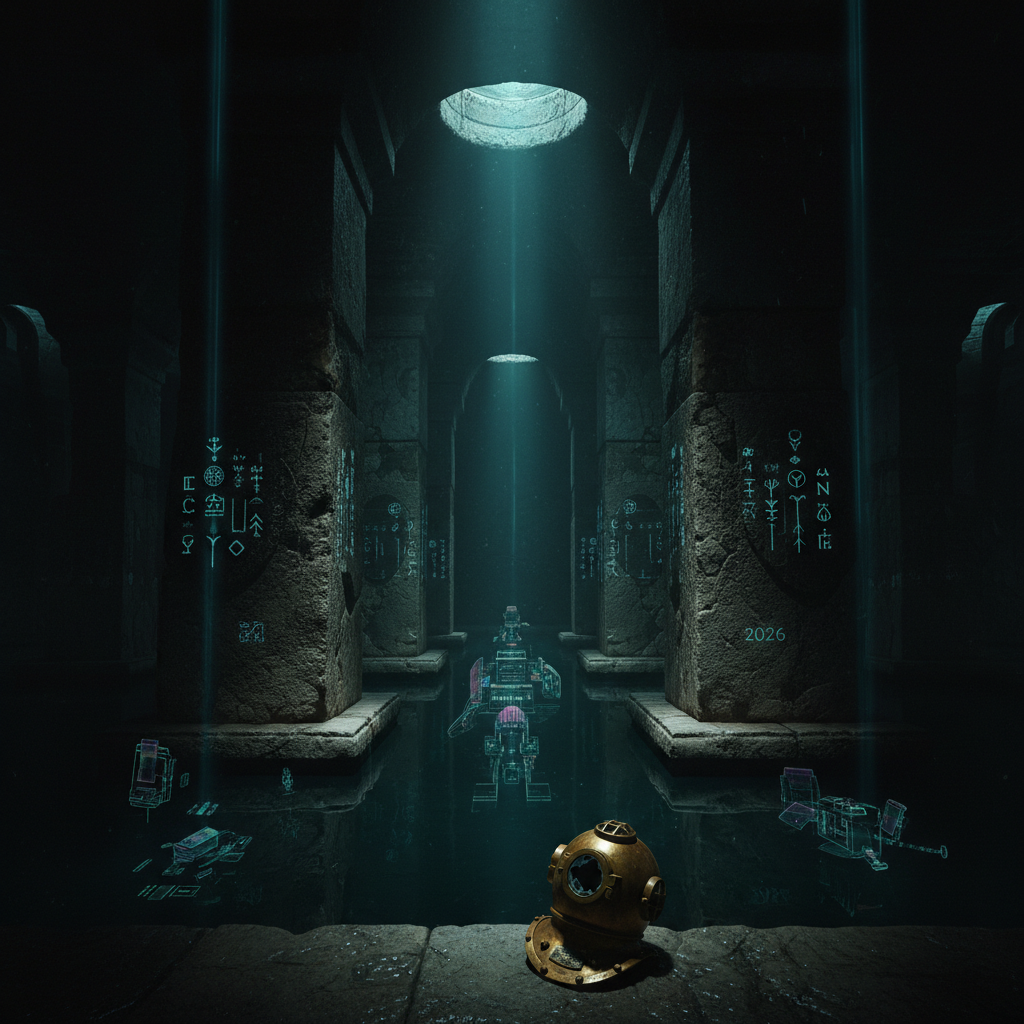
Today, advanced technology equipment such as ground-penetrating radars (GPR), lidar scans, 3D modeling techniques, and even thermal cameras are being used to map the voids and structures beneath Hagia Sophia more precisely. These technologies greatly facilitate the determination of the location, depth, and potential connections of the tunnels. Robotic exploration vehicles, in particular, are sent into narrow and dangerous tunnels where human access is difficult, collecting valuable data about Hagia Sophia's Underground Tunnels.
New Findings and Emerging Secrets (2026)
Some pioneering research conducted in 2026 provides clues about the existence of new tunnel networks and hidden rooms beyond current maps. Especially beneath the western and southern wings of Hagia Sophia, previously undocumented architectural remains have been found. These remains are thought to belong to the initial construction phases of the building or even to earlier Roman periods. Archaeologists state that these new findings will help us reinterpret not only the function of the tunnels but also the general historical development of Hagia Sophia, including its extensive Hagia Sophia's Underground Tunnels.
Areas Open to Visitors and Tourism Potential
Currently, a large part of the underground tunnels of Hagia Sophia is closed to visitors for safety and preservation purposes. However, in the future, it is aimed to open certain sections to tourists with appropriate security measures and without damaging the structure. This will allow tourists to experience not only the high-level beauty of Hagia Sophia but also the mysterious world in its depths. Digital tours and virtual reality applications are also among the potential tools that can be used to introduce these tunnels to the world. For a glimpse into the ongoing global fascination, see Hagia Sophia's Global Standing: Interactions and 2026 Projections, which may include future access to Hagia Sophia's Underground Tunnels.
Preservation of Hagia Sophia's Underground Tunnels for Future Generations
Hagia Sophia is a unique structure on the UNESCO World Heritage List, and its preservation, both visible and underground components, is of great importance. The Hagia Sophia's Underground Tunnels are an important and delicate part of this heritage.
Success of Conservation Efforts
The conservation of underground structures requires complex engineering work such as humidity control, monitoring of structural integrity, and reinforcement against possible earthquakes. Expert teams are constantly working to prevent damage to these tunnels and rooms due to natural conditions, human interaction, or wear over time. Especially in recent years, developed biodegradable protective materials and advanced drainage systems have proven effective in extending the lifespan of underground structures. For more on historical preservation challenges, a relevant resource is UNESCO's work on historic areas of Istanbul, which includes efforts to protect Hagia Sophia's Underground Tunnels.
Education and Awareness Raising
Increasing public awareness about Hagia Sophia's underground heritage is vital for the preservation of these structures. Through educational programs, documentaries, interactive exhibitions, and digital platforms, the cultural and historical value of these mysterious tunnels is conveyed to broad audiences. Especially for new generations to embrace this heritage, innovative approaches are being developed to attract their interest in Hagia Sophia's Underground Tunnels.
Continuous Research and Documentation
The underground world of Hagia Sophia still contains many unknowns. Therefore, regular and continuous archaeological, geological, and architectural research is of great importance. All obtained data must be meticulously documented to form a basis for future research and conservation efforts. In this way, historical clues in every square centimeter beneath Hagia Sophia will be carefully recorded and presented to the scientific world, including new insights into Hagia Sophia's Underground Tunnels.
In conclusion, Hagia Sophia is fascinating not only with its magnificent dome but also with the Hagia Sophia's Underground Tunnels hidden in its depths. These tunnels offer a unique window to understand the multi-layered history of the structure. New discoveries in 2026 and beyond will help to further illuminate this mysterious underground world and prove that the secrets of Hagia Sophia will never end.