Empress Zoe Mosaic
The Imperial Mosaic Panel
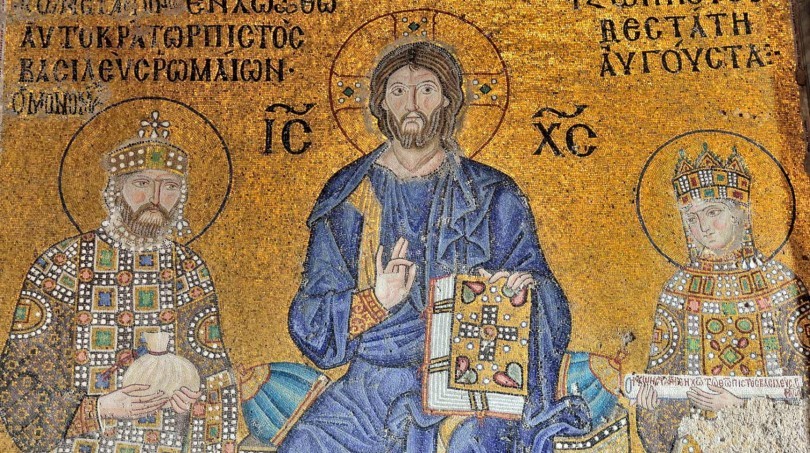
The Empress Zoe mosaic, also known as the Zoe Panel, is one of the most fascinating Byzantine mosaics in Hagia Sophia. Located in the south gallery, this 11th-century masterpiece depicts Christ Pantocrator flanked by Emperor Constantine IX Monomachos and Empress Zoe.
Historical Background
Empress Zoe (c. 978-1050) was one of the most powerful women in Byzantine history. She ruled as empress regnant from 1028 until her death, through marriages to three different emperors. The mosaic panel has been altered multiple times - the faces of the emperor and empress were changed to reflect Zoe's different husbands, making it a unique historical document.
Composition & Symbolism
Christ sits enthroned in the center, holding the Gospels and making a gesture of blessing. On his left stands Constantine IX offering a bag of gold (symbolizing his donations to Hagia Sophia), while on his right stands Zoe holding a scroll (representing imperial decrees). Both wear elaborate imperial regalia including purple robes and jeweled crowns.
The Altered Faces
Art historians have discovered that the faces in this mosaic were changed at least twice. The emperor's face was originally that of Zoe's first husband, Romanos III, then changed to represent her second husband, Michael IV, and finally altered to show Constantine IX. Evidence of these changes can still be seen in the irregularities of the mosaic tesserae.
Location in Hagia Sophia
The Zoe Panel is located in the south gallery, accessible via the stone ramp from the north nave. It sits on the eastern wall, positioned to catch the light from the gallery windows.
Artistic Significance
The mosaic represents the height of middle Byzantine art, featuring the characteristic gold background, formal frontality, and spiritual symbolism of the period. The detailed rendering of the imperial costumes provides valuable information about Byzantine court dress.
Visitor Tip
Visit in the late morning when sunlight illuminates the gold tesserae, making the mosaic shimmer with an ethereal glow.