Hagia Sophia's Mysterious Hues: Pigment Whispers and Artistic Identity from the Past to 2026
Hagia Sophia's colors have always been a captivating reflection of aesthetics, symbolism, and architectural genius. Even in 2026, the pigments in its mosaics and frescoes continue to whisper tales from the past. This article delves into the enduring historical narratives encapsulated within Hagia Sophia's vibrant hues, exploring their journey from antiquity to the present.
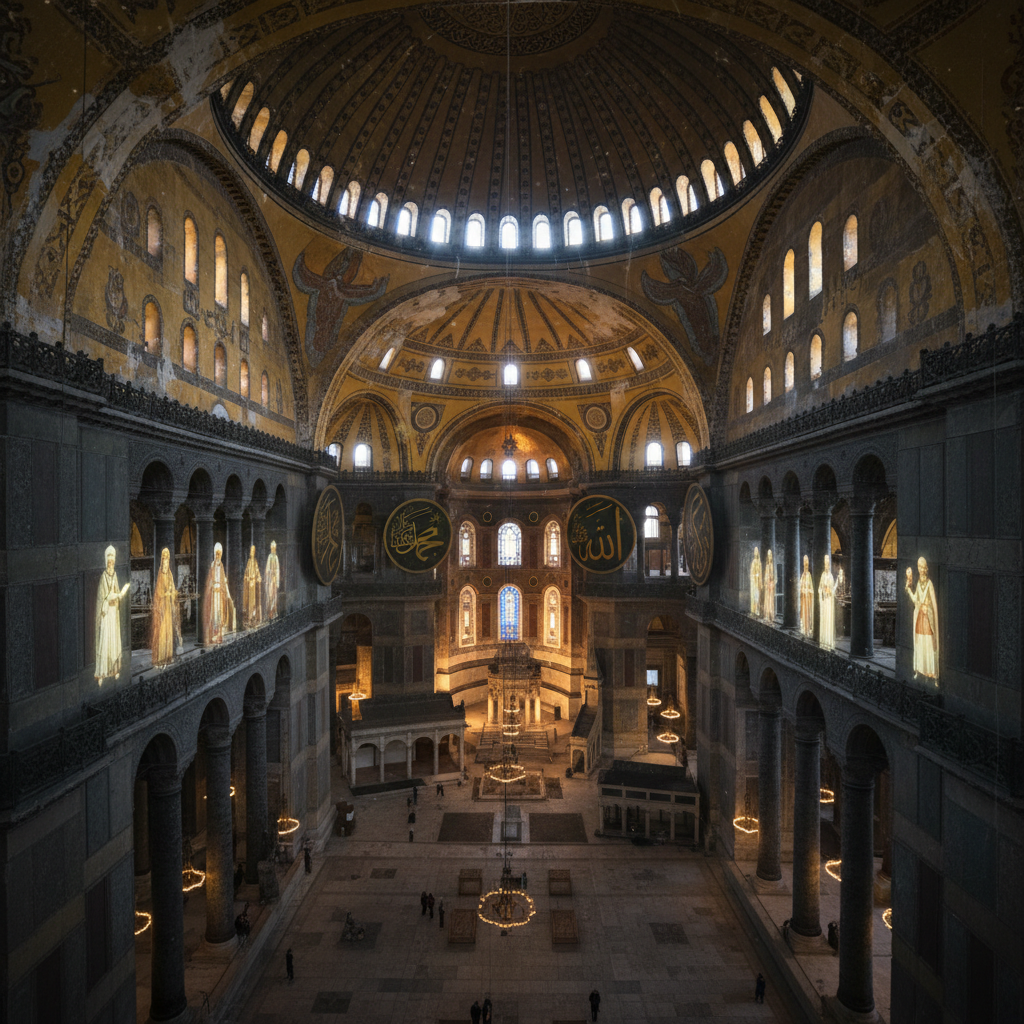
Hagia Sophia's Hues: Whispers of Pigments and Artistic Identity from the Past to 2026
Hagia Sophia's Hues have been a captivating reflection of aesthetics, symbolism, and architectural genius throughout this monumental structure's fifteen-hundred-year history. Even as we enter 2026, the pigments on the walls, in the mosaics, and the frescoes of Hagia Sophia continue to convey whispers of the past to visitors. In this article, we will delve into the color palette that forms Hagia Sophia's artistic identity, exploring its historical evolution and its contemporary significance. We will witness the role colors have played in the mystical atmosphere of Hagia Sophia.
For more insights into the hidden artistic layers and ongoing efforts to preserve Hagia Sophia, explore our article on Hagia Sophia's Traveling Artisans: A Handicraft Journey from Ancient Techniques to 2026 Restorations, which details the meticulous work involved in maintaining its splendor.
Hagia Sophia's Hues: A Palette Spanning from the Byzantine to the Ottoman Eras
Hagia Sophia's color palette has undergone significant changes according to the building's function and the artistic trends of its time. Since its initial construction in 537 A.D., the grandeur of its interior reached its peak with the Hagia Sophia's Hues used. During the Byzantine Empire, the main colors of Hagia Sophia were typically vibrant and sacred tones such as gold, blue, and red.
Gold and Blue in Byzantine Mosaics: A Reflection of Heaven
One of the most striking features of the Byzantine period is the mosaics used in Hagia Sophia's interior decoration. In these mosaics, the brilliance of gold represented divine light, while rich blue tones often symbolized the celestial realm and the Virgin Mary. Red, on the other hand, conveyed martyrdom and power. These colors were important symbols carrying the religious meanings of that era, contributing to the rich tapestry of Hagia Sophia's Hues.
- Gold: Divine light, splendor, eternity.
- Blue: Celestial realm, wisdom, purity of the Virgin Mary.
- Red: Martyrdom, power, imperial authority.
In this period, marble revetments and colored stones also added a natural aesthetic to the structure. Purple, green, and white marble panels enhanced the richness of the interior, while the unique veins and tones of each stone created a natural pattern.
Reinterpretation of Colors in the Ottoman Era
When Hagia Sophia was converted into a mosque after the conquest of Istanbul in 1453, many of the Byzantine mosaics were plastered over. However, new colors and aesthetic understandings were also added to the structure during the Ottoman period. The original Hagia Sophia's Hues gained a new interpretation with this transformation. Green, black, red, and gold tones used in inscriptions and calligraphy reflected the richness of Islamic art.
The names of God, Muhammad, the four caliphs, and their descendants, inscribed on large panels, were usually rendered in gold leaf on a black or dark green background. This color combination represented prestige and deep meaning. Newly added elements such as the minbar, mihrab, and pulpit were also typically adorned with colored stones, wood carvings, and mother-of-pearl inlays. Especially due to the influence of tile art, blue and turquoise tones also found their place in the interior of Hagia Sophia during the Ottoman period, further diversifying Hagia Sophia's Hues.
Symbolic Color Meanings and Artistic Expressions of Hagia Sophia's Hues
Every color on Hagia Sophia's walls is not just a pigment but also a symbol carrying deep meaning. These Hagia Sophia's Hues convey messages from beyond time to today's visitors. The building's use as both a church and a mosque has further enriched the symbolic layers of its colors.
The Role of Colors in Christian Art
In Byzantine iconography, colors were an integral part of sacred figures and narratives. Red symbolized the blood shed on the cross and martyrdom, while purple or imperial blue represented imperial and divine authority. White connoted purity and divine light, and black evoked death and mourning. In Hagia Sophia's mosaics, these symbolic meanings were emphasized by the meticulous selection of each color, showcasing the depth of Hagia Sophia's Hues.
For instance, the colors of the garments in the figures of Mary and John depicted in the Deesis mosaic reflect their religious identities and their place in heaven. Gold tones aimed to offer a spiritual experience to the viewer by highlighting the splendor of heaven and divine presence.
Harmony of Color and Patterns in Islamic Architecture
In the calligraphy and tiles added to Hagia Sophia during the Ottoman period, colors also held symbolic value. Green often expressed paradise and sanctity, while blue and turquoise tones represented peace and tranquility. Geometric patterns and floral motifs, when combined with colors, showcased the abstract and aesthetic aspects of Islamic art. These elements added a new dimension to Hagia Sophia's mystical atmosphere.
During this period, patterns created with the harmony of different colored marbles and stones also enhanced the visual richness of the interior. The natural colors used in woodworking added warmth and elegance to the overall aesthetic of the structure. The Hagia Sophia's Hues were revitalized with a new cultural and artistic interpretation.
Delve deeper into the artistic expressions that have adorned Hagia Sophia throughout its history by reading about Hidden Poems of Hagia Sophia: Verses on the Walls and 2026's Literary Whispers.
Hagia Sophia's Hues in 2026: Restoration and Conservation Efforts
In the current year, 2026, efforts to preserve and restore Hagia Sophia's Hues are of great importance. Centuries of exposure to natural factors and human interventions have caused the original colors to fade or be damaged. Preserving the original colors of this structure, which is on the UNESCO World Heritage list, for future generations is an international responsibility.
Techniques Used in Mosaic Restorations
In the restoration of Hagia Sophia's mosaics, modern and traditional methods are used in combination. Micro-cleaning techniques, laser technology, and special chemicals gently clean the dirt and oxidation from the mosaic surfaces, revealing the original Hagia Sophia's Hues pigments. Expert restorers ensure the integrity of the mosaics by using new pieces compatible with the original materials in areas where tesserae (mosaic pieces) are missing.
These efforts aim to preserve the historical information contained in the mosaics, not just their aesthetic appeal. It is believed that every small color and pattern carries important clues about the past.
Maintenance of Frescoes and Marbles
The frescoes and marble cladding in Hagia Sophia also require regular maintenance and restoration. Humidity and temperature balance are critically important for the preservation of frescoes. Cracks and voids in marble surfaces are filled with special mortars to ensure the structural integrity. These meticulous efforts guarantee the longevity of Hagia Sophia's Hues and patterns. Scientific analyses of plasters and paints on the walls can also reveal hidden information lying beneath the original color layers.
During restoration, past erroneous interventions are also corrected. For example, paintings done with incorrect color tones are detected using modern technology, and applications closer to the original pigments are made. In this process, experts from different disciplines such as architectural history, art history, and material science come together to undertake a multidisciplinary approach.
For more on the current state of Hagia Sophia and its preservation challenges, refer to the UNESCO World Heritage Centre's official page on Hagia Sophia, which provides up-to-date information on its status and conservation efforts.
Visitor Experience in Hagia Sophia: The Impact of Hagia Sophia's Hues
For a tourist visiting Hagia Sophia, the colors of the structure create a powerful visual and emotional impact. As one steps inside, the grandeur of the dome, the sparkle of the mosaics, and the harmony of colors on the walls captivate the visitor. Hagia Sophia's Hues are one of the most important components of this unique ambiance. This color palette offers visitors a visual summary of fifteen hundred years of history.
The Dance of Light and Shadow: The Importance of Colors
Hagia Sophia's architecture was designed to allow natural light to enter the interior dramatically. This light, entering from different angles at different times of the day, constantly changes the colors of the mosaics and other decorations. Golden mosaics glowing in the early morning acquire different tones with softer light in the afternoon. This play of light and shadow demonstrates the dynamic interaction of colors, offering visitors a unique visual feast.
- The vibrancy of colors in the early hours of the day.
- Softer tones in the afternoon.
- Depth created by light from different angles.
Hagia Sophia's iconic windows and openings show how light is distributed within the interior. This special design, as part of the belief system during the Byzantine period, symbolized the descent of divine light to earth.
Colors Contributing to the Spiritual Atmosphere
Hagia Sophia's color palette is an important element that strengthens the spiritual atmosphere of the building. Sacred colors such as gold, blue, and red evoke a sense of reverence and awe in visitors. The green and blue tones added during the Islamic period create a feeling of peace and tranquility. The deep meanings of these colors make the time visitors spend in Hagia Sophia even more meaningful.
In every corner of Hagia Sophia, the spirit of past civilizations reaches us through colors. Hagia Sophia's Hues are not just an architectural detail but also a mirror of our cultural heritage and artistic expression. In 2026, the mystical whispers of these colors continue to tell their own story to every visitor.
To further enhance your understanding of the sensory experience within Hagia Sophia, consider exploring Hagia Sophia's Traveler Echoes: A Thousand Years of Resonations and 2026's Acoustic Secrets.
Hagia Sophia's Hues in the Future: Preservation and Sustainability
Colors have always played an important role throughout Hagia Sophia's fifteen-hundred-year history. In the future, the preservation of this heritage will be possible through sustainable methods and technological innovations. In 2026 and beyond, Hagia Sophia's Hues preservation strategies must also take into account challenges such as climate change and increasing tourist numbers.
Digital Preservation and Virtual Restoration
Digital technologies have become an important tool in the preservation of Hagia Sophia's Hues. High-resolution digital scans and 3D modeling create a detailed record of the structure's current state. This data guides future restoration efforts while also ensuring the preservation of the original colors and patterns in a virtual environment.
Virtual reality and augmented reality applications can allow visitors to experience Hagia Sophia's color palette during different periods. This helps history and art reach wider audiences, while also potentially reducing wear and tear on the physical structure.
For more on how digital techniques are revolutionizing heritage preservation, you can read articles on the ICOMOS (International Council on Monuments and Sites) website.
Environmental Awareness and Sustainable Tourism
Environmental awareness is crucial for the sustainability of Hagia Sophia's Hues and overall structure. Interior climate control, lighting, and humidity control systems must be continuously optimized for the preservation of the artifacts. Managing tourist flow and visitor education also play a critical role in preserving the structure. Conscious actions by visitors will guarantee the transmission of this valuable heritage to future generations.
Hagia Sophia continues to be one of the most valuable parts of humanity's common heritage in 2026. The Hagia Sophia's Hues whispering on its walls are a unique language that conveys to us the wisdom of the past, the beauty of art, and the power of faith. Every tone of these colors represents an important page in Hagia Sophia's mysterious and enchanting story.
For further reading on the historical narrative and human elements contributing to Hagia Sophia's legacy, consider our article on Hagia Sophia's Traveler's Memoir: Human Vistas and Memories Echoing the Past in 2026. Also, explore insights into the architectural pigments and techniques of the Byzantine era through sources like The Getty Conservation Institute's publications, offering a deeper dive into the science behind ancient colors.