Through the Eyes of Every Visitor to Hagia Sophia: Lenses from the Past and Instantaneous Frames of 2026
Hagia Sophia, an architectural marvel standing for over a millennium, holds countless stories within its walls. This article delves into the visual history of Hagia Sophia, examining its appearance, art, and architecture across various periods. As we stand in 2026, we trace its journey from ancient times to its contemporary facade, offering a unique perspective on this iconic structure.
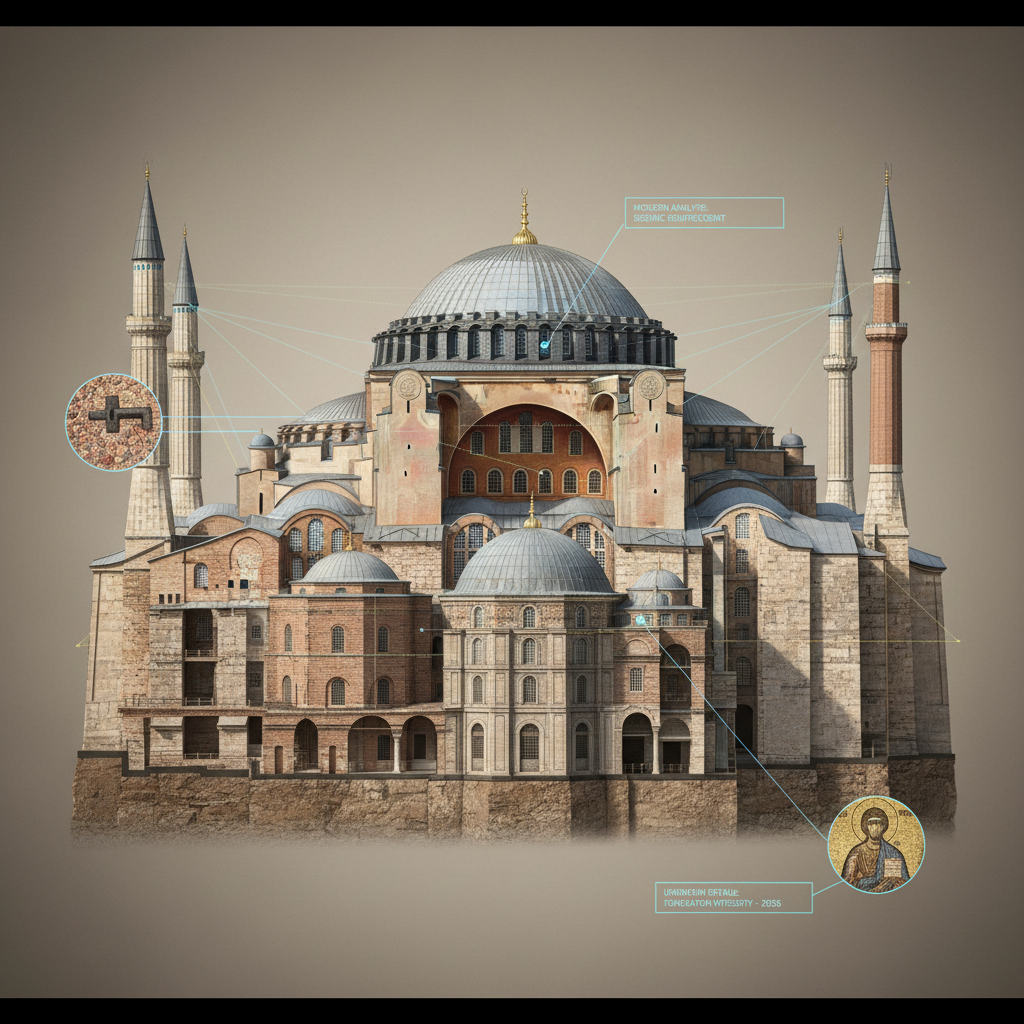
Hagia Sophia: A Visual History - Lenses from the Past and Instant Shots of 2026
Hagia Sophia: A Visual History explores one of the most ancient structures in world history, an architectural masterpiece that has stood for over a thousand years, harboring fascinating stories in every corner. In this article, we will embark on an in-depth journey into its visual history, examining its appearance, art, and architecture across different periods. As we stand in 2026, we will explore how this unique structure bridges the past and the present, and what it means for visitors. Hagia Sophia is a building that carries the traces of centuries in every stone, a common heritage of humanity.
The Visual History of Hagia Sophia: From Byzantine Splendor to Ottoman Elegance
The Hagia Sophia: A Visual History is a compelling story where the cultural and architectural genius of two great empires converge. Opened for worship in 537 AD, the structure initially reflected the unique splendor of the Eastern Roman (Byzantine) Empire. Indeed, the grandeur of its dome, the artistic depth of its mosaics, and the spiritual atmosphere of its interior demonstrate that it was built with the most advanced technology and aesthetic understanding of its time. To learn more about its construction, see our article on When Was Hagia Sophia Built? The Complete History. This initial phase is crucial in understanding the complete Hagia Sophia: A Visual History.
With Sultan Mehmed the Conqueror's conquest of Istanbul in 1453, Hagia Sophia was converted into a mosque and began to bear the imprint of Ottoman civilization. Elements such as the added minarets, buttress towers, mihrab, minbar, and sultan's lodge reshaped the building's silhouette and interior. This transformation enriched not only the building's religious function but also its visual identity, marking a new chapter in the Hagia Sophia: A Visual History.
Byzantine Mosaics and Artistic Tradition in Hagia Sophia
Byzantine mosaics hold a significant place in the Hagia Sophia: A Visual History. These mosaics house some of the finest examples of Christian iconography. Depicting Jesus, Mary, saints, and imperial figures, these works showcase the aesthetic and religious depth of Byzantine art. Specifically, these mosaics are truly breathtaking. Visitors intrigued by these historical elements might also be interested in Codes in Hagia Sophia's Stones: Symbols and Mysteries Every Visitor Must Understand (2026).
- Deesis Mosaic: One of Hagia Sophia's most famous mosaics, considered the pinnacle of late Byzantine art.
- Imperial Gate Mosaic: Depicts Jesus on a throne, with Emperor Leo VI also present in the mosaic.
- Empress Zoe Mosaic: Depicts Empress Zoe and her third husband Constantine IX alongside Jesus.
Ottoman Additions and Architecture in Hagia Sophia
The additions made to Hagia Sophia during the Ottoman period not only increased the physical durability of the structure but also added a new dimension aesthetically. These additions, crafted by masters like Mimar Sinan, enhanced the building's resistance to earthquakes and gave it a new identity. Consequently, they significantly contributed to the overall Hagia Sophia: A Visual History. For a deeper dive into its structural evolution, explore Hagia Sophia's Architecture: Construction Techniques and Unknown Details from the Ancient World to 2026.
- Minarets: The four minarets completing Hagia Sophia's silhouette reflect the elegance of Ottoman architecture.
- Mihrab and Minbar: These elements, added during its use as a mosque, showcase the subtleties of Islamic art.
- Plaques: Massive plaques bearing the names of great Islamic caliphs are among the most striking features of the building's interior.
Hagia Sophia Through the Lens of Photography: Frames from the Past
With the invention of the camera, the Hagia Sophia: A Visual History gained a new dimension. Photographic frames taken from the 19th century onwards are invaluable for documenting the building's condition at different periods, restoration work, and cultural interaction. Old photographs offer many details, from scaffolding on Hagia Sophia's dome to people visiting in period attire. Therefore, photography has become an integral part of understanding its past, adding to the rich Hagia Sophia: A Visual History.
These frames reveal the transformations Hagia Sophia underwent, the wear on its surfaces, and its revitalization through restorations. Each photograph reflects not only a moment but also the social, cultural, and architectural structure of an era. Today, it continues to be a source of inspiration for countless photographers, further enriching the Hagia Sophia: A Visual History.
Hagia Sophia Through the Lens of 19th-Century Travelers
Towards the end of the 19th century, travelers and photographers flocked to Istanbul to immortalize the grandeur of Hagia Sophia. The photographs taken during this period show the interior and exterior of the building in detail, while also reflecting the atmosphere of Istanbul at the time. Undoubtedly, these images are critical to the Hagia Sophia: A Visual History.
- Antoine de Rıvoli's panoramic photographs of Hagia Sophia provide a broad perspective.
- Detailed interior views were captured by the reputable studios of Pascal Sébah and Polycarpe Joaillier. You can find examples of such historical photography collections at institutions like the Library of Congress.
20th-Century Restorations and the Rebirth of Hagia Sophia
In the 20th century, Hagia Sophia underwent extensive restoration work. These efforts were carried out with great meticulousness to preserve the building's original form and convey it to future generations. Photographs document this challenging and arduous process, revealing moments where science merged with art in the ongoing Hagia Sophia: A Visual History.
Hagia Sophia's Visual Identity and Visitor Experience in 2026
As we arrive in 2026, Hagia Sophia continues to captivate millions of visitors from around the world. Today's Hagia Sophia stands as a unique cultural and religious structure, bearing the traces of both Byzantium and the Ottomans. Visitors often research the Hagia Sophia: A Visual History to understand the building's past, immortalizing those unique moments with photographs taken. Ultimately, the experience is deeply enriching. For a comprehensive guide to visiting this year, check out Hagia Sophia in 2026: Fatih's Legacy and the Republic's Reflections - A Visitor's Journey Through Time.
Today's technology offers visitors the opportunity to experience the structure from different perspectives. Virtual reality tours, 3D modeling, and professional photography techniques bring Hagia Sophia's splendor to wider audiences. These modern approaches enrich the building's visual history and offer every visitor a personalized experience, solidifying its place in contemporary Hagia Sophia: A Visual History.
Hagia Sophia Photography in the Digital Age
With the widespread use of smartphones, every visitor has become a photographer. Social media platforms have become part of Hagia Sophia's modern Hagia Sophia: A Visual History. Instagram posts, TikTok videos, and virtual tours contribute significantly to the building's global recognition. Thus, digital media has reshaped how we perceive and share its beauty. For more on this, read about Hagia Sophia's Digital Heritage: Virtual Tours, 3D Models, and Re-exploration with Technology in 2026.
- Hagia Sophia's unique architecture is impressively documented from the air with drone shots.
- Panoramic photographs reveal all the intricate details of the building's interior and exterior, contributing to its Hagia Sophia: A Visual History.
Light Play and Atmosphere in Hagia Sophia
The play of light created in Hagia Sophia's interior at different times of the day offers visitors a mystical experience. The riot of colors that appears when the sun falls on the mosaics is one of the moments photographers most want to capture. These plays of light and shadow are an important part of Hagia Sophia: A Visual History, adding to its ethereal charm. Many photographers share their work on platforms like Flickr, showcasing these magnificent light interactions.
Hagia Sophia's Mystical Stories and Visual Legends
Hagia Sophia is not just an architectural and artistic masterpiece; it also hosts countless mystical stories and legends. These stories add a different dimension to the structure's Hagia Sophia: A Visual History and feed visitors' imagination. Especially the secrets remaining from the Byzantine period and the anecdotes told during the Ottoman era make Hagia Sophia even more mysterious. Therefore, these tales are an essential part of its allure.
For example, elements such as the sweating column legend, the wishing hole, and Hızır's footprints reinforce the sacred atmosphere of the building. These mystical elements show that Hagia Sophia hides a story in every corner and transports visitors to a different dimension, enriching their comprehension of its deep Hagia Sophia: A Visual History.
The Sweating Column and Wishing Rituals at Hagia Sophia
The "Sweating Column" inside Hagia Sophia, believed to be constantly damp, has been a mystical point used by visitors for centuries to make wishes. This column has become an important ritual and symbol of faith within the building's Hagia Sophia: A Visual History. It represents a living tradition.
Angel Mosaic and Mysterious Evidence in Hagia Sophia
Angel mosaics uncovered during restoration work have provided new clues about Hagia Sophia's mysterious past. In particular, the seraphim mosaics, which were covered but later revealed, are important discoveries that enhance the building's visual splendor. These findings further contribute to the rich Hagia Sophia: A Visual History.
Conclusion: The Enduring Legacy of Hagia Sophia
Hagia Sophia is not just a building, but a living history where time and cultures merge. With every stone, every mosaic, and every minbar, it holds an important place in the collective memory of humanity. In 2026, this unique structure will continue to offer visitors every moment of the Hagia Sophia: A Visual History, inspiring them and serving as a bridge between the past and the present. To visit it is not just to see a building, but to witness a story thousands of years in the making.