Emperor Alexander Mosaic
A Rare Portrait of a Byzantine Emperor
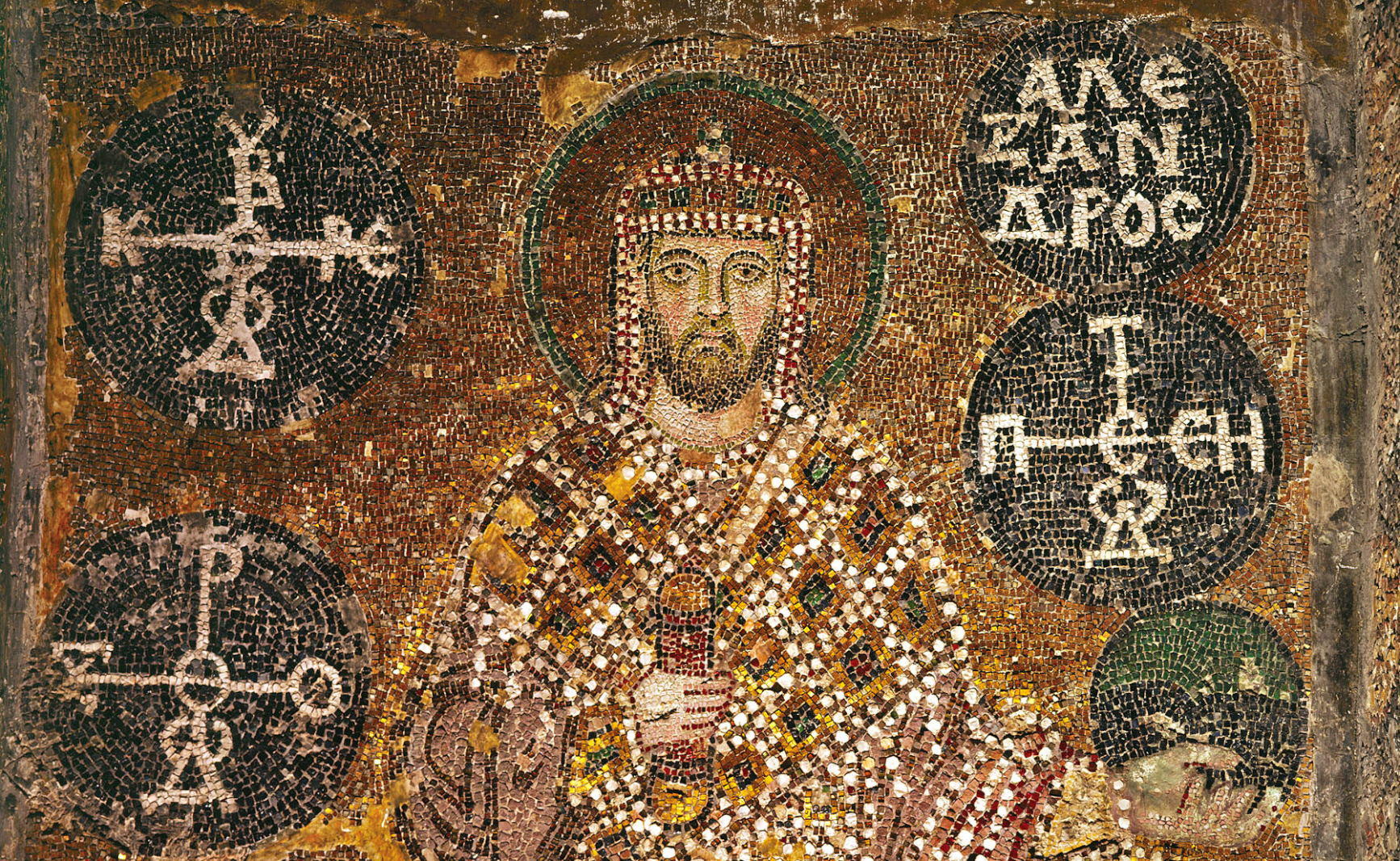
The Emperor Alexander mosaic is one of the most intriguing portraits in Hagia Sophia. Created around 912 AD, this mosaic depicts Emperor Alexander (r. 912-913) in full imperial regalia, standing in a formal pose that was typical of Byzantine imperial imagery.
About Emperor Alexander
Alexander (870-913 AD) was Byzantine Emperor for just over a year. He was the third son of Emperor Basil I and became co-emperor with his brother Leo VI. When Leo died in 912, Alexander became sole ruler but died just 13 months later. Despite his brief reign, this remarkable mosaic ensures he is remembered in Hagia Sophia.
The Mosaic
The portrait shows Alexander wearing the imperial loros (a jeweled scarf) and stemma (crown), holding an orb and akakia (a cylindrical purple silk roll). He is surrounded by medallions containing monograms that spell out 'Alexander, Emperor faithful to God.' The mosaic is notable for its detailed rendering of the imperial costume and regalia.
Location
The mosaic is located on the north gallery of Hagia Sophia, in a relatively hidden corner that many visitors miss. Look for it on the eastern wall of the north gallery, positioned high on the wall.
Historical Significance
This mosaic is one of the few surviving individual portraits of a Byzantine emperor in Hagia Sophia. It provides invaluable information about Byzantine imperial iconography and costume. The formal, hieratic style is characteristic of middle Byzantine art.
Condition
The mosaic has survived in relatively good condition, though some areas show signs of damage and restoration. The gold background tesserae still shimmer in the light, creating the ethereal effect characteristic of Byzantine mosaics.
Visitor Tip
The mosaic is easy to miss as it's in a less-visited area. Ask a guide or look carefully in the northeast corner of the north gallery.