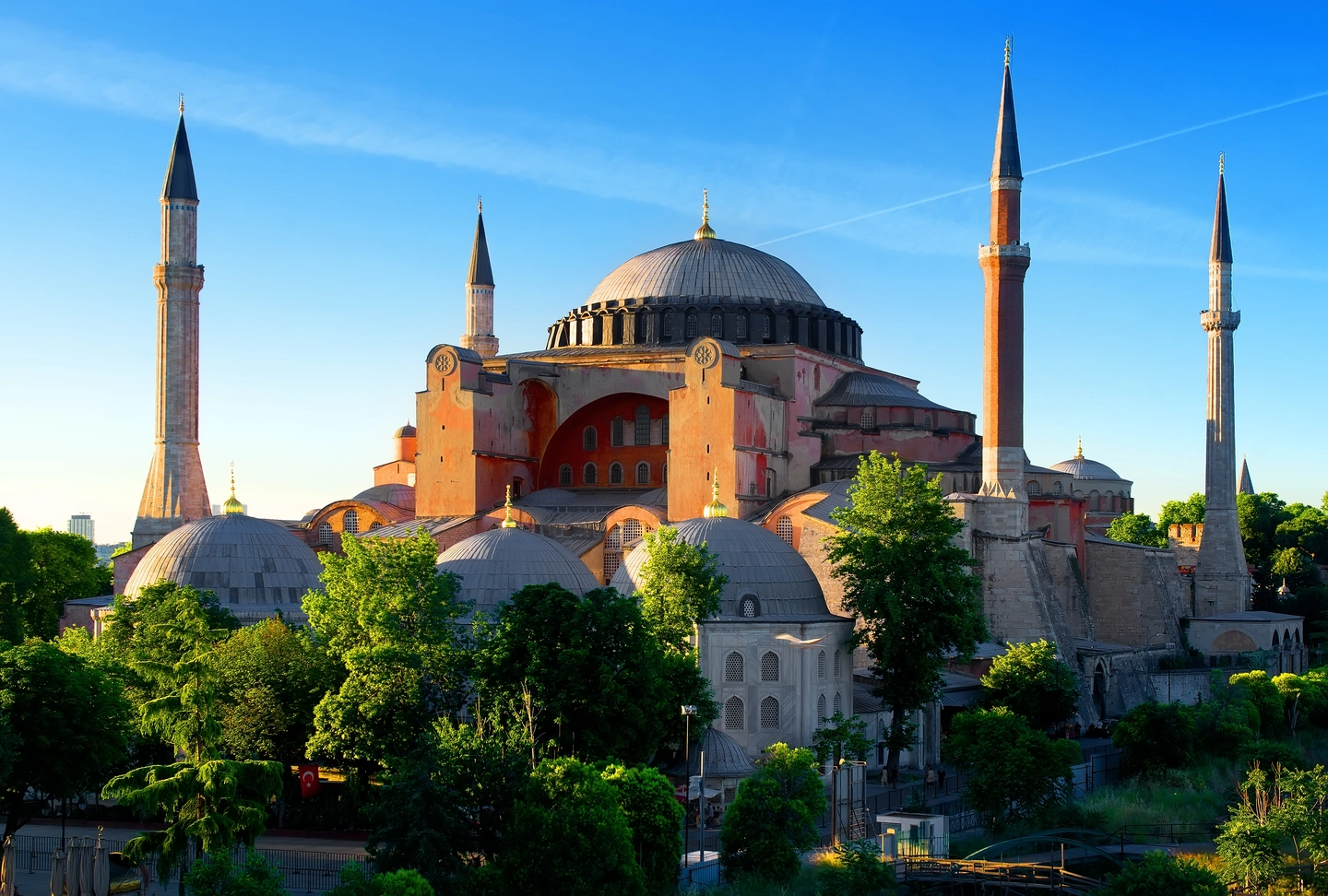
Hagia Sophia Dome
The revolutionary pendentive dome that changed architecture forever
Revolutionary Pendentive Design
The dome of Hagia Sophia was a revolutionary achievement in architecture. The architects Isidore of Miletus and Anthemius of Tralles solved the ancient problem of placing a circular dome on a square base through the use of pendentives - curved triangular sections that transition from the square corners to the circular dome base. This innovation allowed for a much larger open interior space than had ever been achieved before.
The Floating Effect
Forty windows ring the base of the dome, creating the illusion that it floats on a halo of light. The 6th-century historian Procopius wrote that the dome 'seems not to rest upon solid masonry, but to cover the space beneath as though suspended from heaven by a golden chain.' This ethereal quality was intentional, designed to represent the dome of heaven.
Structural Challenges
The original dome partially collapsed after earthquakes in 553 and 557 AD. It was rebuilt by Isidore the Younger (nephew of the original architect) with a steeper profile - about 6 meters higher than the original - to reduce lateral thrust. This rebuilt dome has survived for over 1,400 years, though buttresses were added over the centuries to provide additional support.
Lasting Influence
The pendentive dome of Hagia Sophia directly influenced Ottoman mosque architecture, particularly the works of the great architect Sinan. The Blue Mosque, Süleymaniye Mosque, and countless others drew inspiration from this design. The concept spread throughout the Mediterranean world and influenced the development of Renaissance architecture in Europe, including St. Peter's Basilica in Rome.