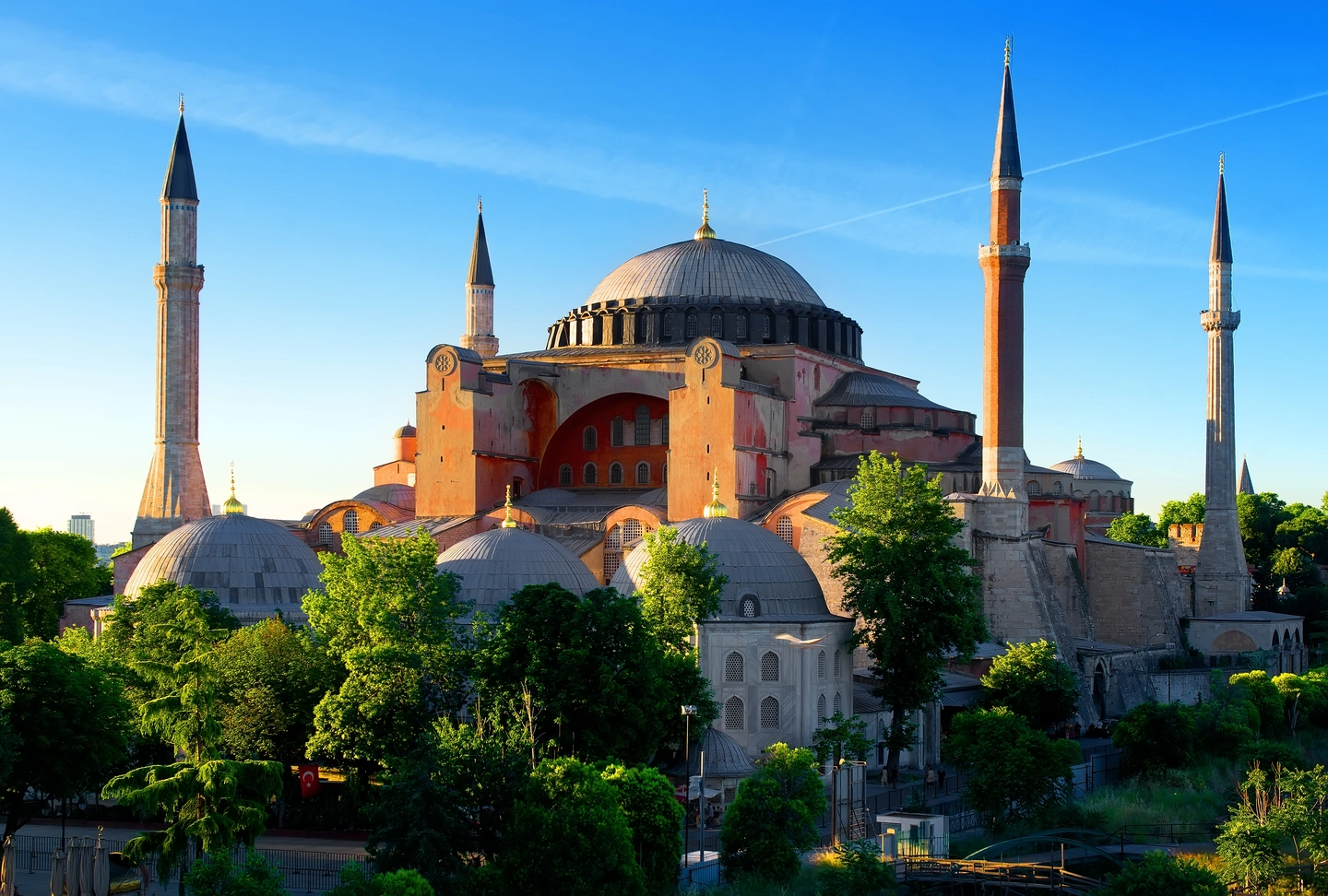
Hagia Sophia Facts
Discover the history, definition, and fascinating facts about one of the world's most remarkable architectural achievements
What is Hagia Sophia? Definition & Meaning
Hagia Sophia (Greek: Ἁγία Σοφία, meaning "Holy Wisdom") is a Late Antique place of worship located in Istanbul, Turkey. Originally built as a Christian patriarchal cathedral in 537 AD by Byzantine Emperor Justinian I, it was the world's largest cathedral and the center of Orthodox Christianity for nearly 1,000 years. Following the Ottoman conquest of Constantinople in 1453, it was converted into a mosque by Sultan Mehmed II. The building served as a museum from 1934 to 2020 under the Turkish Republic, and was reconverted into a mosque in July 2020.
Key Facts at a Glance
History of Hagia Sophia
The Great Cathedral
Emperor Justinian I commissioned the construction of Hagia Sophia after the previous church was destroyed during the Nika riots of 532 AD. The architects Isidore of Miletus and Anthemius of Tralles created an architectural masterpiece that would influence religious architecture for centuries. Upon its completion, Justinian reportedly exclaimed, "Solomon, I have outdone thee!"
Imperial Mosque
After Sultan Mehmed II conquered Constantinople in 1453, Hagia Sophia was immediately converted into a mosque. The Ottomans added minarets, a mihrab, minbar, and covered or plastered over many Byzantine mosaics. Sultan Abdülmecid I commissioned the Swiss-Italian Fossati brothers to restore the building in 1847-1849, during which many mosaics were rediscovered.
Secular Monument
As part of Atatürk's secularization reforms, Hagia Sophia was converted into a museum in 1934. The covered mosaics were restored and displayed alongside Islamic calligraphy, representing the building's dual heritage. It became one of Turkey's most visited tourist attractions and a symbol of cultural coexistence.
Active Mosque
In July 2020, a Turkish court annulled the 1934 decree, and President Erdoğan declared Hagia Sophia would reopen as a mosque. It remains open to visitors outside of prayer times, continuing to serve as a bridge between cultures and faiths.
Architectural Marvel
Revolutionary Dome Design
The pendentive dome of Hagia Sophia was an engineering breakthrough. The circular dome sits on a square base through the use of four triangular pendentives, allowing natural light to flood the interior through 40 windows at the dome's base.
Massive Columns
104 columns support the structure, with 40 in the lower gallery and 64 in the upper gallery. Many columns were salvaged from ancient temples, including eight green columns from the Temple of Artemis at Ephesus.
Golden Mosaics
The interior was originally covered with over 30 million gold mosaic tiles, creating a shimmering effect that earned it the description of "heaven on earth" from medieval visitors.
Hagia Sophia in World History
Hagia Sophia's significance in world history cannot be overstated. It served as the model for Ottoman mosque architecture, directly influencing the design of the Blue Mosque, Süleymaniye Mosque, and countless others. Its innovative dome construction techniques spread throughout the Mediterranean world and influenced the development of Renaissance architecture in Europe. The building has witnessed coronations of Byzantine emperors, the Fourth Crusade's sacking of Constantinople, and the Ottoman conquest - making it a living chronicle of human civilization.
Plan Your Visit
Experience the wonder of Hagia Sophia in person. As an active mosque, entry is free, but visitors should respect prayer times and dress modestly.