Hagia Sophia's Architecture: Construction Techniques and Unknown Details from the Ancient World to 2026
Standing for centuries in the heart of Istanbul, the architecture of Hagia Sophia is one of the most fascinating structures in human history. This unique sanctuary, which brings together the splendor of the Eastern Roman Empire (Byzantium), the elegance of the Ottoman Empire, and the modern legacy of the Turkish Republic, is an engineering marvel and an aesthetic masterpiece. This article delves into its construction techniques and unknown details, updated for 2026.
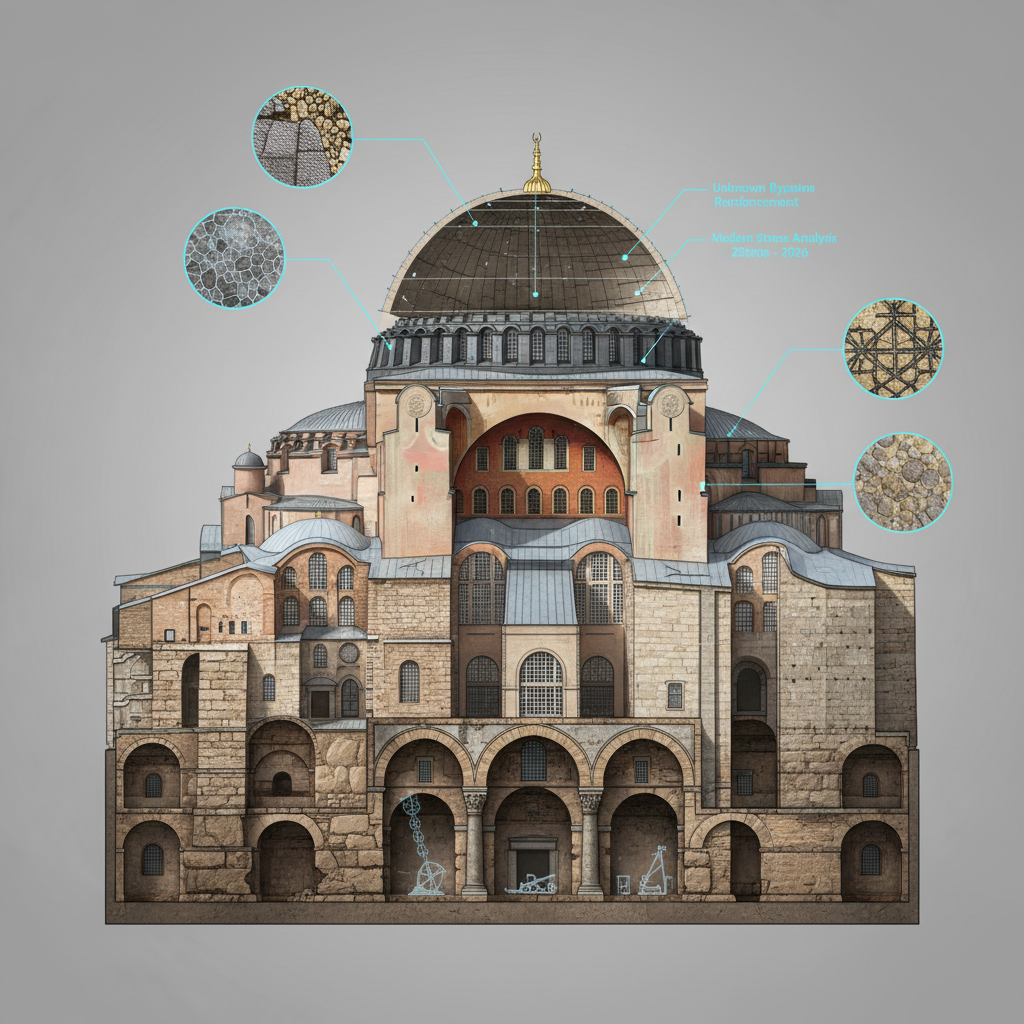
Hagia Sophia Architecture: A Timeless Marvel
Standing for centuries in the heart of Istanbul, the Hagia Sophia Architecture is one of the most fascinating structures in human history. This unique sanctuary, which brings together the splendor of the Eastern Roman Empire (Byzantium), the elegance of the Ottoman Empire, and the modern legacy of the Turkish Republic, is an engineering marvel and an aesthetic masterpiece. Even in 2026, Hagia Sophia's construction techniques and the secrets it holds continue to captivate visitors and researchers from around the world.
The Birth of Hagia Sophia Architecture and Byzantine Engineering
Hagia Sophia was built between 532 and 537 AD during the reign of Emperor Justinian I by genius engineers like Anthemius and Isidore. This five-year period was an incredible achievement given the conditions of that era. The engineers who laid the foundation of the structure had to develop a system that was both resistant to earthquakes and capable of supporting a massive dome. The ingenuity of Hagia Sophia architecture from this period is truly remarkable. For more insights into the initial vision, explore Justinian I's Vision: Building Hagia Sophia.
The Secret of the Dome: Pendentives and Weight Distribution
The most striking feature of Hagia Sophia is undoubtedly its colossal dome. This dome had an unprecedented span for its time and distributed its weight through triangular transition elements called pendentives, which rested on four large piers. Pendentives are an ingenious solution used to place a circular dome on a square base, showcasing the advanced Hagia Sophia architecture.
- Dome Diameter: Approximately 31-33 meters. This diameter has been one of the largest dome diameters in the world for thousands of years.
- Dome Height: Approximately 55 meters. This height creates a dazzling spaciousness when entering the structure.
- Material Optimization: Lightweight bricks brought from the island of Rhodes were used in the construction of the dome. This reduced weight and increased earthquake resistance, a testament to the foresight in Hagia Sophia architecture.
Material Selection and Durability in Hagia Sophia Architecture
The materials used in the construction of Hagia Sophia provided not only durability but also aesthetic integrity. Special marble columns were brought from all over the world, even from Egypt and Rome, for the building's construction. These columns not only provided static balance to the structure but also added a rich visual texture to the interior, defining the unique Hagia Sophia architecture.
Ottoman Touches in Hagia Sophia Architecture
After the conquest of Istanbul in 1453, Hagia Sophia was converted into a mosque and enriched with extensive restorations and additions during the Ottoman Empire. The additions during this period aimed not only to increase the functionality of the structure but also to create an aesthetic harmony with the Byzantine era architecture. These changes further evolved the magnificent Hagia Sophia architecture. For an in-depth look at its transformation, see Hagia Sophia in 2026: Fatih's Legacy and the Republic's Reflections - A Visitor's Journey Through Time.
The Rise of the Minarets
During the Ottoman period, four minarets were added to Hagia Sophia. These minarets changed the silhouette of the structure, giving it a different monumental grandeur. The first minaret was built of wood during the reign of Fatih Sultan Mehmet, and later stone minarets were added during the reigns of Bayezid II and Selim II. The supporting buttresses and two minarets added to Hagia Sophia by Mimar Sinan strengthened the structural integrity of the building, increasing its resistance to future earthquakes, a crucial development in Hagia Sophia architecture.
Ottoman Calligraphy and Interior Art
The colossal plates and elements such as the mihrab and minbar inside Hagia Sophia showcase the skill of Ottoman artists. Especially the mihrab, which indicates the direction of the Kaaba, and the minbar, from which sermons are delivered, are important elements of traditional Ottoman mosque architecture. Additionally, the names of Allah, Muhammad, the four caliphs, and two grandchildren are written on the large calligraphic plates inside the mosque. These plates are among the greatest calligraphic works of that period, adding another layer to the rich Hagia Sophia architecture.
- Calligraphic Masterpieces: The calligraphic plates in Hagia Sophia were written on wood by master calligraphers of the period.
- Mihrab and Minbar: These elements, added during the Ottoman period, completed the functionality of the mosque.
- Reflections of Islamic Art: The tile, marble, and wood carvings within the structure present the finest examples of Islamic aesthetics, enhancing the overall Hagia Sophia architecture.
Unknown Secrets and Mysticism of Hagia Sophia Architecture
Hagia Sophia, besides being an architectural masterpiece, also draws attention with its numerous rumors and mysteries. The techniques used during the construction of the building are considered to be far beyond the scientific and engineering level of that era. The enduring mystery surrounding Hagia Sophia architecture continues to fascinate. Dive deeper into these fascinating narratives by reading Whispers on Hagia Sophia's Walls: Unseen Stories from Past to Present.
The Weeping Column and Wishing Stones
The column inside the building, known as the "Weeping Column" or "Sweating Column," is one of the most interesting points for visitors. It is believed that this column occasionally seeps water, and according to legends, wishes come true when a wish is made and a finger is inserted into its hole. Although it may have a psychological effect, such legends reinforce the mystical atmosphere of Hagia Sophia architecture.
Acoustic Perfection in Hagia Sophia Architecture
In the architectural planning of Hagia Sophia, special attention was paid to acoustics. The materials used on the inner surface of the dome and in the walls were designed to ensure that sound is distributed evenly and clearly. This allowed rituals during the Byzantine period and sermons during the Ottoman period to be heard clearly from every point. Even in 2026, this acoustic structure continues to amaze visitors, highlighting the brilliance of Hagia Sophia architecture.
Hagia Sophia's Status and Conservation Efforts in 2026
Today, Hagia Sophia continues to attract global attention with its unique cultural heritage and Hagia Sophia architecture. Significant national and international efforts are being made to preserve the structure and pass it on to future generations.
Restoration and Maintenance Works for Hagia Sophia Architecture
The preservation of historical heritage is vital for monumental structures like Hagia Sophia. As of 2026, periodic restoration works continue to ensure the structural safety of the building, protect its mosaics, and carry out general maintenance. These works are meticulously carried out by combining modern technology and traditional methods. Especially after the major earthquakes experienced in 2023, the continuous review and strengthening of the building's resistance is of critical importance for the future of Hagia Sophia architecture. For more details on visiting and general information, consult our Hagia Sophia's Mysterious Layers: Your A-Z Tourist Guide to Everything You Need to Know.
Digital Archiving and Virtual Tours of Hagia Sophia Architecture
With the development of technology, detailed digital archives of Hagia Sophia are being created, and virtual tour opportunities are offered. In this way, people from all over the world can examine this magnificent Hagia Sophia architecture up close, even if they cannot physically be there. This digitalization process has offered great advantages in increasing the accessibility of cultural heritage, especially in the post-pandemic period. The Google Arts & Culture platform offers detailed virtual explorations of Hagia Sophia.
Hagia Sophia as a UNESCO World Heritage Site
Hagia Sophia has been on the UNESCO World Heritage list since 1985. This status emphasizes the universal value of the structure and its importance for humanity. UNESCO plays an active role in the processes of preserving and promoting Hagia Sophia, encouraging international cooperation. In 2026, this cooperation continues, and efforts are made to protect Hagia Sophia globally and to ensure its value is understood. The International Council on Monuments and Sites (ICOMOS) also plays a crucial role in advising on the conservation of such sites, further safeguarding the legacy of Hagia Sophia architecture.
Hagia Sophia Architecture: A Legacy from Past to Future
Hagia Sophia has undergone numerous changes throughout its nearly 1500-year history, hosting different cultures and faiths. However, despite everything, it has managed to endure by preserving its original Hagia Sophia architectural principles. This structure, opened with Emperor Justinian's cries of "Solomon, I have outdone thee!", continues today to be a common heritage of humanity and a symbol of engineering genius.
As we reach 2026, Hagia Sophia is more than just a place of worship or a museum; it is a story reaching us from the depths of the past, a source of inspiration. Every detail, from the mosaics on its walls to its colossal dome, from its minarets to its legendary corners, offers an unforgettable experience to its visitors. The architecture, engineering marvel, and artistic richness of this unique structure will continue to be admired by future generations, solidifying the importance of Hagia Sophia architecture.