Hagia Sophia's Traveling Artists: Mysterious Stories Behind Colors and Lines (2026)
Hagia Sophia has profoundly influenced humanity's aesthetic understanding for over a millennium. Its mosaics and frescoes keep the spirit of the past alive. Even in 2026, Hagia Sophia's artistic legacy continues to mesmerize visitors, with mysterious stories behind the colors and lines of its unique art. Discover the traveling painters who shaped its beauty.
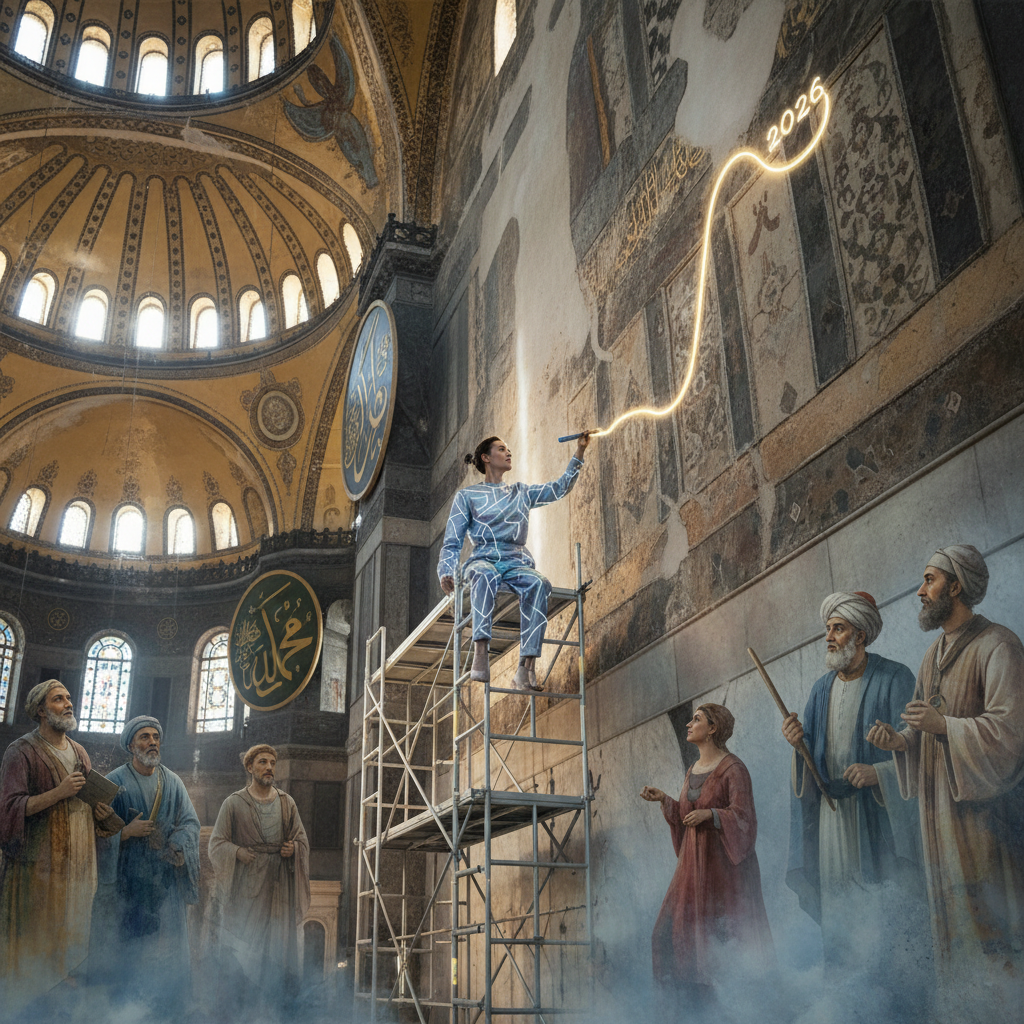
Hagia Sophia Art: Mysterious Stories Behind Colors and Lines (2026)
Hagia Sophia has profoundly influenced humanity's aesthetic understanding for over a millennium, standing as an architectural and artistic masterpiece. Within the walls, mosaics, and frescoes of this unique structure, numerous Hagia Sophia art pieces have kept the spirit of the past alive. Even as we reach 2026, Hagia Sophia's artistic legacy continues to mesmerize visitors and researchers alike. In this article, we will delve into the captivating world of Hagia Sophia art and the mysterious stories behind it.
Hagia Sophia Art and Byzantine Era Mosaics
At the heart of Hagia Sophia's visual richness lie breathtaking mosaics dating back to the Byzantine Empire. These mosaics showcase the imperial power, religious beliefs, and artistic capabilities of the period. Each mosaic is composed of thousands of meticulously placed small pieces of stone or glass, forming stunning examples of Hagia Sophia art.
Mosaic of the Virgin Mary and Child Jesus
Located in the semi-dome of the apse, this mosaic is one of Hagia Sophia's oldest and most impressive works. The Virgin Mary and the Child Jesus, depicted against a golden background, stand out with both their spiritual depth and artistic finesse. The construction date of this mosaic dates back to the 9th century.
Mosaic Above the Imperial Gate
This mosaic, located above the Imperial Gate leading from the narthex to the main nave, depicts enthroned Jesus and Emperor Leo VI prostrating before him. This work is a significant example emphasizing the religious and political power of the Byzantine Empire. In the Hagia Sophia art concept, the connection between emperors and divine power was often expressed through such artistic representations.
Komnenos Mosaic
Located in the south gallery, this mosaic depicts Emperor John II Komnenos and Empress Irene alongside the Virgin Mary and Child Jesus. The mosaic symbolizes the imperial family's piety and their donations to Hagia Sophia. The individual expressions on the family members' faces demonstrate the advanced portraiture art of the period.
Ottoman Era Additions and the Transformation of Hagia Sophia Art
After the conquest of Istanbul in 1453, Hagia Sophia was converted into a mosque, and new layers were added to its artistic identity. Ottoman sultans preserved the magnificence of the Byzantine period while adding elements of Islamic art, giving it a new spirit. This transformation process is one of the most important phases in Hagia Sophia art history.
Calligraphy and Giant Calligraphic Panels
Among the most striking artistic additions to Hagia Sophia during the Ottoman period are the gigantic calligraphic panels, in addition to the minbar and mihrab. These panels are considered among the pinnacles of Islamic calligraphic art. Featuring masterful examples of Celi Sülüs style, these panels bear the names of Allah, Muhammad, the four caliphs, and Hz. Hasan and Husayn. Particularly those by Kazasker Mustafa İzzet Efendi, these panels are 7.5 meters in diameter and are known as the world's largest calligraphic panels, enriching the diverse collection of Hagia Sophia art.
Mihrab and Minbar
The mihrab, placed in the direction of the qibla, and the minbar, from which sermons are delivered, gave Hagia Sophia the distinguishing features of Ottoman mosques. These elements are adorned with marble craftsmanship and details reflecting the aesthetic understanding of the period. The marble minbar, built during the reign of Sultan Murad III, is an example of unparalleled workmanship, contributing to the unique blend of Hagia Sophia art.
Sultan's Loges and Library
Among the Ottoman-era additions are the sultan's loges, special sections used by sultans for prayer, and the library. These structures are enriched with the wood craftsmanship and painted decorations of the period. The library added by Sultan Mahmud I contains beautiful examples of the book art and ivory work of the era.
Frescoes and Hidden Remains of Hagia Sophia Art
The walls of Hagia Sophia contain layers from different periods, in addition to Byzantine frescoes. While these frescoes are not as well preserved as the mosaics, they reveal the religious narratives and decorative motifs within the church. Fresco remains discovered during restoration work shed light on the structure's artistic past, showcasing another facet of Hagia Sophia art.
Angel Figures and Seraphim
Beneath some mosaics and frescoes covered with plaster during the Ottoman period, angel figures and four-winged seraphim have been discovered. Particularly these seraphim faces located in the corners of the dome are important elements of Christian cosmology. As of 2026, the restored seraphim faces continue to present the celestial splendor of Hagia Sophia to visitors.
Non-Figurative Decorations
Geometric and plant motifs, non-figurative in the Byzantine period, were also present on the ceilings and walls of Hagia Sophia. These earlier decorations persisted even during the iconoclastic period. These motifs demonstrate the ability of the craftsmen of the period to aesthetically abstract natural forms.
Hagia Sophia Art Through the Eyes of Western Travelers
From past to present, many Western travelers, painters, and writers have visited Hagia Sophia and been influenced by the artistic magic of this unique structure. These travelers depicted Hagia Sophia in their works, spreading its fame worldwide. Through their eyes, Hagia Sophia art was reinterpreted with different cultural perspectives.
19th Century Travelers and Their Drawings
In the 19th century, especially orientalist painters brought the internal and external views of Hagia Sophia to their canvases. Artists like William Henry Bartlett and Léon Auguste Asselineau documented the atmosphere, people, and architectural details of Hagia Sophia of that period. These drawings provide valuable visual resources about Hagia Sophia's past today, highlighting the enduring appeal of Hagia Sophia art.
Hagia Sophia in the Artists' Color Palettes
Painters tried to capture the play of light in Hagia Sophia's dim interior, the sparkle of the mosaics, and the grandeur of the architecture on canvas. Their works show that Hagia Sophia is not only a place of worship but also an infinite source of inspiration. The mystical atmosphere of Hagia Sophia was recreated through the use of colors and shadows.
Artistic Preservation and Future of Hagia Sophia Art (2026)
As of 2026, Hagia Sophia continues to serve as both a place of worship and a cultural heritage site. The preservation of the structure's artistic works and their transmission to future generations is of great importance. National and international organizations are striving for the restoration and conservation of Hagia Sophia's mosaics, frescoes, and calligraphic works, ensuring the legacy of Hagia Sophia art.
Restoration and Conservation Efforts
Periodically carried out restoration and conservation efforts prevent damage to Hagia Sophia's artistic fabric. These works particularly focus on protecting the mosaics from external factors such as humidity, temperature differences, and air pollution. Expert teams exhibit meticulous craftsmanship to preserve Hagia Sophia art pieces as close to their original state as possible.
Digital Archiving and Virtual Tours
With the advancement of technology, Hagia Sophia's artistic heritage is being digitally archived and opened to the world through virtual tours. In this way, even those who cannot physically visit Hagia Sophia can examine the artistic details of the structure up close. This digitalization process is an important way to facilitate access to cultural heritage in 2026.
Educational Programs and Awareness Campaigns
Various educational programs and guided tours are organized to raise awareness about the artistic and cultural significance of Hagia Sophia. These programs aim to teach especially younger generations about Hagia Sophia's rich history and artistic value. It is emphasized that Hagia Sophia is not just a building, but also a living art museum. For more on the rich narratives within, you might explore the memoirs embedded in its walls or discover the broader historical narrative provided by Smithsonian Magazine.
Hagia Sophia, with its artistic journey extending from past to present, is one of the most valuable parts of humanity's common heritage. Its walls, colors, and lines tell a unique story at the intersection of different cultures and beliefs. Hagia Sophia art will continue to mesmerize its visitors always.