Hagia Sophia's Mysterious Touches: Rituals of Connection and Sacred Traces from the Past to 2026
Hagia Sophia, a centerpiece of Istanbul for over a millennium, continues to captivate visitors in 2026. Beyond its architectural grandeur, this iconic structure is steeped in mystical tales, particularly those surrounding its unique 'touching rituals'. These ancient practices hint at deep spiritual connections and leave behind sacred traces, inviting exploration into a rich, living history that continues to unfold today.
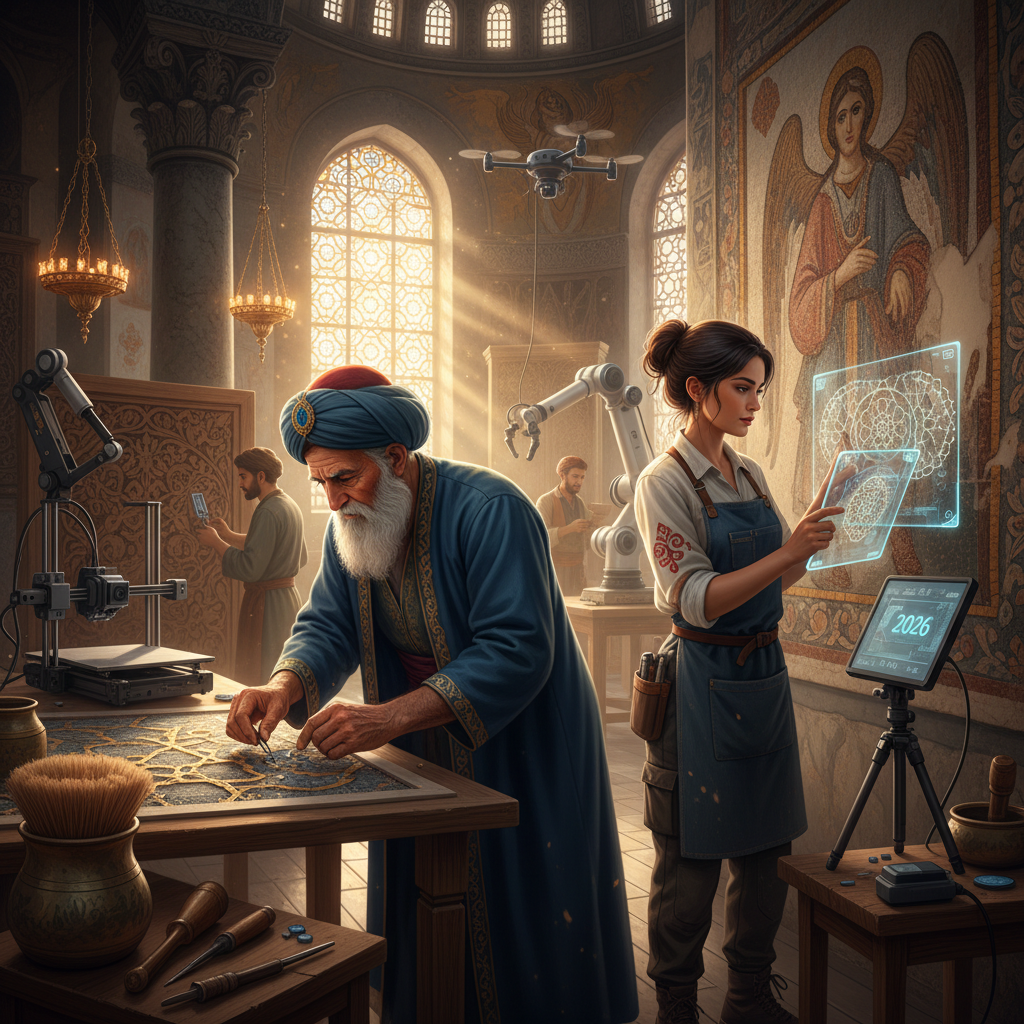
Hagia Sophia: Rituals of Touch – From the Past to 2026, Sacred Traces
In 2026, Hagia Sophia, rising in the heart of Istanbul, continues to mesmerize its visitors. This unique structure, which has hosted different civilizations for over a thousand years, attracts attention not only with its architecture but also with the mystical stories it harbors, and especially with the Hagia Sophia: Rituals of Touch. These rituals represent ancient beliefs, often spread by word of mouth or sometimes found in written sources, and the deep connection visitors establish with Hagia Sophia. In this article, we will examine in detail the meaning of touching Hagia Sophia's sacred walls, its change throughout history, and its current effects.
History of Hagia Sophia and the Origin of Touching Rituals
Since its construction by Emperor Justinian in the 6th century AD, Hagia Sophia has been an unyielding witness to empires and religions. Bearing the traces of the Roman, Byzantine, and Ottoman Empires, this structure has been considered a sacred place in every era. This perception of sacredness brought with it various beliefs and touching rituals, forming the core of Hagia Sophia: Rituals of Touch.
The Beginning of Mystical Touches
During and after the construction of Hagia Sophia, beliefs spread that the structure was more than just a place of worship, but also possessed a divine energy. Especially during the Byzantine period, it was believed that emperors and the public would find healing or have their wishes granted by touching certain points. These beliefs gradually became traditional touching rituals, a significant aspect of Hagia Sophia: Rituals of Touch.
Changing Religions, Enduring Traditions
Converted into a mosque after the conquest by Fatih Sultan Mehmet in 1453, Hagia Sophia gained great importance for the Islamic world as well. Some rituals from the Christian period continued to exist, either blended with new religious beliefs or with different interpretations. It is rumored that many Ottoman sultans also specifically touched certain points of Hagia Sophia. This shows how deep-rooted the tradition of Hagia Sophia: Rituals of Touch is. The evolving lights and shadows within Hagia Sophia have also played a role in these changing perceptions over centuries.
Famous Hagia Sophia: Rituals of Touch and Their Meanings
There are many different touching rituals in Hagia Sophia that attract visitors' attention and which they try to perform. Each of these rituals has its own unique story and meaning. Even in 2026, visitors still flock to these points, keeping alive the ancient beliefs of centuries past, making Hagia Sophia: Rituals of Touch a living tradition.
The Sweating Column (Weeping Column)
- Location: A copper-plated column located in the northwest direction of Hagia Sophia.
- Ritual: It is believed that if you insert your thumb into the hole at the bottom of this column and rotate it 360 degrees while making a wish, your wish will come true. Also, due to its dampness, it is called the "sweating" or "weeping" column, and this dampness is believed to be healing. Some sources claim that the moisture inside the column is Constantine's tears, while others state it is one of Saint Gregory's miracles.
- Meaning: Healing, wish fulfillment, abundance. This is a prime example of Hagia Sophia: Rituals of Touch.
Gates of Heaven and Hell
Located on the western facade of Hagia Sophia, on either side of the imperial gate, these gates also hold mystical significance. According to legends, passing through these gates helps cleanse sins or fill one with divine energy.
- Gate of Heaven: Considered the place through which those who follow the right path and whose prayers are accepted pass.
- Gate of Hell: Referred to as the place through which those who wish to cleanse themselves of evil deeds and repent their sins pass.
Touching these gates and passing under them is seen as a kind of spiritual cleansing and purification ritual. It is one of the most dramatic of the Hagia Sophia: Rituals of Touch. Much like the spiritual echoes found in the hymns of Hagia Sophia, these gates resonate with deep spiritual meaning.
The Ticket Stone and Fortune Circle
Another ritual widespread in Hagia Sophia, especially among women, is touching the stone known as the "Ticket Stone" or "Fortune Circle." It is believed that this stone opens up opportunities and helps those who wish to marry. This tradition, usually tried by young people, is laden with hope and future expectations.
- Ritual: Touching this stone and making a wish or performing旋转 movements around it.
- Meaning: Fortune, marriage, good luck. This ritual is a cherished part of Hagia Sophia: Rituals of Touch.
Hagia Sophia: Rituals of Touch and Tourist Interests in 2026
Today, Hagia Sophia is visited with great interest, especially by international tourists. With the spread of technology and the internet, Hagia Sophia's mystical stories and touching rituals have reached wider audiences. In 2026, visitors not only see the architecture but also seek to experience these ancient traditions, making Hagia Sophia: Rituals of Touch a key attraction.
The Place of Rituals in the Digital Age
Social media platforms and travel blogs have increased the sharing of information about Hagia Sophia: Rituals of Touch. Tourists research these rituals before their visit, watch video content, and determine in advance which points they will touch in Hagia Sophia. This situation further increases the popularity of these rituals. A recent study by Statista in 2025 showed a significant increase in cultural tourism interest, with historical sites like Hagia Sophia being top destinations.
Cultural Interaction and Experiential Tourism
Modern tourists want to experience not only the sights but also the culture and traditions of that place. The touching rituals in Hagia Sophia have become an important part of this experiential tourism. Visitors feel that they establish a deeper connection with Hagia Sophia by participating in these centuries-old traditions. This is an unmissable opportunity for those seeking an authentic experience through Hagia Sophia: Rituals of Touch. The increasing trend of experiential tourism has been highlighted in analyses by the UNWTO (World Tourism Organization) in their 2026 outlook reports.
Preservation and Future of Hagia Sophia: Rituals of Touch
The preservation of historical and cultural heritage such as Hagia Sophia is the responsibility of all humanity. The mystical and traditional values carried by these structures must be passed on to future generations. Hagia Sophia: Rituals of Touch are a living part of this cultural heritage.
Sustainability and Awareness
Intense tourist influx can cause wear and tear on Hagia Sophia's delicate surfaces. Therefore, it is of great importance to raise awareness among visitors and for them to be careful when performing touching rituals. Authorities can guide visitors through information panels or guides explaining how to properly touch the designated points. Efforts by UNESCO World Heritage Centre continue to promote sustainable tourism practices at sites like Hagia Sophia, safeguarding Hagia Sophia: Rituals of Touch.
Continuation of Rituals and Transmission of Heritage
Hagia Sophia's mystical atmosphere and the Hagia Sophia: Rituals of Touch it contains are elements that complete the uniqueness of this structure. Keeping these traditions alive as part of history and beliefs will allow future generations to establish this deep and special connection with Hagia Sophia. There is no doubt that Hagia Sophia will continue to host these mysterious touches in 2026 and beyond. Indeed, the ongoing work by Hagia Sophia's traveling artisans ensures the careful restoration and preservation of its intricate details, allowing these traditions to endure.