Hagia Sophia's Traveler's Memoir: Human Vistas and Memories Echoing the Past in 2026
As we arrive in 2026, Hagia Sophia's human stories continue to echo within its walls, carrying the traces of the past. This unique structure has not only been a place of worship or a museum for centuries, but also a host to countless people's memories, beliefs, and experiences. Beyond its architectural grandeur, Hagia Sophia is an intergenerational bridge, with each stone holding untold narratives.
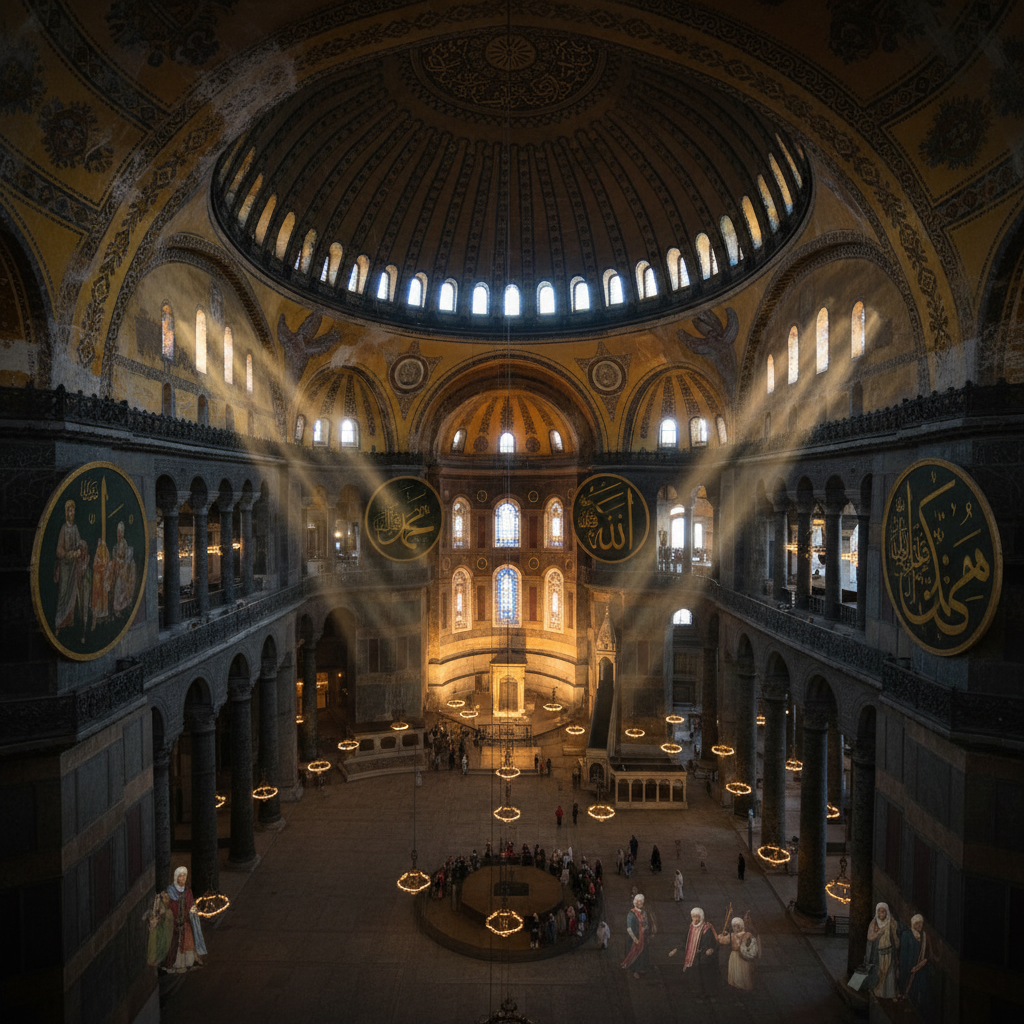
Hagia Sophia: Human Stories
As we arrive in 2026, Hagia Sophia: Human Stories continue to echo profoundly within its ancient walls, carrying the vivid traces of the past. Beyond its architectural grandeur, this unique structure has for centuries been much more than just a place of worship or a museum; it has been a host to countless individual memories, beliefs, and profound experiences. Indeed, Hagia Sophia stands as an intergenerational bridge, with each weathered stone holding a lived and deeply personal narrative.
Hagia Sophia: Whispers From Ancient Eras to 2026
Throughout its illustrious history, Hagia Sophia has consistently served as a vital crossroads of various civilizations and deeply held beliefs. Thousands of individuals, ranging from powerful emperors to humble citizens, and from contemplative dervishes to masterful artists, have experienced a wide spectrum of emotions within this formidable and sacred structure. Consequently, their whispers, their joys, and their sorrows can still be tangibly felt in Hagia Sophia's truly mystical atmosphere, even today in 2026. These are the compelling Hagia Sophia: Human Stories that continue to resonate.
Byzantine Emperors: The Genesis of Hagia Sophia
The monumental construction of Hagia Sophia began precisely with the grand vision of Emperor Justinian. Completed in 537 CE, this magnificent structure profoundly symbolized the immense power and unparalleled glory of the Byzantine Empire. The Hagia Sophia human stories from this particular period brilliantly shed light on imperial ceremonies, profound religious rituals, and also the sophisticated art understanding prevalent in that ancient era.
- Justinian's deep devotion and unwavering faith in Hagia Sophia's creation.
- The immense human effort behind the architectural genius of Anthemius and Isidore.
- The triumphs and also the significant anxieties of emperors crowned within Hagia Sophia's hallowed halls.
Ottoman Conquest: A New Spiritual Identity
With the pivotal conquest of Istanbul in 1453, Hagia Sophia embraced a new spiritual identity, subsequently being converted into a mosque. Sultan Mehmed the Conqueror's profound respect for Hagia Sophia, along with his diligent efforts to preserve it, deeply influenced how the people of that era perceived this majestic structure. Therefore, the Hagia Sophia human stories from this transformative period truly bear the indelible traces of an era where deeply different faiths remarkably coexisted.
- Sultan Mehmed the Conqueror's historic first entry into Hagia Sophia and his inaugural prayer within its walls.
- The exquisite works of Ottoman calligraphers and master tile artisans of that specific period.
- The rich social life shaped by the charitable soup kitchens (imarets) and the benevolent waqfs (endowments) thoughtfully established around Hagia Sophia.
Hagia Sophia Through the Modern Eyes of Visitors in 2026
Visitors exploring Hagia Sophia in 2026 experience a unique and truly captivating blend of past and present. Indeed, smelling the echoes of history, gently touching the ancient walls, and deeply feeling the enduring spirit of the building leaves indelible and cherished memories in the heart of every single visitor. Despite the numerous innovations and rapid advancements brought by the digital age, Hagia Sophia's profound and spiritual essence remains utterly untouched. These modern encounters add new chapters to the ongoing Hagia Sophia: Human Stories.
Mystical Touch: The Enduring Energy of Hagia Sophia
Many visitors consistently report feeling an intense and palpable energy while gracefully walking through Hagia Sophia's majestic interior. This profound sensation can easily be explained by the cumulative prayers, profound joys, and deep sorrows accumulated within the building over its more than fifteen hundred years of rich history. Consequently, its mystical atmosphere allows modern visitors to embark upon a truly unique and deeply spiritual inner journey. This mystical touch is a core part of the Hagia Sophia: Human Stories.
Here are some common observations noted by both tourists and dervishes regarding Hagia Sophia's mystical atmosphere:
- A remarkably warm and inviting feeling sensed amidst the otherwise cold, gray stone walls.
- A distinct spiritual uplift experienced during moments when ethereal light beams majestically stream through the ancient windows. Discover more about Hagia Sophia's Evolving Lights and Shadows.
- The profound tranquility emanating from the harmonious and beautiful coexistence of symbols from vastly different historical periods.
Technology and History: A Seamless Convergence
Today, a visit to Hagia Sophia is also thoughtfully supported by modern technologies. Easily accessible audio guides via QR codes, engaging interactive screens, and innovative augmented reality applications all offer visitors an enriched and truly immersive experience. However, despite all these cutting-edge innovations, Hagia Sophia itself inherently continues to be the greatest and most compelling guide of all. For example, the SmartHistory project on Hagia Sophia provides excellent digital resources for preparation or further study. These technological enhancements help bring the Hagia Sophia: Human Stories to life for a new generation.
Hagia Sophia: Human Stories - A Unifying Bridge of Beliefs
Hagia Sophia stands as one of the rare and truly exceptional places where people of distinctly different faiths can gracefully converge. Its unique ability to house the rich traces of both Christian and Muslim civilizations under the same glorious roof profoundly symbolizes humanity's universal values of understanding and tolerance. This remarkable convergence holds immense significance for countless visitors arriving from every corner of the globe, making it a central theme in all Hagia Sophia: Human Stories.
Mosaics and Frescoes: Living Witnesses to History
Hagia Sophia's breathtaking mosaics and vibrant frescoes proudly showcase the magnificent art of the Byzantine Empire and its intricate religious motifs. These awe-inspiring works vividly depict important personalities and pivotal events of the Christian period, while simultaneously establishing an impressive and harmonious dialogue with the exquisite calligraphic inscriptions carefully added during its transformative time as a mosque.
This immense visual richness gracefully offers visitors the following invaluable cultural heritages:
- Exquisite depictions of Jesus, the Virgin Mary, and revered saints.
- Prominent mosaics of the Komnenos Family and the powerful Empress Zoe.
- Majestic calligraphic panels of Allah, Muhammad, Abu Bakr, Umar, Uthman, and Ali, meticulously crafted by master Ottoman calligraphers. You can learn more about Islamic Calligraphy and its significance.
Minbar and Mihrab: Islamic Artistry Reflected in Hagia Sophia
Structures such as the elaborate minbar, the sacred mihrab, and the elevated pulpit, all thoughtfully added when Hagia Sophia was converted into a mosque, elegantly carry the distinctive beauty of Islamic art. These new elements gracefully add a new and profound dimension to the building's interior, while simultaneously demonstrating how diverse architectural styles of different faiths can be beautifully blended. This rich interplay is indeed shaped by continuing Hagia Sophia: Human Stories.
The Future of Hagia Sophia: Preserving a Global Heritage
In 2026, Hagia Sophia is meticulously preserved as a truly invaluable World Heritage site. Years of dedicated restoration work and ongoing maintenance projects are conscientiously aimed at ensuring that this unique and irreplaceable structure is safely passed on to future generations. Moreover, the income carefully collected from visitors also significantly contributes to these vital preservation efforts, ensuring that the Hagia Sophia: Human Stories continue for centuries to come.
Sustainable Tourism: Protecting a Treasure
Managing a globally significant heritage site like Hagia Sophia with sustainable tourism principles is of paramount importance. Carefully controlling visitor flow, actively increasing environmental awareness, and genuinely engaging local communities are all critical elements for preserving both the invaluable cultural and the physical integrity of Hagia Sophia for centuries to come. The UNESCO World Heritage Centre provides further information on such sites. Protecting this treasure is essential for future Hagia Sophia: Human Stories.
Education and Awareness: Sharing Hagia Sophia Human Stories
Education and robust awareness efforts concerning Hagia Sophia's profound historical and cultural significance play a key role in effectively transmitting its rich heritage to future generations. Thoughtful collaborations with educational institutions, compelling documentaries published on various digital platforms, and innovative interactive exhibitions all collectively bring Hagia Sophia's incredible story to broader audiences. Thus, the powerful Hagia Sophia human stories are meaningfully kept alive for all time.
In 2026, Hagia Sophia is far more than merely a pile of stone and mortar; it is a living history book, a profound bridge of faith, and an enduring symbol of humanity's common and shared heritage. Every new visitor inevitably becomes an integral part of this grand narrative and, in doing so, creates their very own unique Hagia Sophia: Human Stories.