Moments Frozen in Time at Hagia Sophia: The Mysterious Stories of Pillars, Silent Witnesses to Civilization (2026)
Hagia Sophia in Istanbul, a unique blend of history and architecture, holds countless stories within its ancient structure. The Hagia Sophia columns, standing for thousands of years, are silent yet profoundly impressive witnesses to multiple civilizations. Discover their mysteries and historical significance in 2026.
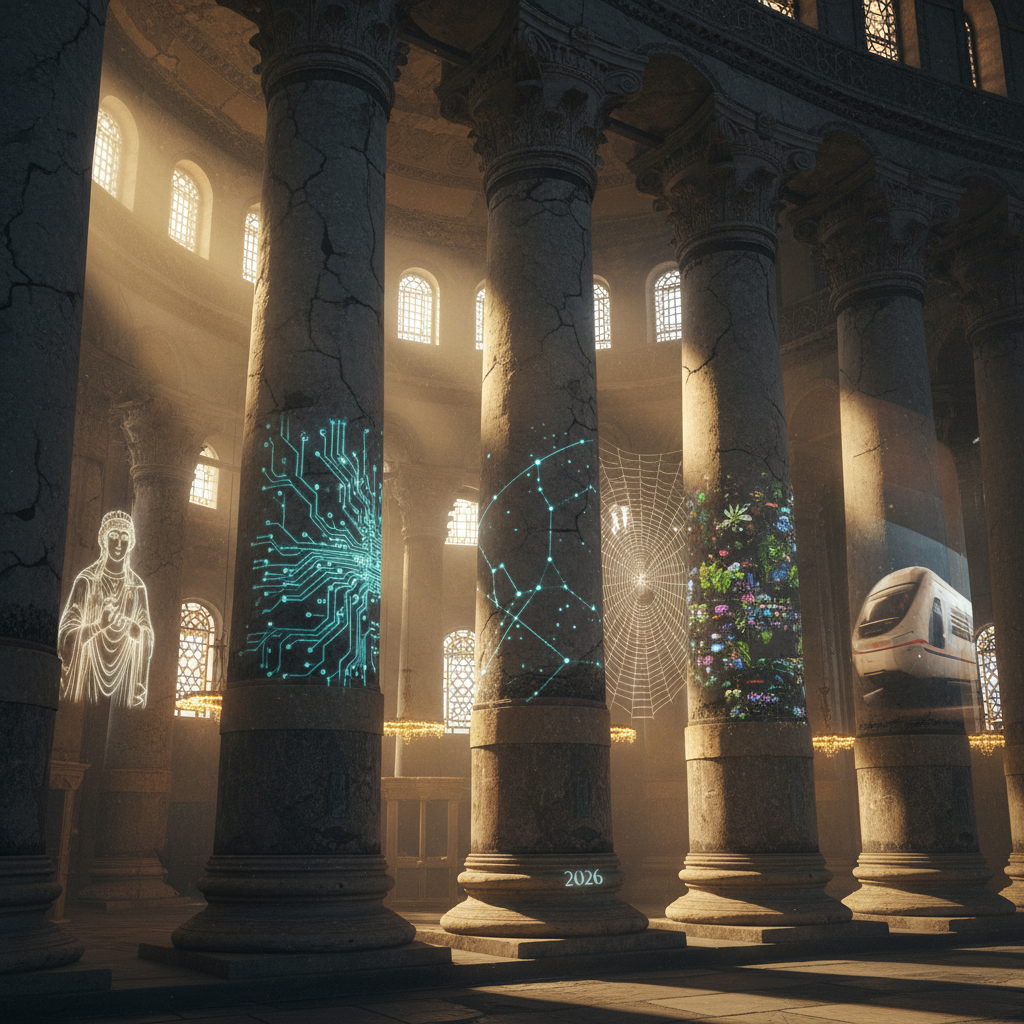
Hagia Sophia's Ancient Columns: Silent Witnesses of History
Rising as a unique blend of history and architecture in the heart of Istanbul, Hagia Sophia welcomes its visitors with a new story at every turn. Within this structure, Hagia Sophia's Ancient Columns, in particular, have stood for thousands of years, witnessing countless civilizations—silent yet profoundly impressive testimonials. In this article, as of 2026, we will shed light on the architectural features, historical significance, and mystical stories surrounding these colossal columns that still stand today. To understand the soul of Hagia Sophia, let us delve into the secrets behind these magnificent columns.
The Architectural Marvel and Origin of Hagia Sophia's Ancient Columns
The construction of Hagia Sophia began in the 6th century during the reign of Emperor Justinian and was carried out by the most prestigious architects of the era, Anthemius and Isidorus. These architects pushed their technical knowledge and creativity to their limits to create a structure previously unparalleled. One of the fundamental elements that ensured the building's survival, of course, is Hagia Sophia's Ancient Columns.
These columns are not merely supporting elements but also works of art that add aesthetic depth to the structure. Composed of various types of stone, with meticulously carved capitals and bases, these columns can also be considered an engineering marvel. Even today, how these columns were erected and what technologies were used is not fully understood. For more insights into the unseen structural elements, explore the Mysterious Foundations of Hagia Sophia.
Columns from Different Sources
- Porphyry Columns: These columns, usually purple or dark red, were brought from Egypt. They were used as a symbol of imperial power and wealth.
- Green Thessalian Marble Columns: Brought from Thessaly, these columns offer a striking aesthetic in Hagia Sophia's narthex and galleries. Their bright green tones add a distinct atmosphere to the interior.
- Marble Columns: Marble columns brought from different regions of Anatolia and the Aegean create a rich texture with their varying colors and vein patterns.
Each of these columns was gathered from different geographical locations and used in the magnificent construction of Hagia Sophia. This also demonstrates the vastness and power of the Roman Empire of that period. The fact that the columns came from such diverse sources can also be interpreted as a form of "spoils" culture; the re-emergence of works from previous civilizations within a new imperial structure.
Historical Layers and Transformations of Hagia Sophia's Ancient Columns
Hagia Sophia is a structure that has been destroyed and rebuilt several times throughout its history, enduring fires and earthquakes. During each demolition and reconstruction process, Hagia Sophia's Ancient Columns also witnessed these transformations.
The Byzantine Period and the Role of the Columns
When first built, Hagia Sophia was the largest cathedral in the Christian world. The columns, in addition to supporting the vastness of the building's central nave, were strategic elements that directed the play of light and echoing sounds within. The carvings and reliefs on the column capitals were filled with Christian symbolism, telling a visual story to the faithful. Such historical shifts are further detailed in the article Hagia Sophia: A Monument of Political and Social Transformations.
The Ottoman Period and a New Identity
After the conquest of Istanbul in 1453, Hagia Sophia was converted into a mosque. During this period, the role of the columns did not change, but some Christian symbols on them were covered or removed. On the other hand, new additions such as the mihrab and minbar were harmoniously placed between the columns. Ottoman engineers also added additional supports and buttresses to some columns to increase the building's resistance to earthquakes. This underlines the structural as well as aesthetic importance of Hagia Sophia's Ancient Columns.
Mysterious Stories and Legends Among Hagia Sophia's Ancient Columns
Hagia Sophia's mystical atmosphere is filled with countless legends and stories that have endured for centuries. Hagia Sophia's Ancient Columns, in particular, are at the center of these tales. Visitors, as they wander around these columns, encounter not only history but also the mysteries of the past.
The Weeping Column (Sweating Column)
One of Hagia Sophia's most famous legends concerns the "Weeping Column" or "Sweating Column" located inside. It is believed that wishes come true for those who insert their finger into the small hole on this column and rotate it. It is also said that the constant dampness of this column is a sign of a sacred power and that it maintains the humidity balance in Hagia Sophia. This continues to be a popular stopping point for those visiting Hagia Sophia in 2026. For more on visitor experiences and popular spots, see Hagia Sophia Visitor Experiences: Bridging the Past in 2026.
The Angel Column
Another legend is the belief that an angel figure exists on one of the inner columns. According to various rumors, this angel figure dates back to the initial construction of the building and is believed to protect Hagia Sophia from evil. It is known that many people throughout history have tried to find this column but have been unable to clearly identify it. Such stories demonstrate that Hagia Sophia's Ancient Columns are not just piles of stone, but also symbols.
The Present State and Preservation of Hagia Sophia's Ancient Columns (2026)
As of 2026, Hagia Sophia's Ancient Columns still stand in all their splendor. However, centuries of wear and tear, natural erosion, and earthquakes have necessitated continuous maintenance and restoration of these structural elements. Today, international experts and Turkish Conservation Boards are collaborating extensively to pass on this unique heritage to future generations. For a broader perspective on cultural preservation efforts in Turkey, refer to Turkey's Ministry of Culture and Tourism.
Restoration Works
- Material Analyses: Chemical analyses of the original stone materials forming the structure of the columns are being conducted to determine the most suitable repair and reinforcement methods.
- Structural Monitoring: Laser scanning and digital modeling techniques are used to continuously monitor the columns for inclinations, cracks, and other structural defects.
- Environmental Control: Humidity and temperature levels in the interior are kept under control to prevent further damage to the columns.
These efforts are vital for preserving the overall integrity of Hagia Sophia and particularly for enhancing the durability of Hagia Sophia's Ancient Columns. Restoration teams aim to use techniques most appropriate to the original, paying attention to the historical value of each column.
The Significance of Hagia Sophia's Ancient Columns for Visitors
For everyone who visits Hagia Sophia, the columns are one of the most striking features of the structure. These colossal columns, reaching up to the high ceilings, inspire admire and awe in visitors. On each column, traces of time, touches of different civilizations, and countless mystical stories are hidden.
When experiencing the captivating atmosphere of Hagia Sophia, you should not only focus on the beauty of the grand dome and mosaics. Looking up and carefully observing every detail of these immense columns will help you understand the soul of Hagia Sophia more deeply. Hagia Sophia's Ancient Columns, as silent witnesses, carry the echoes of the past into the present and offer an unforgettable experience. To delve deeper into the monument's historical context, you might find this UNESCO World Heritage Site page on Historic Areas of Istanbul insightful.
If you plan to visit Hagia Sophia in 2026, remember that these columns are not merely piles of stone; behind each one lies a story spanning thousands of years. You can make a wish, touch the damp column, or simply be captivated by the aesthetics of these structural marvels. They are an integral part of the heart and soul of Hagia Sophia.