Istanbul Reflected in the Hagia Sophia: A Timeless Mirror of the City's Heart (2026)
Hagia Sophia, a monumental structure gracing Istanbul's skyline for centuries, is far more than just architecture; it embodies the very soul of the city. Its profound history and continuous transformations make it a living reflection of Istanbul's heart. The deep connection between Hagia Sophia and Istanbul is evident in every architectural detail and historical layer.
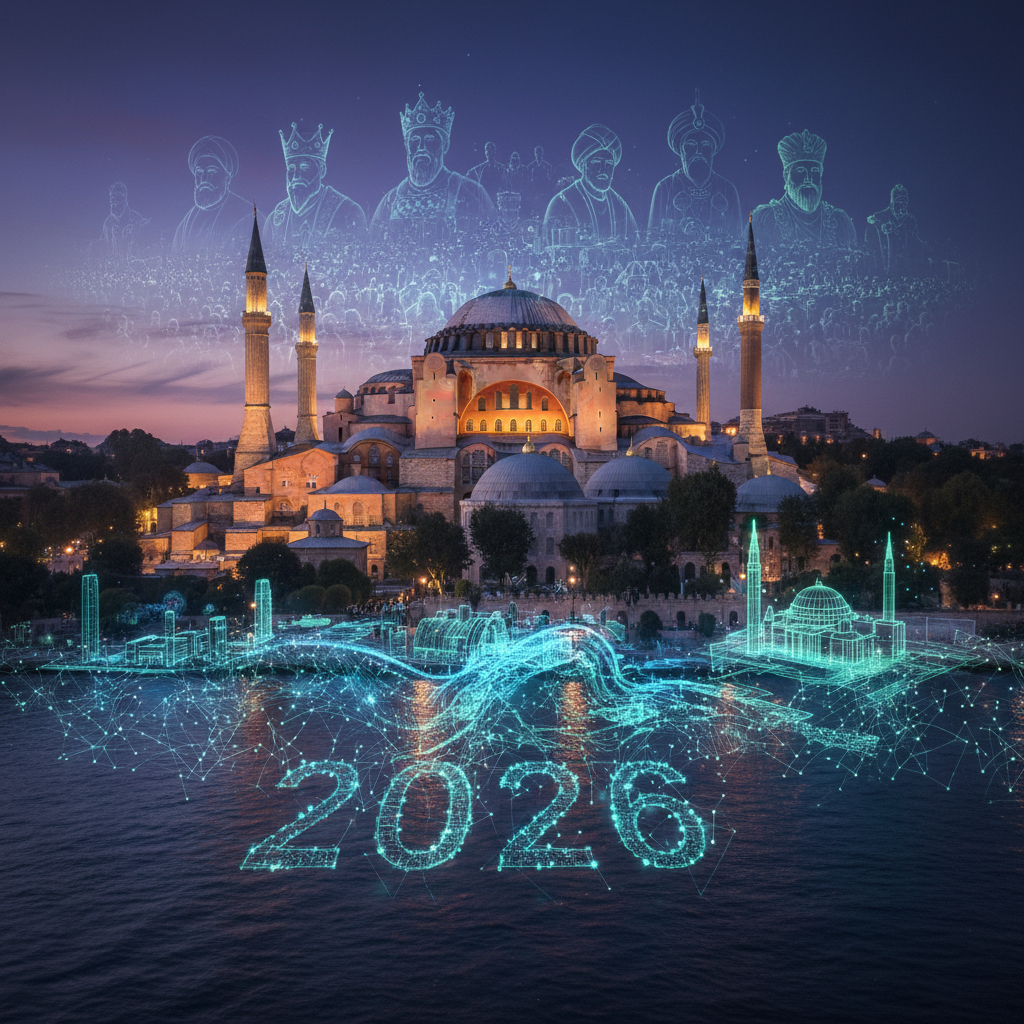
Hagia Sophia and Istanbul: A Timeless Connection
The profound and enduring bond between Hagia Sophia and Istanbul: A Timeless Connection is evident in every stone and story of this magnificent city. Hagia Sophia, which has adorned the skyline of Istanbul for centuries and holds profound history in every corner, is not merely a structure but also the soul of the city, its identity, and a living mirror of the transformations it has experienced over centuries. The Hagia Sophia Istanbul relationship beats in the heart of this mystical city; for Hagia Sophia has witnessed the golden ages of both Christianity and Islam, the rise and fall of empires, and is the most powerful symbol of an Istanbul that constantly changes but fundamentally remains the same. Even as we enter 2026, Hagia Sophia's bond with this city grows stronger every day, solidifying its place as a timeless connection.
Historical Origins and Transformations: The Hagia Sophia and Istanbul Connection
The history of Hagia Sophia is intertwined with the history of Istanbul. The foundations of the structure were laid at the beginning of the 6th century, during the reign of Emperor Justinian. From its initial construction, Hagia Sophia was not only a place of worship but also a political and cultural center. Its conversion into a mosque by Fatih Sultan Mehmet after the conquest of Istanbul was the clearest indicator that the city was entering a new era, further cementing the Hagia Sophia and Istanbul: A Timeless Connection.
Transition from Byzantium to the Ottomans
- First Construction of Hagia Sophia: Opened for worship in 537, Hagia Sophia held the title of the world's largest cathedral at that time. With its architectural genius, the marbles used, and its colossal dome, it was truly an engineering marvel. For more details on its construction, see Hagia Sophia's Legendary Masters: Geniuses and Hidden Artisans Behind the Millennium-Old Structure (2026).
- Conquest of Istanbul and Hagia Sophia: With Fatih Sultan Mehmet's conquest of Istanbul in 1453, Hagia Sophia was converted into a mosque, and Islamic motifs were added while preserving its mosaics. This transformation was actually a symbol of the cultural blending in the city, which passed from the Romans to the Turks, representing two great civilizations. For a broader perspective on its societal impact, explore Hagia Sophia: A Monument of Political and Social Transformations Throughout the Ages (2026).
- Mimar Sinan's Touch: Thanks to the additions and reinforcements made during the Ottoman period, especially by Mimar Sinan, Hagia Sophia has managed to stand to this day. Surrounded by minarets, a madrasah, and tombs, the structure became a magnificent part of Ottoman architecture.
These periods show that the Hagia Sophia Istanbul relationship is not only a physical but also a spiritual bond. Every transformation of the city has echoed in the walls and spirit of Hagia Sophia, highlighting the Hagia Sophia and Istanbul: A Timeless Connection.
Hagia Sophia's Mystical Atmosphere and Its Impact on Istanbul
Hagia Sophia is not just a colossal structure, but also a carrier of mystical stories accumulated over centuries. The deep silence felt the moment you step inside, the play of light reflecting off the walls, and the details in every nook and cranny transport the visitor to a different dimension. This mystical atmosphere has also permeated the general ambiance of Istanbul, strengthening the Hagia Sophia and Istanbul: A Timeless Connection.
Hagia Sophia's Mysterious Stories
Hagia Sophia holds many legends and mysteries. Some of them are:
- The Weeping Column (Wishing Column): Also known as the sweating column, it is believed that if you insert your thumb into the hole in this column and make a full circle, your wishes will come true. Learn more about its intriguing tales in Moments Frozen in Time at Hagia Sophia: The Mysterious Stories of Pillars, Silent Witnesses to Civilization (2026).
- Sweating Walls: There are beliefs that the dampness of certain walls inside Hagia Sophia represents sacred water or holds a certain power.
- Angel Figures and Traces: It is said that the angel figures beneath the plastered mosaics after the conquest can still be felt and seen from certain angles. For more on the hidden aspects, see Hagia Sophia Traveler's Guide 2026: Hidden Chambers and Unexplored Corners.
These stories are important elements that deepen the Hagia Sophia Istanbul relationship, attracting tourists and local people alike. Hagia Sophia continues to fuel Istanbul's imagination with these mysteries, showcasing the profound Hagia Sophia and Istanbul: A Timeless Connection.
Hagia Sophia and Istanbul: Architectural and Artistic Genius
Hagia Sophia's architecture is an example of mastery and innovation that surpassed its own era. The dome construction, lighting techniques, and materials used were groundbreaking for their time. This architectural genius has also inspired other structures in Istanbul, further illustrating the Hagia Sophia and Istanbul: A Timeless Connection.
Byzantine and Ottoman Synthesis
Hagia Sophia houses the most beautiful examples of both Byzantine and Ottoman art within its structure. The presence of the most exquisite examples of Islamic calligraphy right next to Christian mosaics creates a unique synthesis. This situation continues to attract the interest of local and foreign researchers even in 2026, emphasizing the enduring Hagia Sophia and Istanbul: A Timeless Connection.
- Mosaics: Byzantine mosaics depicting emperors and their consorts, saints, and religious scenes are among Hagia Sophia's most valuable artistic legacies. The Deesis mosaic is one of the best known.
- Calligraphy: The round calligraphic panels added after the conquest, bearing the names of Allah, Muhammad, the four caliphs, and Hasan, Hussein, represent the pinnacle of Ottoman calligraphy.
- Mihrab and Minbar: The marble mihrab and carved wooden minbar added when it was converted into a mosque are masterpieces of Ottoman period wood and stone craftsmanship.
This artistic richness has transformed the Hagia Sophia Istanbul relationship into a cultural monument. Every detail of Hagia Sophia carries the traces of these two great civilizations in Istanbul. For further exploration of its artistic heritage, consider visiting UNESCO's World Heritage page for the Historic Areas of Istanbul, which prominently features Hagia Sophia, a testament to the Hagia Sophia and Istanbul: A Timeless Connection.
Hagia Sophia's Place in Present-Day Istanbul (2026)
Today, in 2026, Hagia Sophia remains one of the most important cultural and religious structures at the heart of Istanbul. It is a center of attraction for both local people and tourists from all over the world. Its open status as a mosque, while also serving as a museum, makes Hagia Sophia unique, reinforcing the Hagia Sophia and Istanbul: A Timeless Connection.
A Touristic and Spiritual Stop
According to data from the Ministry of Culture and Tourism, Hagia Sophia welcomes millions of visitors every year. It is one of the first places everyone who comes to Istanbul absolutely wants to visit. Especially its spiritual value holds a distinct importance for both the Christian and Islamic worlds.
- Visitor Experience: Visiting Hagia Sophia is not just seeing a historical structure, but like traveling through time. This unique place, where different cultures and beliefs come together, offers an unforgettable experience to visitors. For insights into contemporary visits, refer to Hagia Sophia Visitor Experiences: Bridging the Past in 2026.
- Ongoing Debates and Meaning: The periodic discussions regarding the status of Hagia Sophia show its place in collective memory and how strong the Hagia Sophia Istanbul relationship is. Every discussion further increases interest in Hagia Sophia, underscoring the Hagia Sophia and Istanbul: A Timeless Connection.
In 2026, Hagia Sophia is still a living history, a breathing heritage, and a world-renowned symbol of Istanbul. The city's bond with this unique structure is an unbreakable shared destiny that will continue into the future, a true Hagia Sophia and Istanbul: A Timeless Connection.
The Future of Hagia Sophia and Its Importance for Istanbul
Hagia Sophia is not just a reflection of the past but also carries great significance for the future of Istanbul. Listed as a UNESCO World Heritage site, this structure plays a vital role in preserving global cultural heritage and passing it on to future generations. The Hagia Sophia Istanbul relationship plays a key role in the preservation of this heritage, ensuring the continued Hagia Sophia and Istanbul: A Timeless Connection.
Sustainability and Conservation Efforts
As of 2026, efforts for the preservation and maintenance of Hagia Sophia continue with great diligence. Due to its location in an earthquake zone and its thousands of years of age, restoration and reinforcement works are constantly on the agenda.
- International Cooperation: Cooperation with international organizations is carried out for the preservation of Hagia Sophia. Scientists and experts are developing various projects to secure the future of the structure.
- Education and Awareness: Education and awareness projects are carried out regarding the historical and cultural importance of Hagia Sophia. Especially, younger generations are encouraged to protect this heritage.
Hagia Sophia is not just a symbol of Istanbul, but also a common value of human history. Its preservation is essential for the continued cultural richness of Istanbul and the world. The Hagia Sophia Istanbul relationship is an endless bond that reflects the worth, value, and future of this unique structure, truly embodying the Hagia Sophia and Istanbul: A Timeless Connection.