Justinian I's Vision: Building Hagia Sophia
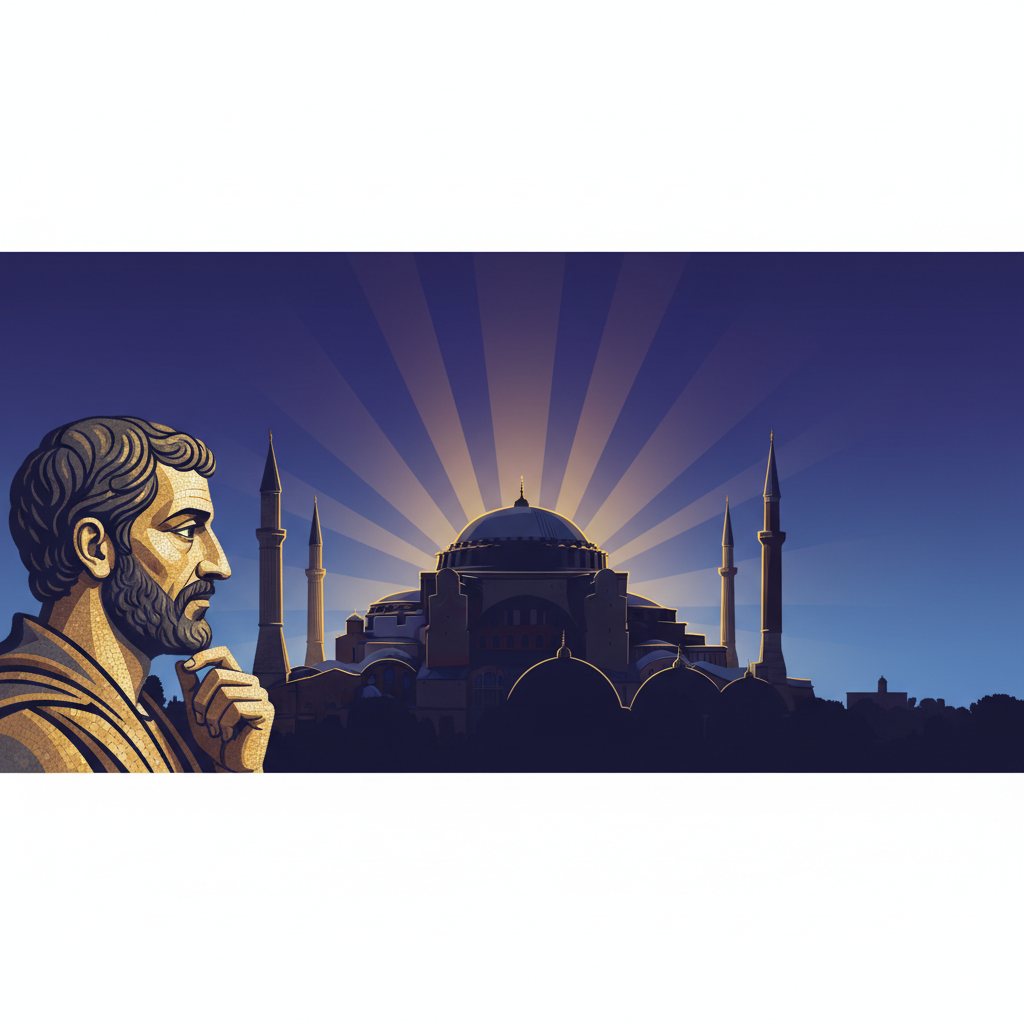
Hagia Sophia stands as a breathtaking testament to human ingenuity, architectural prowess, and profound faith. Its towering domes and intricate mosaics have captivated visitors for centuries, whispering tales of empires, transformations, and enduring spiritual significance. At the heart of its creation lies the ambitious vision of one man: Emperor Justinian I.
Justinian I's Vision: Building Hagia Sophia
Hagia Sophia stands as a breathtaking testament to human ingenuity, architectural prowess, and profound faith. Its towering domes and intricate mosaics have captivated visitors for centuries, whispering tales of empires, transformations, and enduring spiritual significance. At the heart of its creation lies the ambitious vision of one man: Emperor Justinian I. This article delves into the pivotal role Justinian played in conceiving and constructing this magnificent edifice, exploring the historical context, the challenges faced, and the lasting legacy of his monumental undertaking. Prepare to uncover the hidden stories and mystical aura surrounding one of the world's most iconic structures. Hagia Sophia: History & Architecture
The Grandeur of Justinian's Reign: A New Golden Age
Emperor Justinian I, who ruled the Byzantine Empire from 527 to 565 AD, envisioned a revitalized Roman Empire, a "renovatio imperii." His reign marked a period of significant military conquests, legal reforms (most notably the Corpus Juris Civilis), and an unparalleled flourishing of arts and architecture. He aimed to restore the glory of the past while forging a new identity for the Eastern Roman Empire, and Hagia Sophia was to be the crown jewel of this ambitious program.
Justinian's desire for a structure that would symbolize the empire's power and its deep devotion to Christianity was immense. He sought to create a church that would surpass all others in scale, beauty, and spiritual resonance. This ambition was not merely personal; it was a strategic move to solidify his authority and inspire awe among his subjects and foreign dignitaries alike. The construction of such a magnificent basilica was a declaration of imperial might and divine favor.
The Precursors: Churches Before Hagia Sophia
Before the Hagia Sophia we know today, two earlier churches stood on the same site, each bearing the name "Hagia Sophia," meaning "Holy Wisdom." The first was a basilica built by Emperor Constantius II in the 4th century. This structure, known as the "Great Church," was destroyed during riots in 404 AD.
A second, larger basilica was then constructed by Emperor Theodosius II and inaugurated in 415 AD. This impressive structure with a wooden roof also met a fiery end during the Nika Riots of 532 AD. These devastating riots, sparked by chariot racing factions, nearly cost Justinian his throne. It was in the ashes of this destruction that Justinian's grand vision for the third, and ultimately permanent, Hagia Sophia was born.
The Nika Riots and the Birth of a Masterpiece
The Nika Riots were a turning point for Justinian's reign and for the future of Constantinople. With much of the city in ruins, including the second Hagia Sophia, Justinian faced a critical decision. Encouraged by his empress, Theodora, he suppressed the rebellion with brutal efficiency and then seized the opportunity to rebuild Constantinople on an even grander scale.
His primary focus was the construction of a new Hagia Sophia, one that would be impervious to future fires and riots, and one that would stand as an eternal monument to his reign and to God. This immediate aftermath of destruction provided the impetus for an architectural marvel that would redefine Byzantine architecture and influence religious structures for centuries.
The Architects and Their Vision: Anthemius and Isidore
Justinian entrusted the monumental task of designing and constructing the new Hagia Sophia to two brilliant minds: Anthemius of Tralles, a mathematician and physicist, and Isidore of Miletus, a geometer and engineer. Neither was primarily an architect in the traditional sense, which allowed them to approach the project with innovative and daring solutions.
Their expertise in mathematics and mechanics was crucial in tackling the unprecedented engineering challenges posed by the building's massive dome. Justinian himself was deeply involved in the project, reportedly spending vast sums of money and pushing the architects to achieve an unparalleled level of grandeur and structural innovation. He demanded a building that would be unlike anything seen before.
Engineering Marvels: The Dome of Heaven
The most striking feature of Hagia Sophia, and its greatest engineering triumph, is its colossal central dome. At its completion, it was the largest unsupported dome in the world, a feat that astounded contemporaries. The architects employed a revolutionary technique known as pendentives – triangular, curved supports – to transition from the square base of the building to the circular base of the dome.
This ingenious solution allowed for the creation of an expansive, open interior space, seemingly defying gravity. The dome appears to float above the nave, an effect further enhanced by the ring of 40 windows at its base, which flood the interior with light. This design created a sense of divine light and ethereal beauty, contributing to the building's mystical aura. The construction of the dome was fraught with challenges, including its initial collapse in 558 AD after an earthquake, necessitating a reconstruction with a slightly higher profile.
Materials and Construction: A Symphony of Resources
Justinian spared no expense in the construction of Hagia Sophia. He ordered the finest materials from across the empire and beyond. Columns of green marble were brought from Ephesus, porphyry from Egypt, and white marble from Marmara. Precious metals, ivory, and mosaics adorned the interior, creating an opulent spectacle.
The construction process was incredibly rapid, taking just under six years, from 532 to 537 AD. This speed was achieved through the employment of an estimated 10,000 workers and artisans, working tirelessly under the emperor's direct supervision. The sheer scale of the undertaking required immense coordination and logistical planning, a testament to Justinian's administrative capabilities.
The Inauguration and Justinian's Exclamation
On December 27, 537 AD, Hagia Sophia was finally consecrated. Legend has it that upon entering his completed masterpiece, Justinian exclaimed, "Solomon, I have surpassed thee!" This declaration, referencing the biblical King Solomon's Temple, perfectly encapsulated his ambition and the profound sense of accomplishment he felt.
The inauguration was a magnificent affair, attended by the emperor, the patriarch, and countless citizens. It marked the culmination of a colossal effort and the beginning of Hagia Sophia's long and storied history as the patriarchal cathedral of Constantinople, the spiritual heart of the Byzantine Empire.
The Enduring Legacy of Justinian's Hagia Sophia
Hagia Sophia served as the principal cathedral of Constantinople for over 900 years, witnessing coronations, imperial ceremonies, and countless religious services. Its architectural innovations, particularly the use of pendentives and the massive dome, profoundly influenced subsequent Byzantine, Ottoman, and even Western European architecture. It inspired countless churches and mosques, becoming a blueprint for religious structures for centuries.
Even after its conversion into a mosque by the Ottomans in 1453 and its later transformation into a museum in 1934, Hagia Sophia continued to command respect and awe. Its recent reversion to a mosque in 2020 has reignited discussions about its multifaceted identity and enduring significance. Regardless of its current status, the foundational vision of Justinian I remains indelibly etched into its very fabric.
Hagia Sophia: A Journey Through Time
For any tourist or history enthusiast, understanding Justinian's role is crucial to appreciating the full majesty of Hagia Sophia. It is not just a building; it is a narrative of ambition, faith, engineering genius, and cultural transformation. From the ashes of riot and destruction, Justinian willed into existence a structure that would transcend time, becoming a symbol of human aspiration and divine inspiration.
Visiting Hagia Sophia today is to step into a living museum, a place where layers of history, art, and spirituality converge. The echoes of Justinian's grand vision resonate in every arch, every mosaic, and every beam of light that filters through its ancient windows, inviting contemplation and wonder.
Planning Your Visit to Hagia Sophia
When planning your visit to Hagia Sophia, consider these tips to enhance your experience:
* Go Early: Arriving shortly after opening helps avoid the largest crowds and allows for a more serene experience.
* Dress Modestly: As an active place of worship, visitors are required to dress modestly. Women should cover their heads (scarves are often provided or available for purchase).
* Look Up: The dome and upper galleries hold some of the most spectacular mosaics and architectural details. Don't forget to explore the upper level for different perspectives.
* Guided Tours: A knowledgeable guide can bring the history and intricate details of Hagia Sophia to life, offering insights into Justinian's original intentions and the building's subsequent transformations.
* Photography: Photography is generally allowed, but be respectful and avoid flash photography in certain areas.
Hagia Sophia remains a must-see destination, offering a profound connection to history, art, and the enduring human spirit. Justinian I's vision continues to inspire and awe, making it an essential stop for anyone exploring Istanbul.