Comnenus Mosaic
The Imperial Family of John II Comnenus
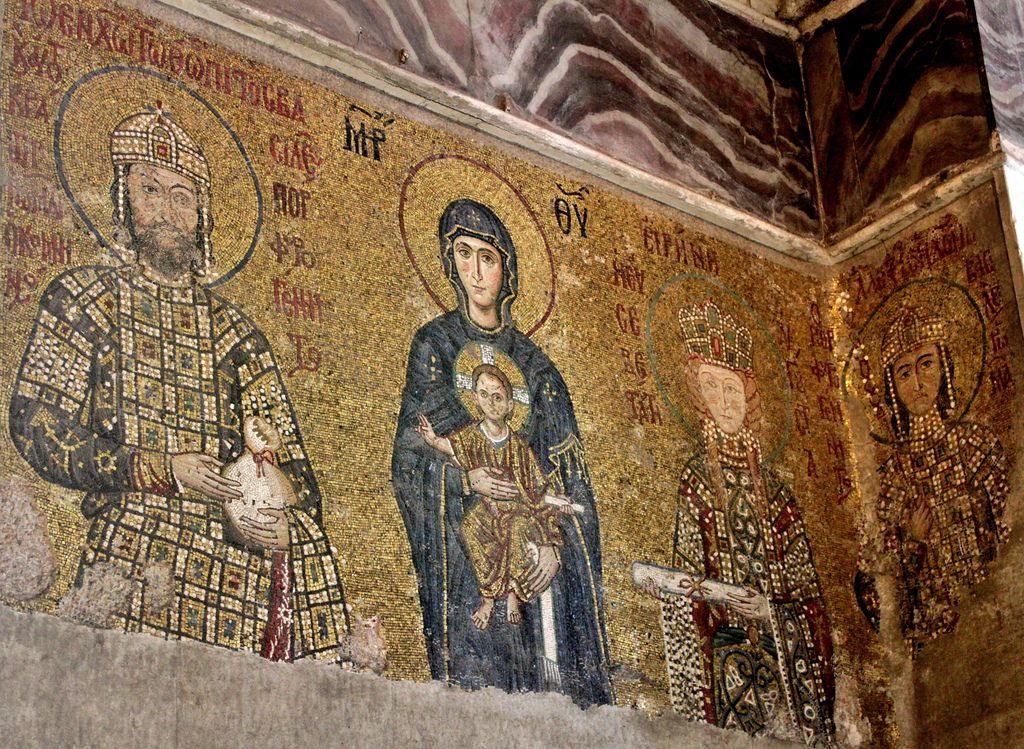
The Comnenus mosaic in the south gallery of Hagia Sophia shows Christ Pantocrator flanked by Emperor John II Comnenus, Empress Irene, and their son, the young prince Alexios. This 12th‑century panel is one of the finest surviving examples of middle Byzantine imperial art.
Historical Background
The mosaic is dated to the reign of Emperor John II Comnenus (r. 1118–1143). It belongs to a period when the Byzantine Empire experienced renewed military strength and artistic refinement. The Comnenian dynasty invested heavily in religious foundations, and Hagia Sophia once again became a stage for imperial representation.
Composition & Iconography
Christ sits enthroned in the center, blessing with his right hand while holding the Gospels in his left. On his right stands Emperor John II in richly decorated imperial robes, offering a model of a money bag or gift, symbolizing his donations to the Great Church. On Christ's left stands Empress Irene, holding a scroll that represents imperial decrees and benefactions. Their son Alexios appears as a youthful figure beside them, underlining dynastic continuity.
Symbolism & Meaning
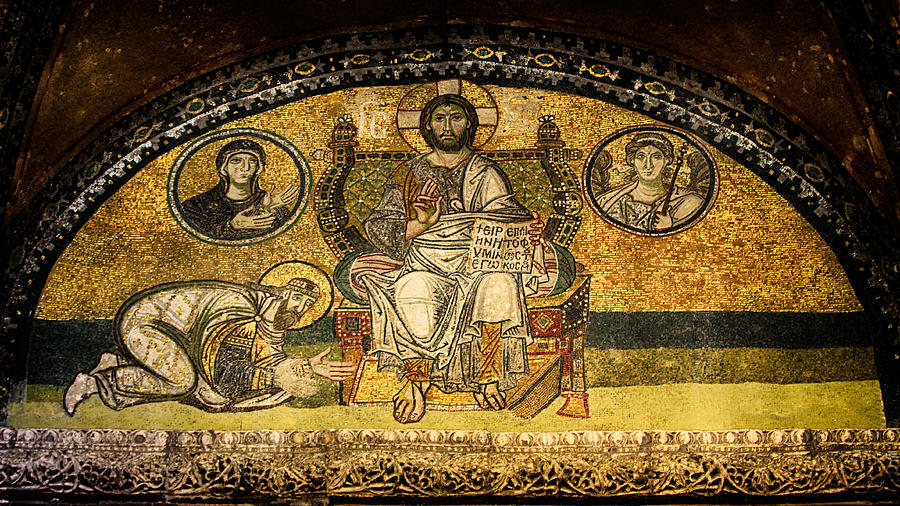
The panel visualizes the relationship between the heavenly and earthly rulers. Christ, the true king, accepts the offerings of the imperial family, legitimizing their rule. Details such as the jeweled crowns, loros garments, and elaborate halos highlight both political authority and spiritual devotion.
Location in Hagia Sophia
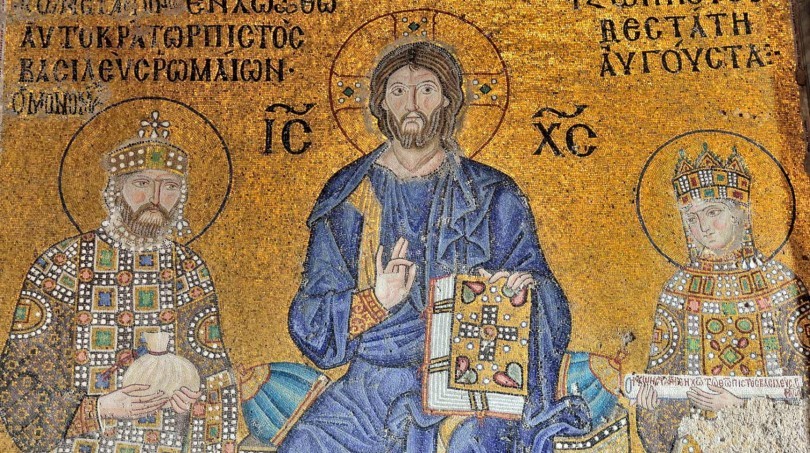
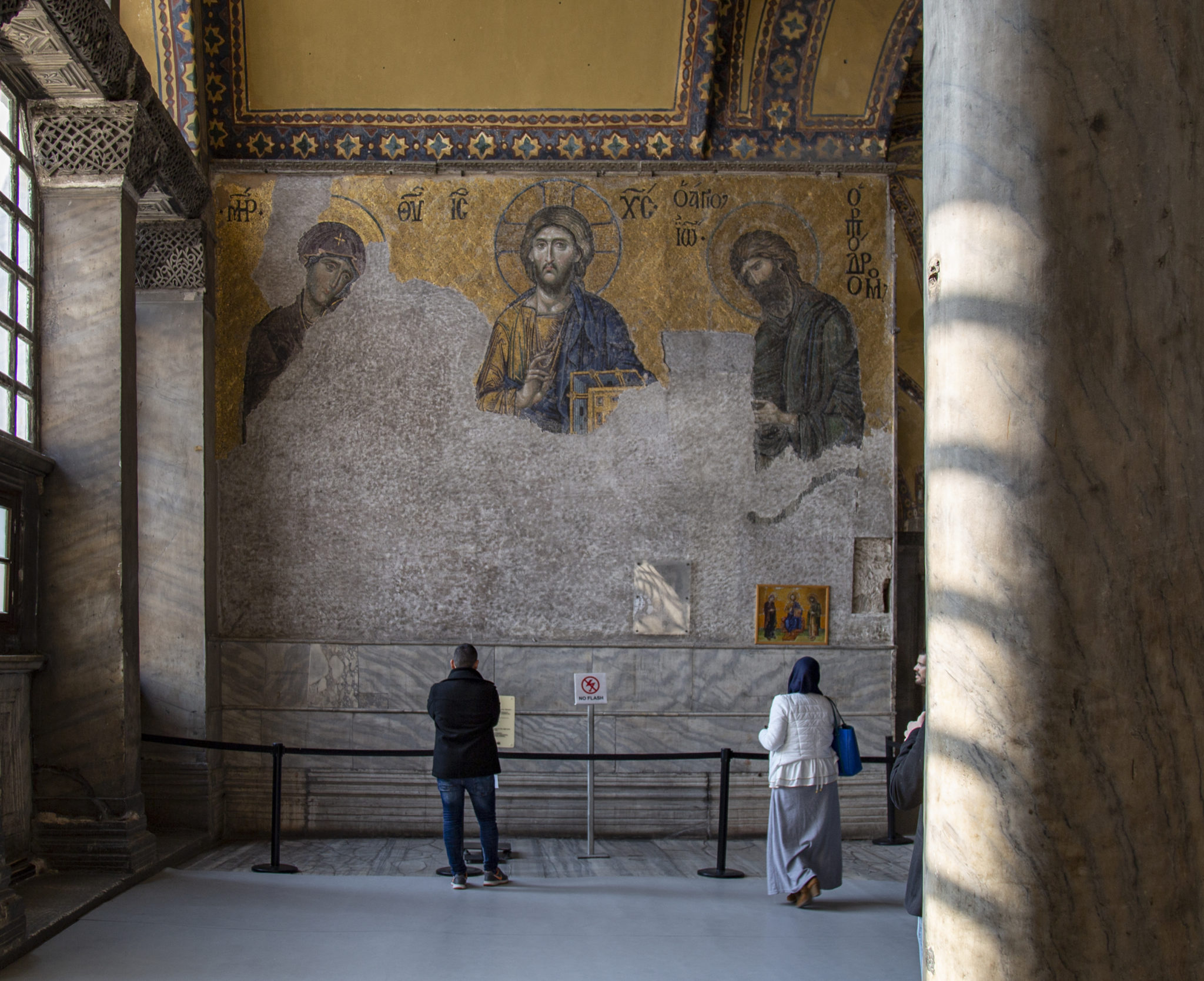
The Comnenus mosaic is located in the south gallery of Hagia Sophia, not far from the Empress Zoe panel. From the upper galleries you can approach it closely enough to admire the fine details of the tesserae and the subtle modeling of the faces.
Visitor Tip
Take time to compare the Comnenus mosaic with the nearby Empress Zoe panel. The differences in style, color palette, and facial expression reveal changing artistic tastes between the 11th and 12th centuries.