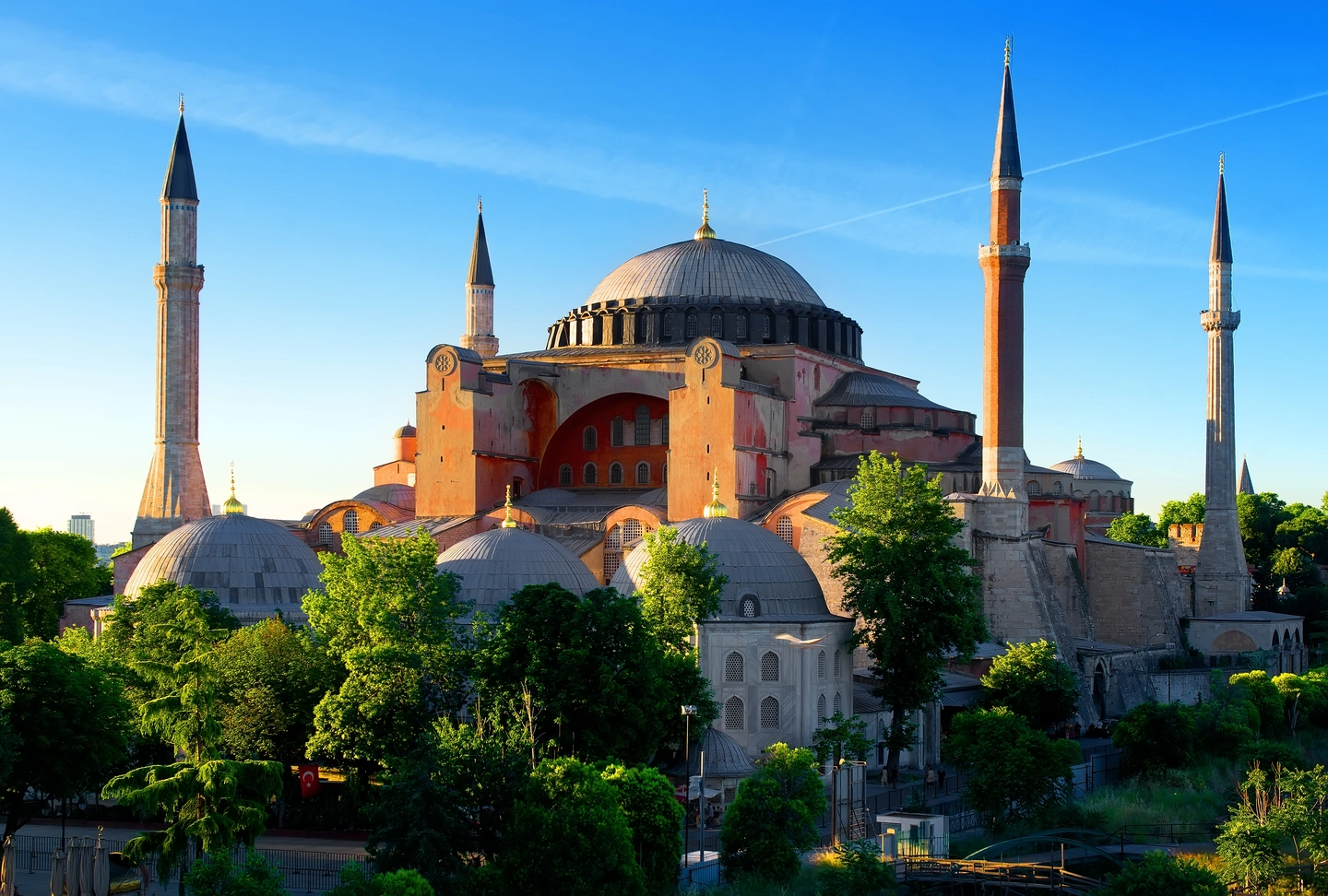
Inside Hagia Sophia
Step inside one of the world's most extraordinary buildings. From the soaring dome to the glittering mosaics, discover every detail of Hagia Sophia's breathtaking interior.
Interior Highlights
The Central Dome
Rising 55.6 meters above the floor, the dome spans 31.87 meters and appears to float on a ring of 40 arched windows that flood the interior with natural light.
Byzantine Mosaics
Gold-ground mosaics depicting Christ, the Virgin Mary, emperors, and empresses survived centuries of plaster covering and remain among the finest examples of Byzantine art.
Ottoman Calligraphy
Eight massive medallions — the largest examples of Islamic calligraphy in the world — bear the names of Allah, Muhammad, and the early caliphs in gold lettering on green backgrounds.
Marble Columns
107 columns of verde antico, porphyry, and Proconnesian marble were sourced from ancient temples across the Mediterranean, including the Temple of Artemis at Ephesus.
Ground Floor: What to See
The main level of Hagia Sophia holds the majority of its architectural and spiritual treasures. Here is what to look for as you explore.
The Nave
The vast central nave measures roughly 73 meters long by 69.5 meters wide. Standing at the center, look up to experience the full impact of the dome — the sense of boundless space is what made the building famous from the moment it opened in 537 AD.
The Apse & Mihrab
The semi-circular apse at the eastern end holds a golden mosaic of the Virgin and Child. Below it sits the mihrab, added after 1453, which indicates the direction of Mecca. Because Hagia Sophia does not face Mecca precisely, the mihrab is set at a slight angle to the apse.
The Minbar & Sultan's Lodge
The ornate marble minbar (pulpit) was added by Sultan Murad III. Nearby, the elevated Sultan's Lodge (Hunkar Mahfili) features gilded latticework and was used by the sultans during Friday prayers, allowing them to worship privately above the congregation.
The Weeping Column
Also called the Perspiring Column or Wishing Column, this copper-clad pillar in the northwest corner has a thumb-sized hole worn smooth by centuries of visitors. Legend says inserting your thumb and feeling moisture grants a wish. The column is associated with St. Gregory the Miracle Worker.
The Imperial Door
The largest of Hagia Sophia's nine doors, the Imperial Door was reserved for the emperor. Above it hangs a 9th-century mosaic showing Christ enthroned, with Emperor Leo VI prostrating before him — one of the most photographed scenes inside the building.
The Marble Floor Panels
Look down as well as up: the opus sectile floor features large circular panels of Proconnesian marble surrounded by verde antico borders. The largest circular panel, called the Omphalion, marks the spot where Byzantine emperors were crowned.
Upper Gallery: The Mosaic Treasury
The upper gallery houses Hagia Sophia's most celebrated mosaics. Access requires a separate ticket (25 EUR for foreign visitors), but the experience is well worth it.
The Deesis Mosaic
Considered one of the finest works of Byzantine art, this 13th-century mosaic in the south gallery depicts Christ flanked by the Virgin Mary and John the Baptist. The faces display a remarkable softness and humanity that anticipated Renaissance art by more than a century.
Empress Zoe Mosaic
This 11th-century mosaic shows Christ seated between Emperor Constantine IX Monomachos and Empress Zoe. Careful inspection reveals that the emperor's face was altered at least twice as Zoe's husbands changed — an extraordinary piece of Byzantine political art.
Comnenus Mosaic
Dated to 1122 AD, this well-preserved mosaic shows the Virgin and Child between Emperor John II Comnenus and Empress Irene. The Empress's Hungarian features and the vivid colors make this one of the best-preserved mosaics in the building.
Panoramic Views
The upper gallery provides the best vantage point for appreciating the scale of the interior. From here you can see the full sweep of the dome, the pendentives, and the half-domes. The south gallery railing offers the classic overhead view of the nave floor below.
Tips for Exploring Inside
Visit Early Morning
Arrive when it opens to avoid crowds. The morning light through the eastern windows illuminates the apse mosaic beautifully.
Photography Tips
Bring a wide-angle lens to capture the dome. Flash is prohibited. During prayer times, non-worshipping visitors should remain respectful and avoid photographing those praying.
Start at the Center
Stand on the Omphalion in the center of the nave first. Look up at the dome, then work your way around the ground floor before heading to the upper gallery.
Respect the Dress Code
Hagia Sophia is an active mosque. Cover shoulders and knees, and women should bring a headscarf. Free coverings are available at the entrance if needed.